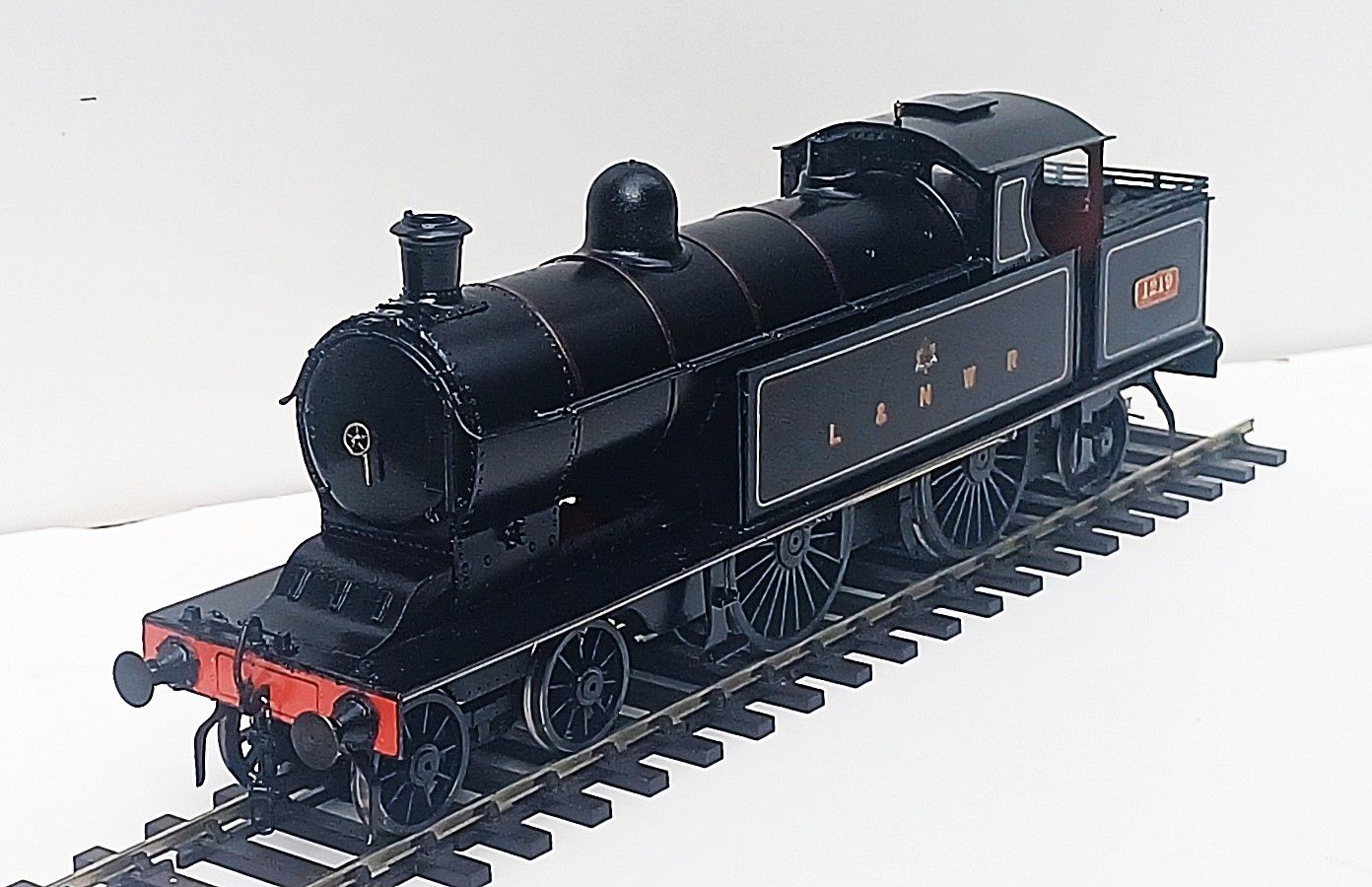
LNWR Whale Precursor Tank 4-4-2T no. 1219.


Model engines and locos

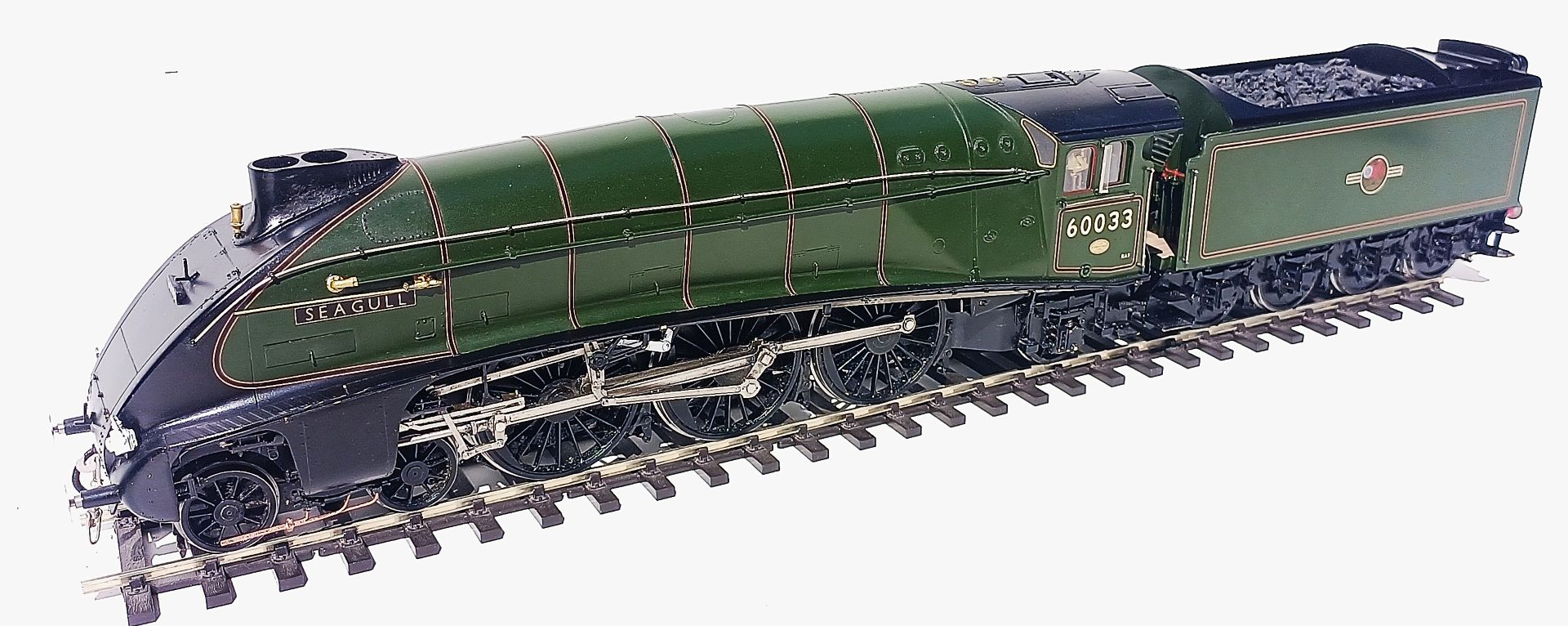
This is I believe, a pre-production sample of a Loveless A4. No opening smokebox door (in my opinion a gimmick which required over-scale hinges, so no loss there) and no DCC. It still has its original inner and outer cardboard boxes. But when taken in part exchange it had damage and missing parts. Fortunately the baked-on cellulose paint is still in good condition. Damage consisted of the tender being dropped to bend a couple of rear steps (easily reshaped) and damage to the corridor connection (well repaired now, but not so easily). The join between the green streamlined casing and the black running plate over the driving wheels had broken on one side (now repaired with epoxy resin, clamped together for 24 hours and any excess glue on the top face cleaned away). Missing parts were a couple of cab handrails (easily replaced) and a tender brake pull rod. I have also added cylinder blow down pipework and the cab window cinder guards. On the track she runs just like any other Loveless A4…..superbly.
A risky acquisition that has paid off handsomely. Isn’t see a beauty? A good friend, who already owns two other bird A4’s had no hesitation in making an offer (a Klondyke that will be gracing these pages soon) that I couldn’t refuse.

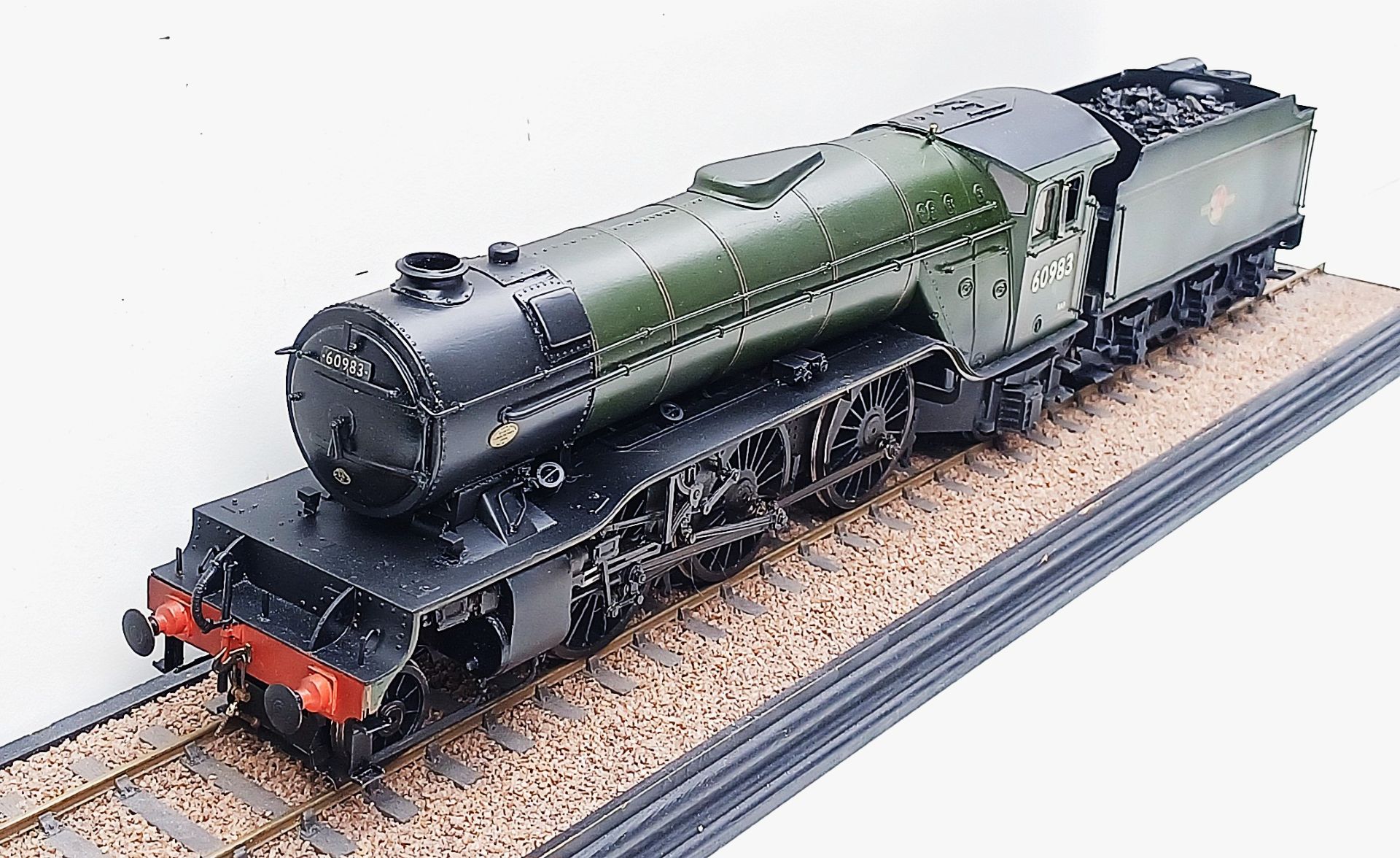
60983 was the last V2 to be built in 1944 and as proved by the numerous photos in books and on the internet, 60983 (in the condition modelled), of top shed, was a regular performer in the late fifties and early sixties, on the classic trains such as “The Scarborough Flyer” and “Scotch Goods”.

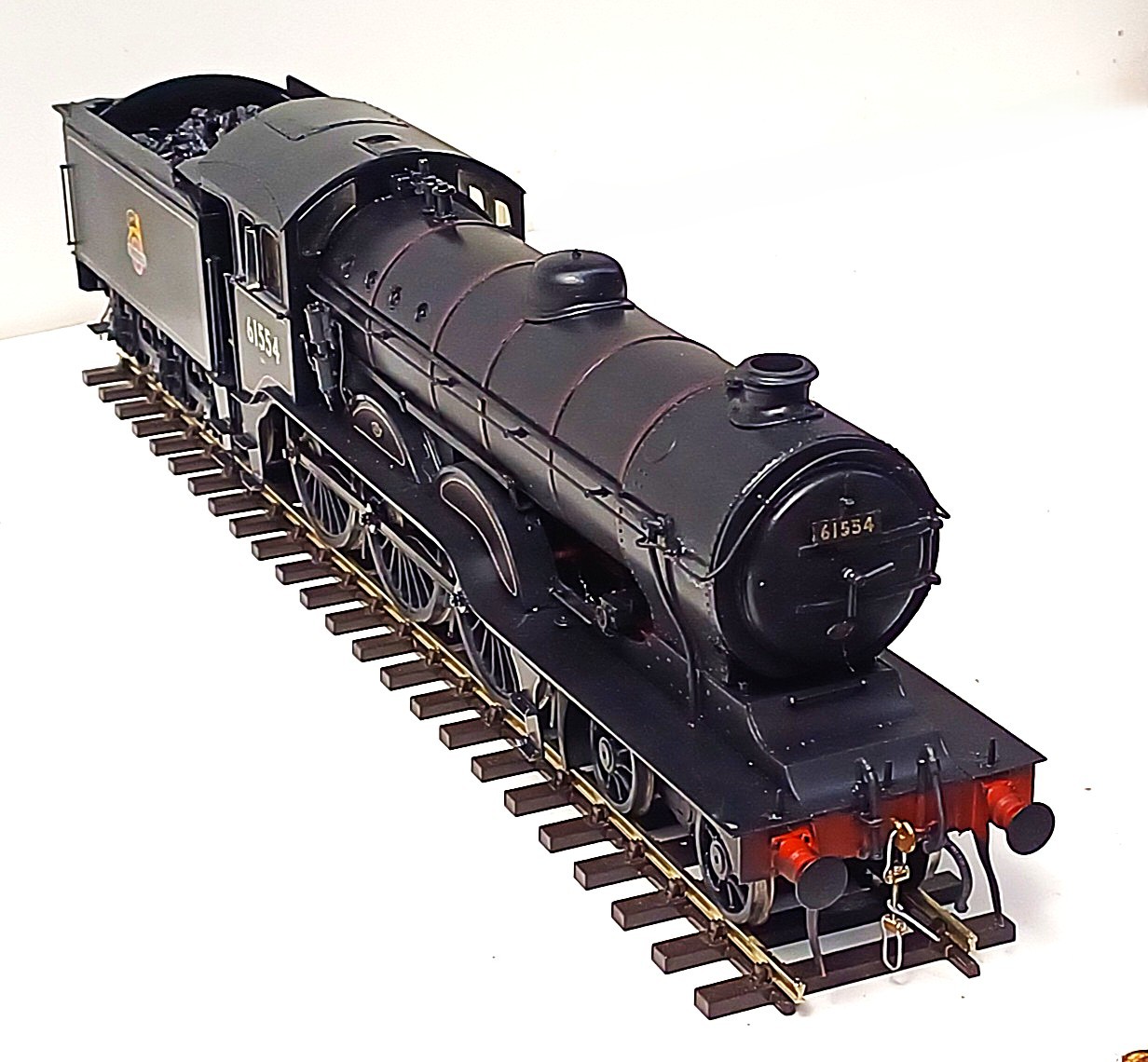
On the 8th May 1955, 61554 took the nine coach East Midlander rail tour from Nottingham Midland to Crewe Basford Hall sidings, North Stafford sidings, Crewe Works and terminating at the Stone Yard Bank.
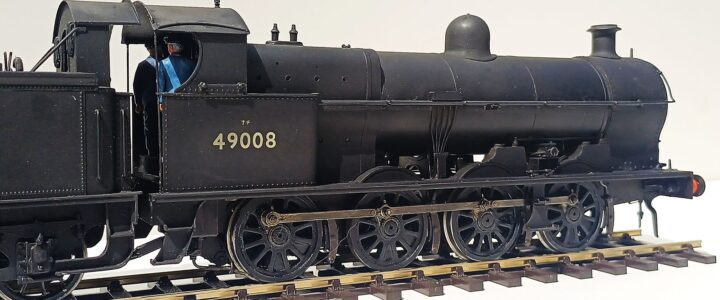
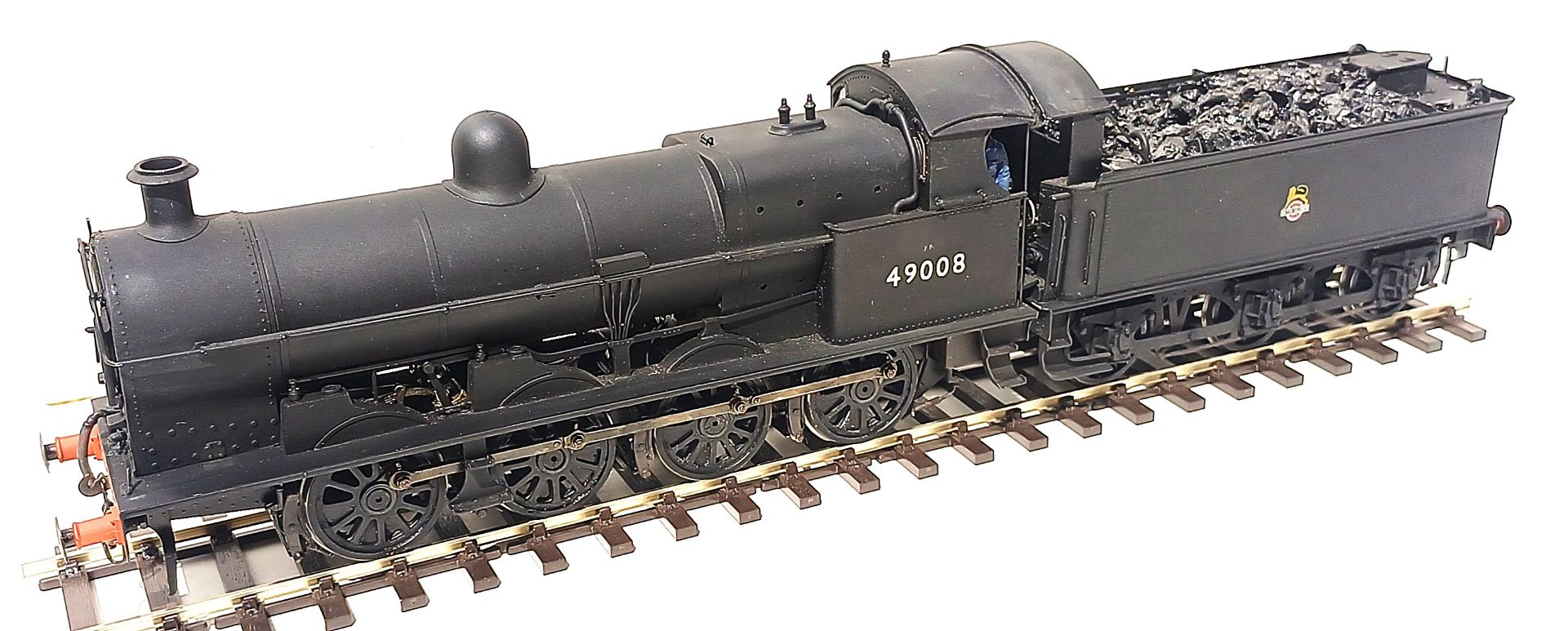
The real no. 49008 locomotive, was actually the original Webb “A” class compound no. 50, built in 1893, going through rebuilds to “D” class, “G1” class before finally being rebuilt to “G2A” in 1943.
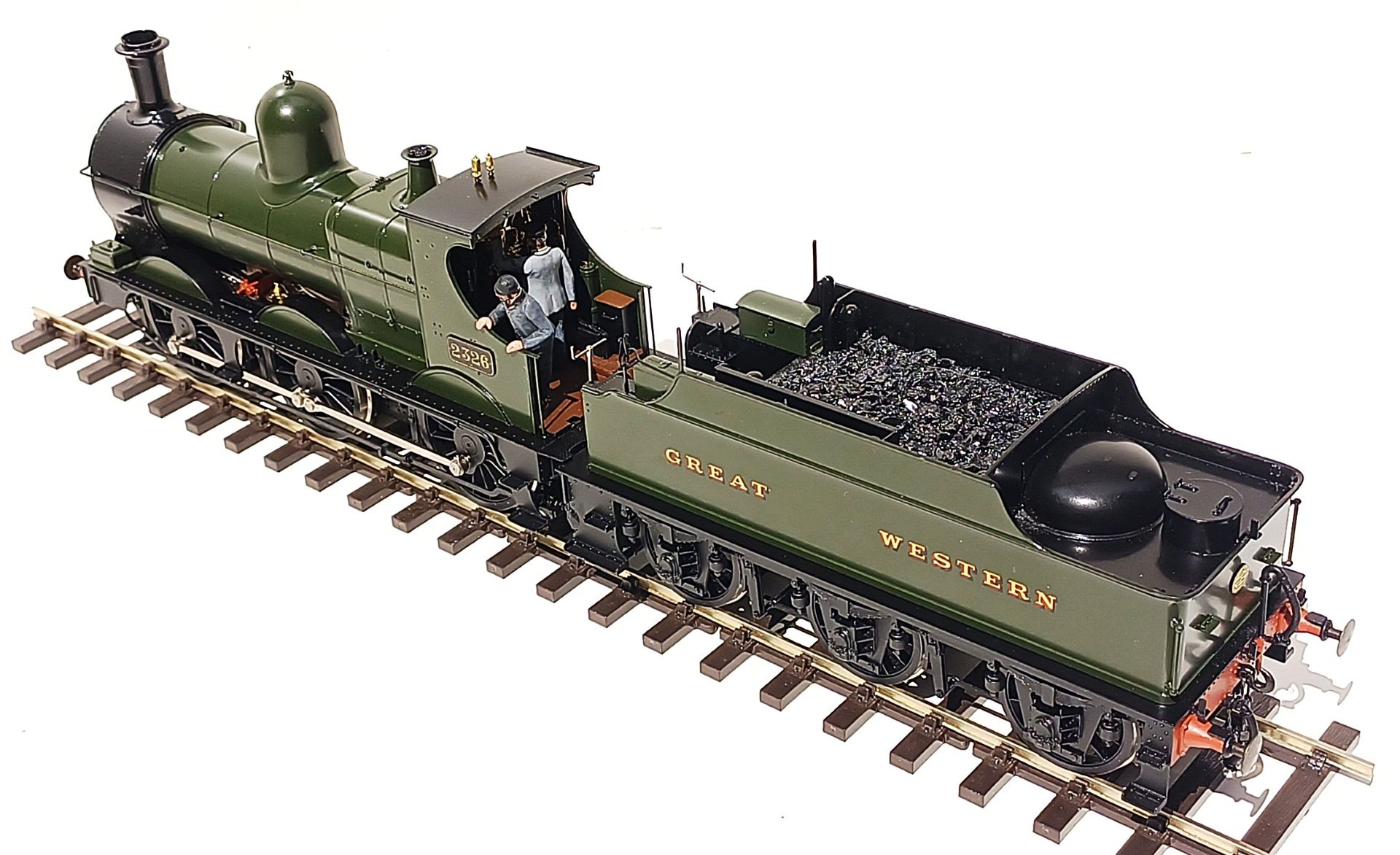
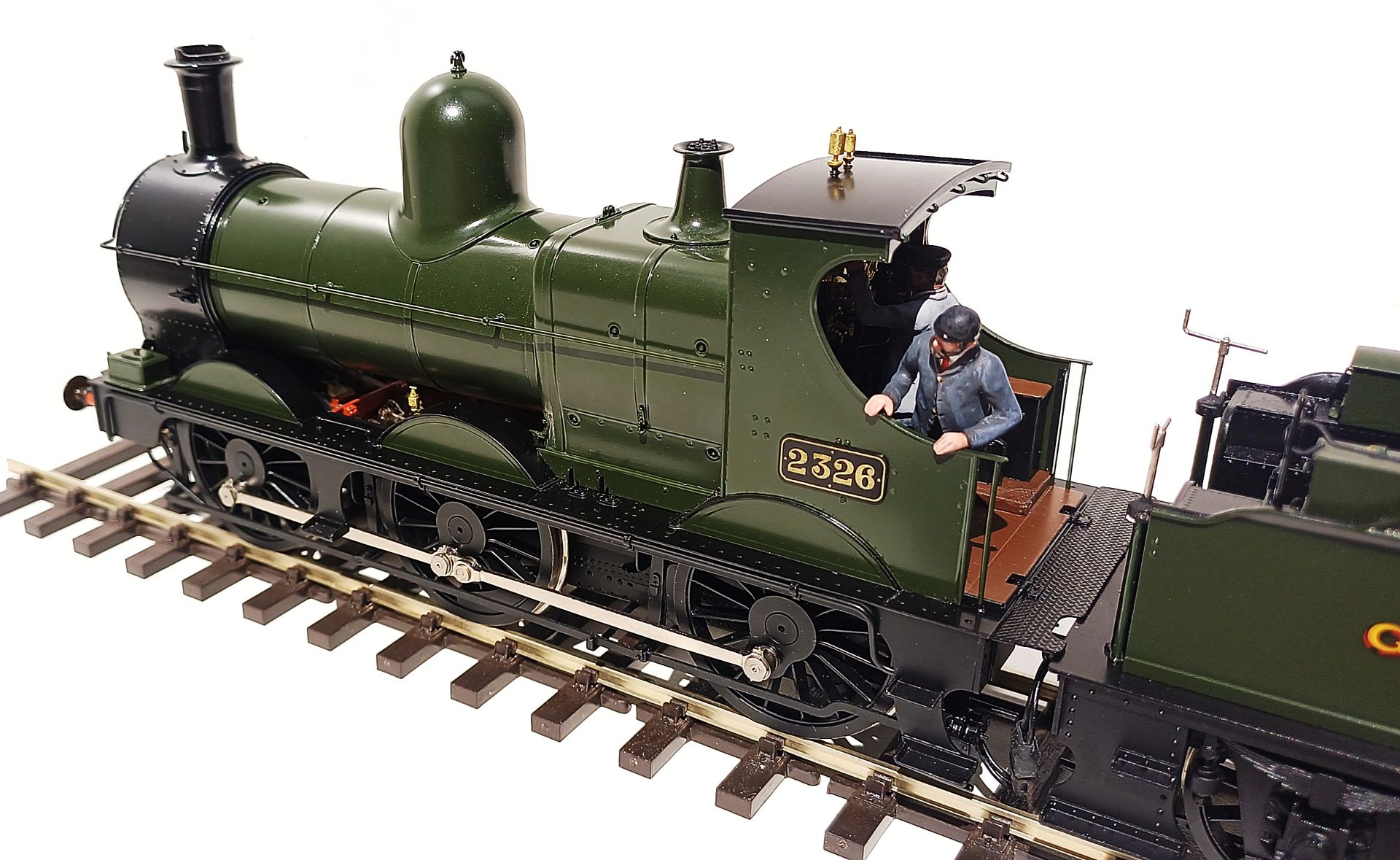
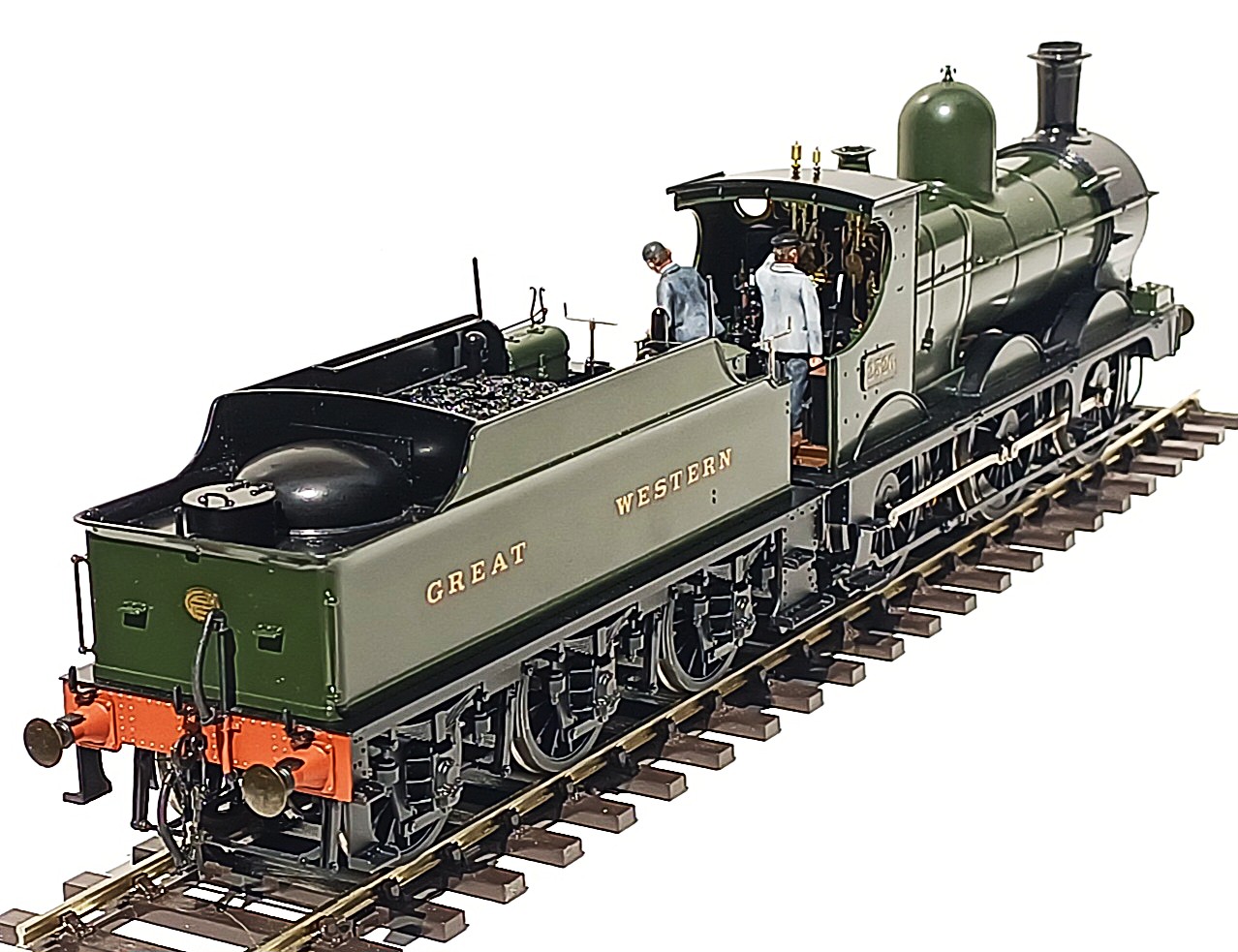
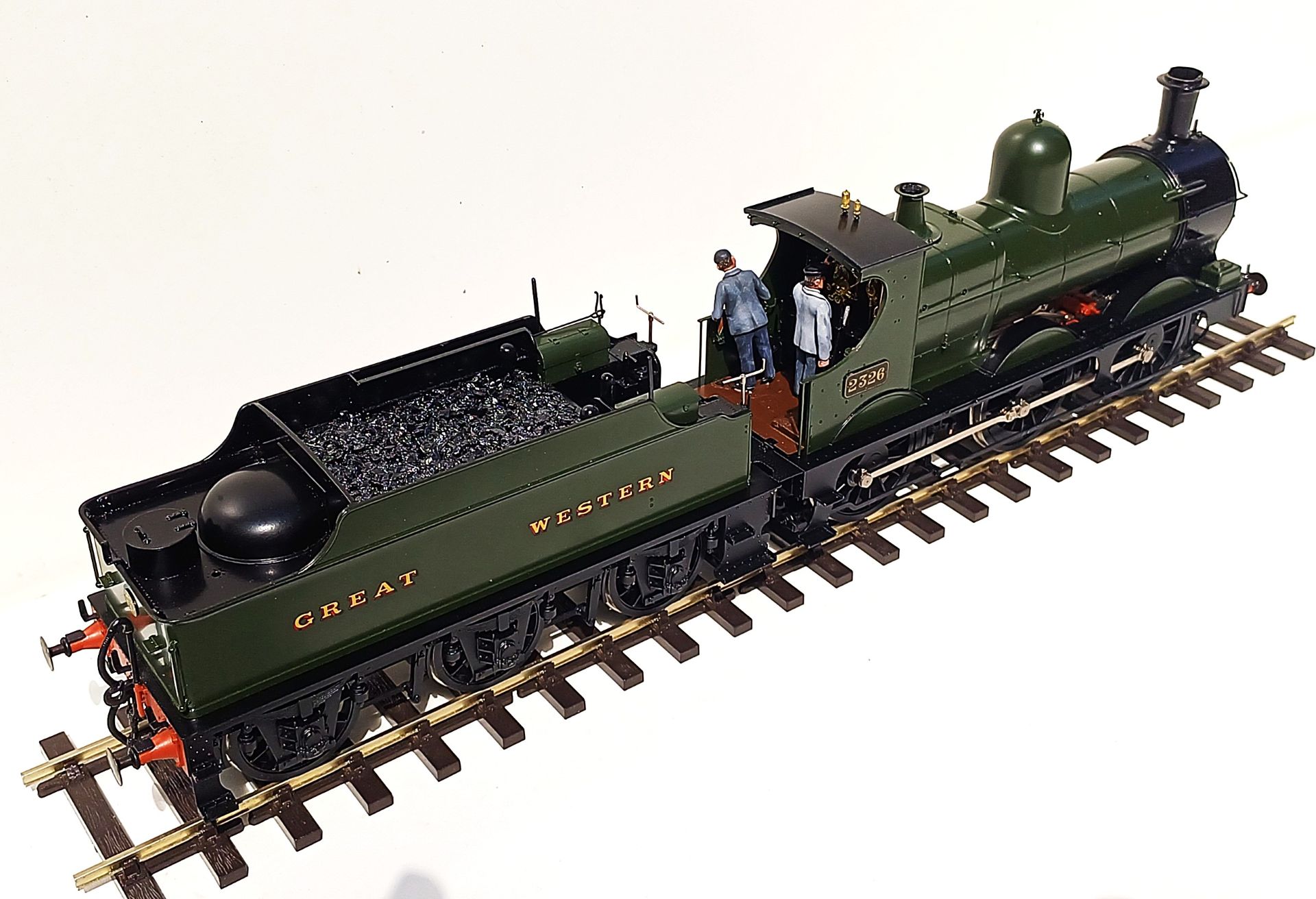
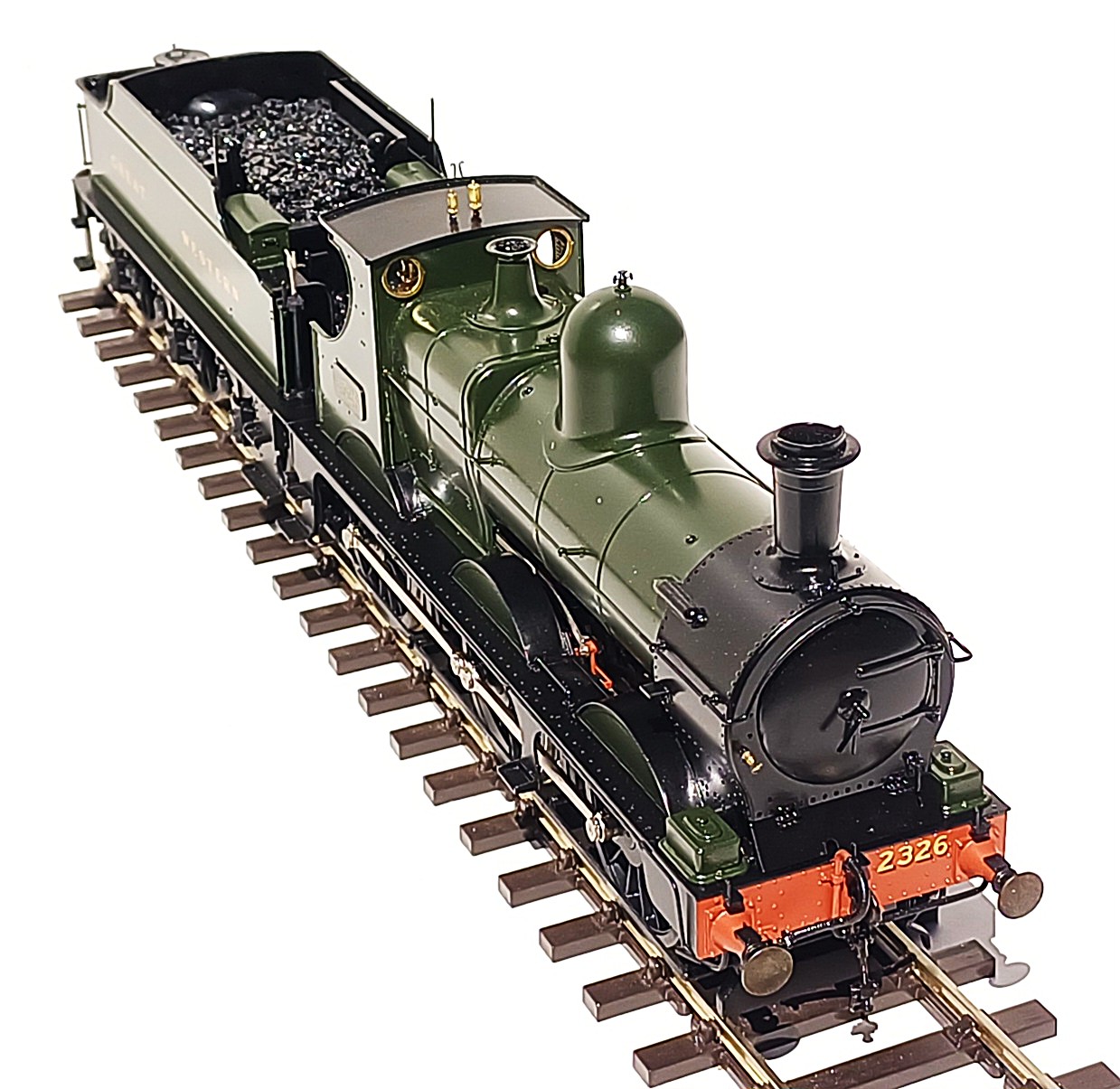
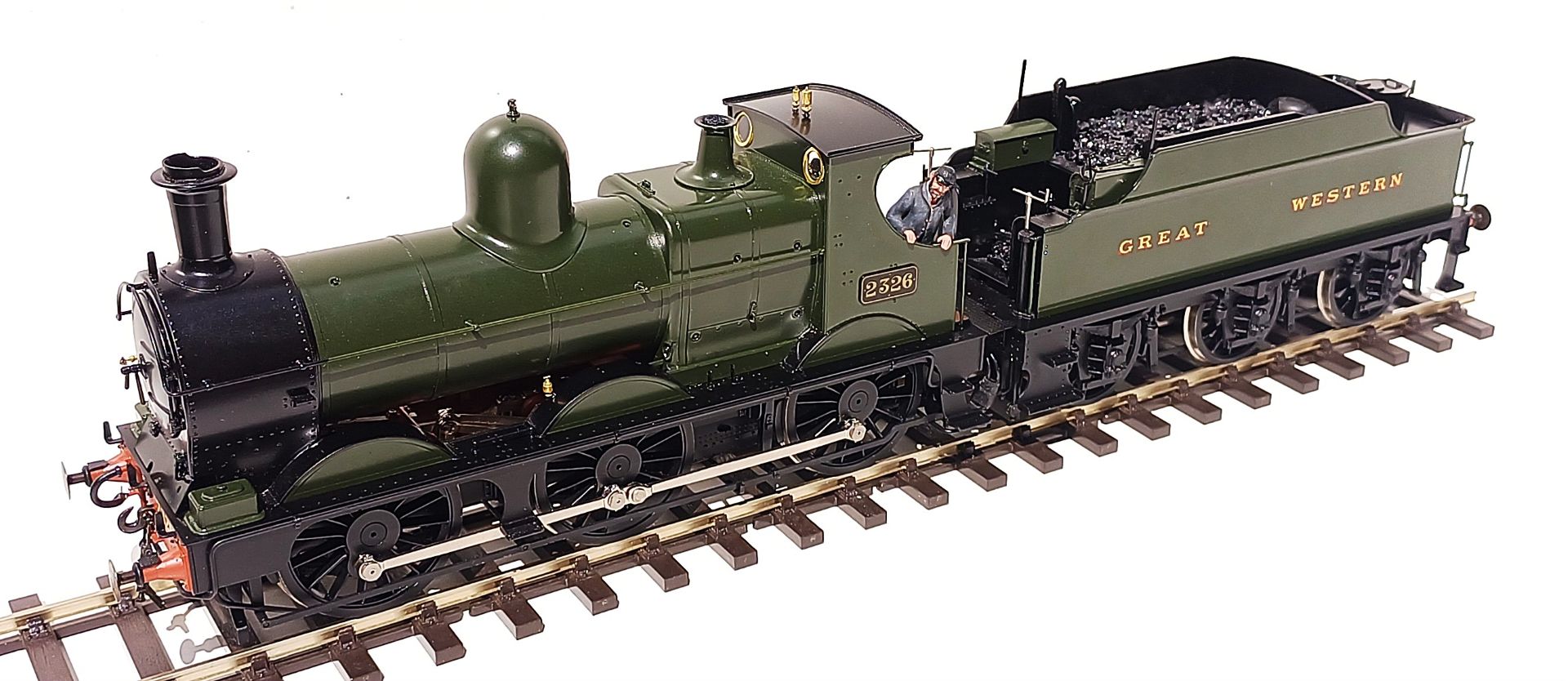
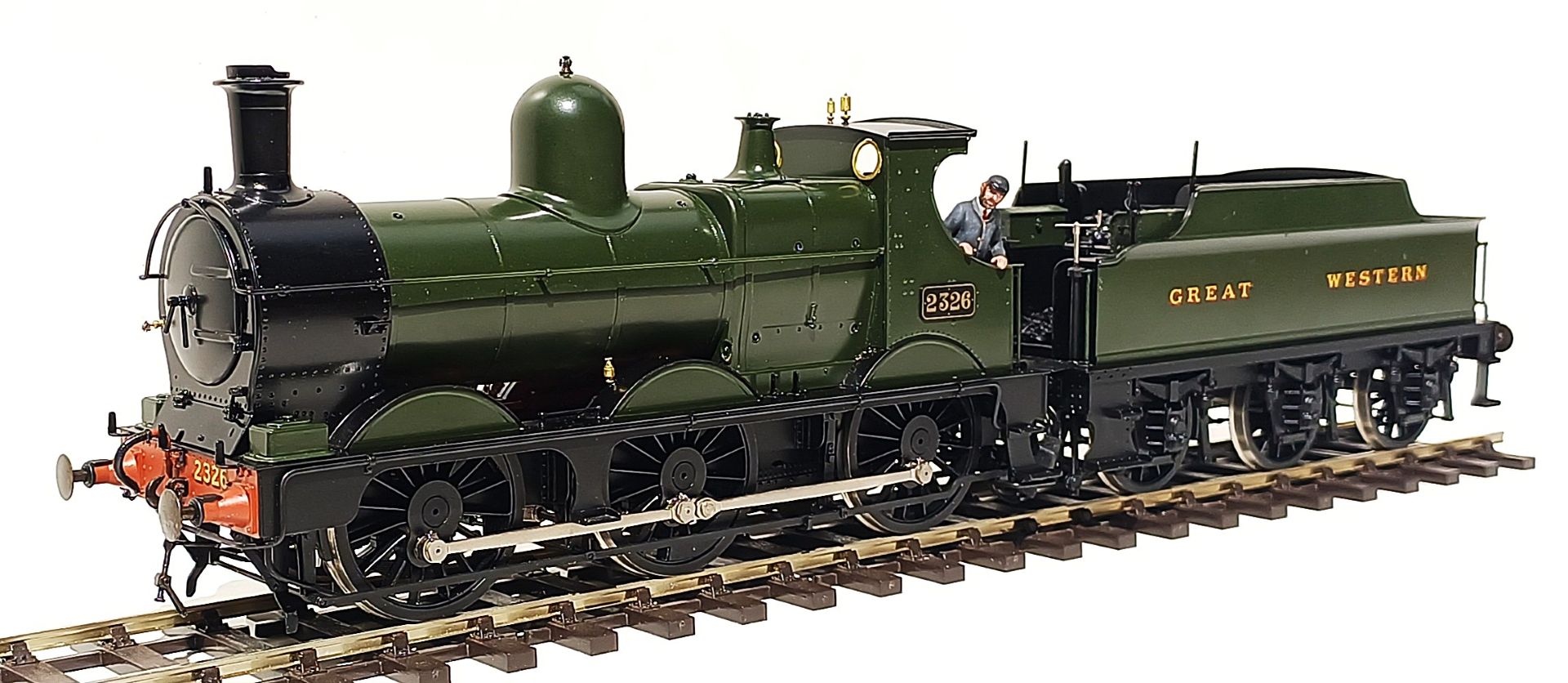
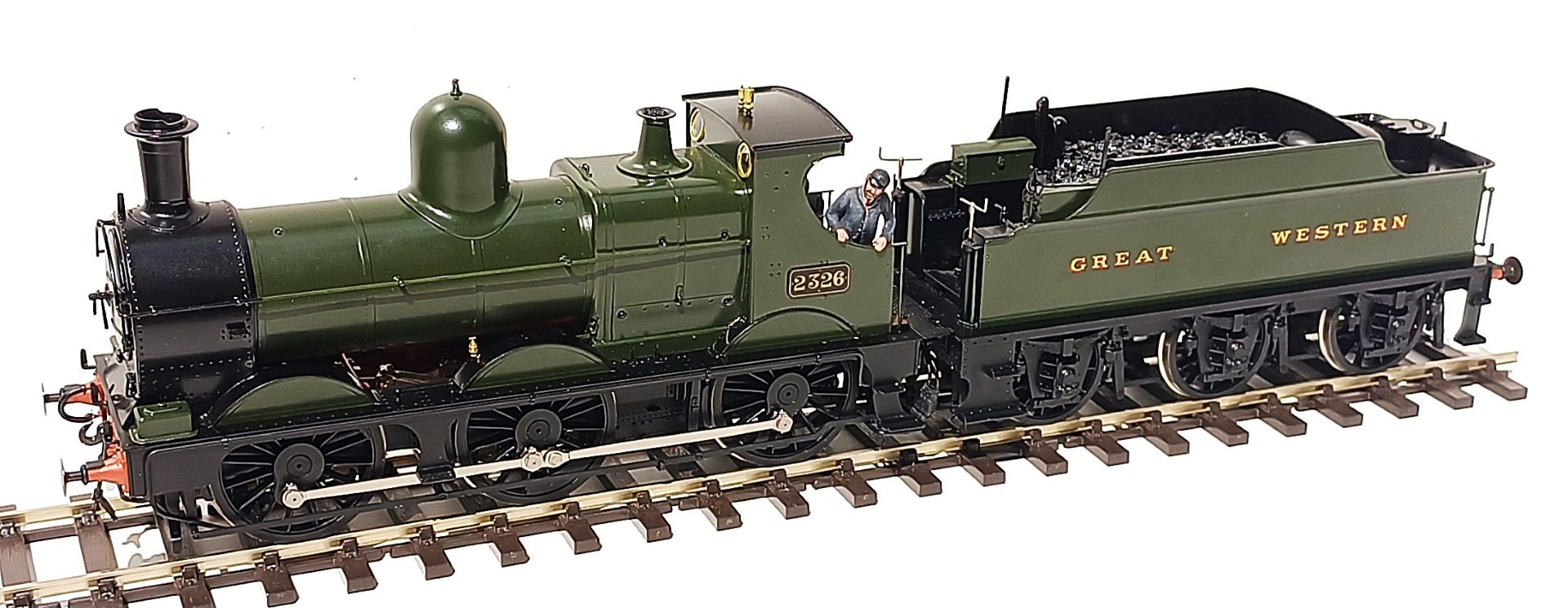
GWR Dean Goods 0-6-0 no. 2326. This fabulous model of a very popular prototype is by the Lee Marsh Model Co. and was constructed with fully working inside motion in South Korea, with DC/DCC control and sound. The build quality and paint finish (cellulose) is second to none and the model, although second hand, is still in mint condition.
To complement the model I have purchased and fitted to the cab, a professionally painted by A C Stadden driver and fireman from the “Hero’s of the Footplate” range, which have been custom designed for the Lee Marsh Dean Single model. As the Dean Single and Dean Goods have virtually the same design of cab I was sure that they would look just as good in this model, and I think they do?
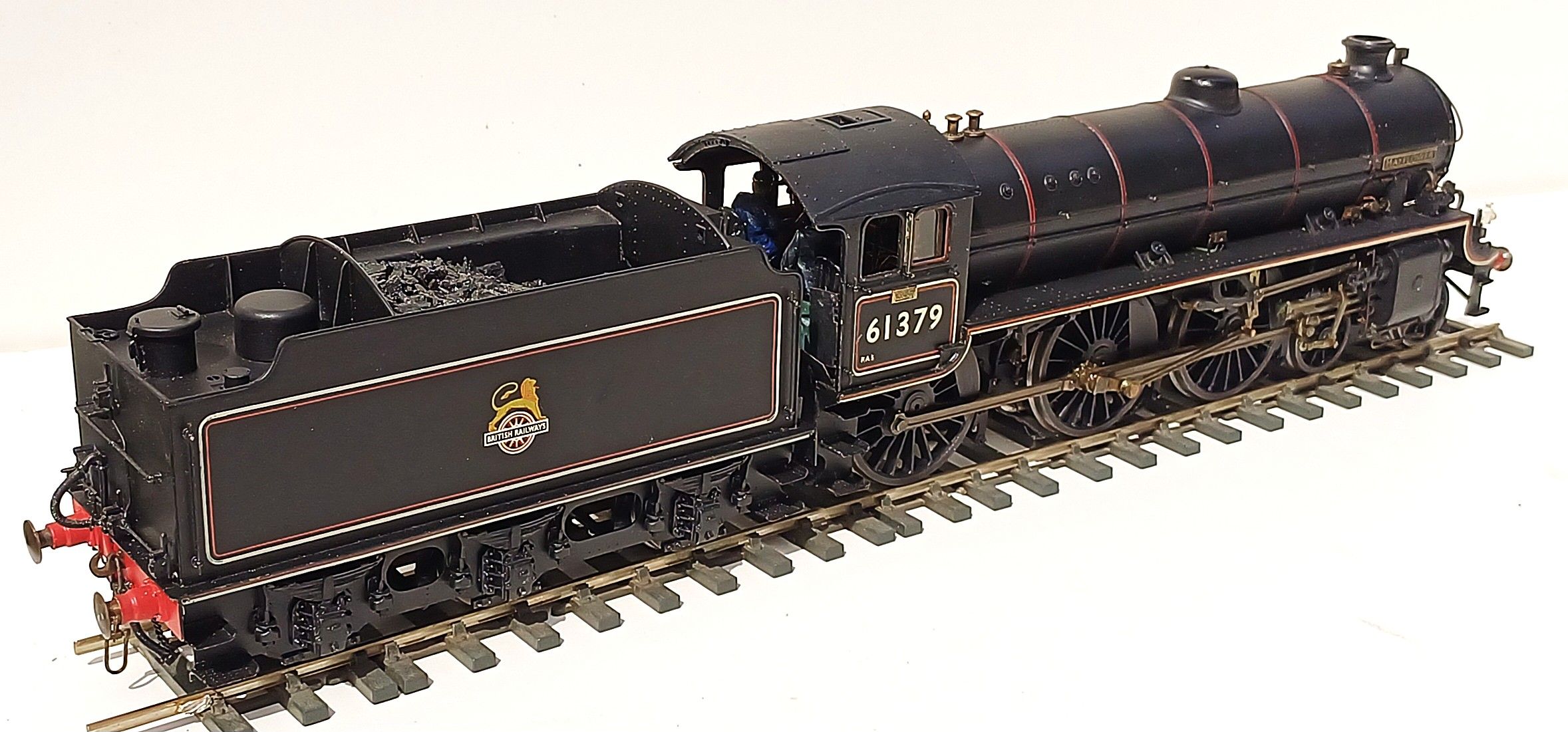
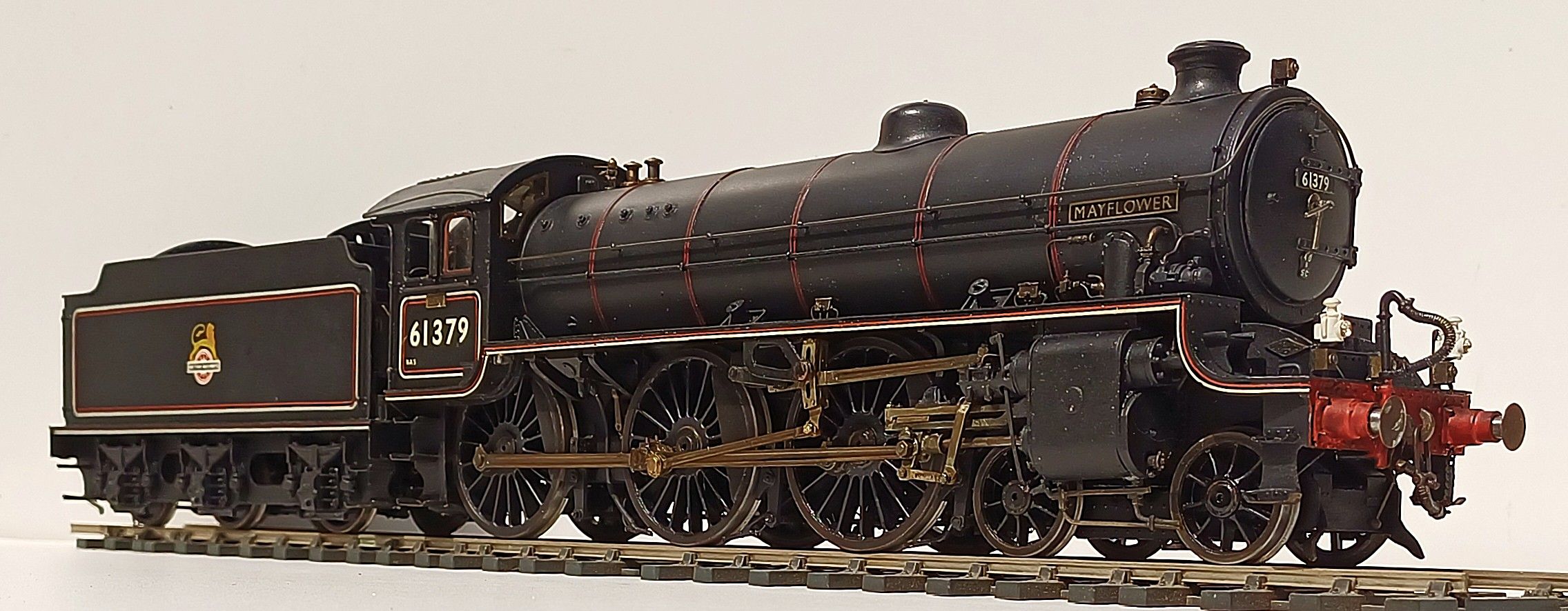
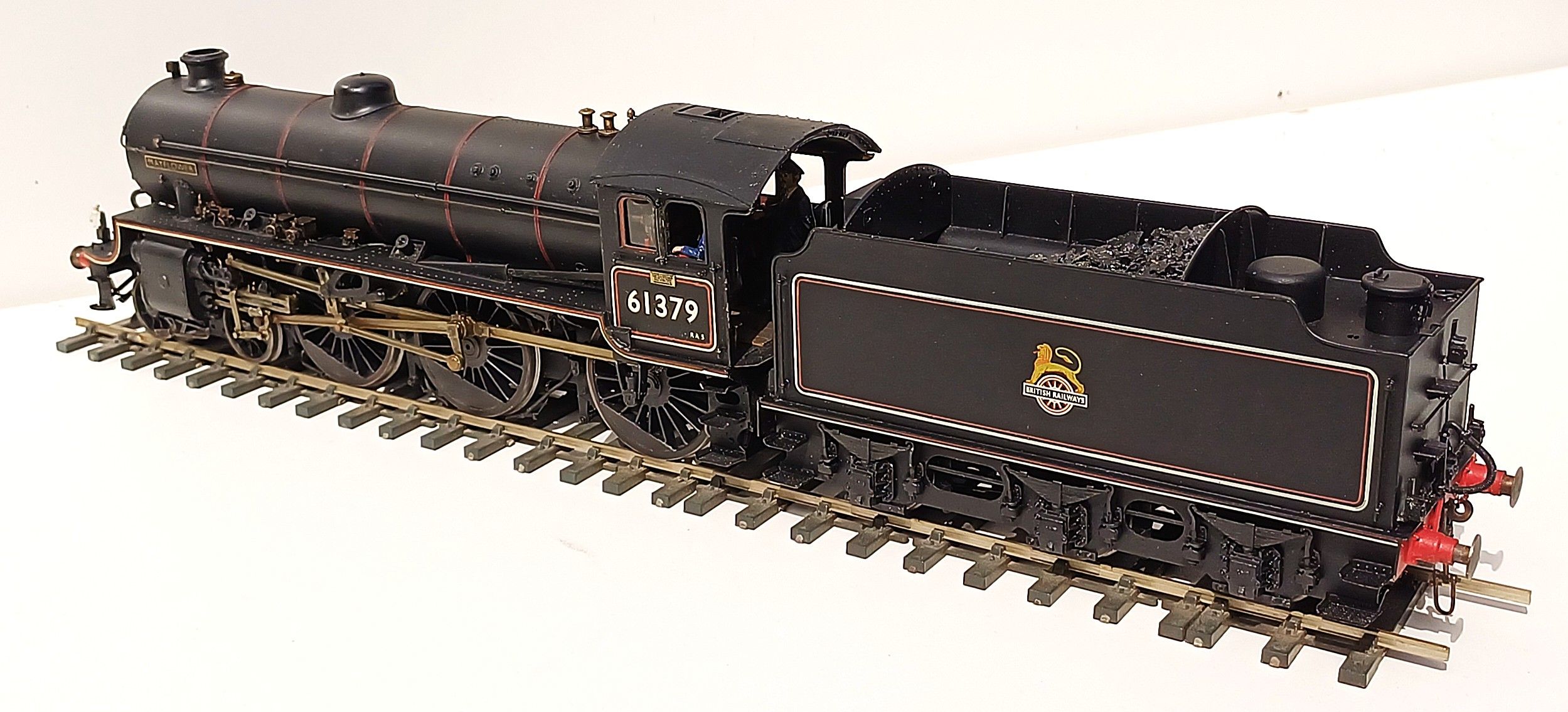
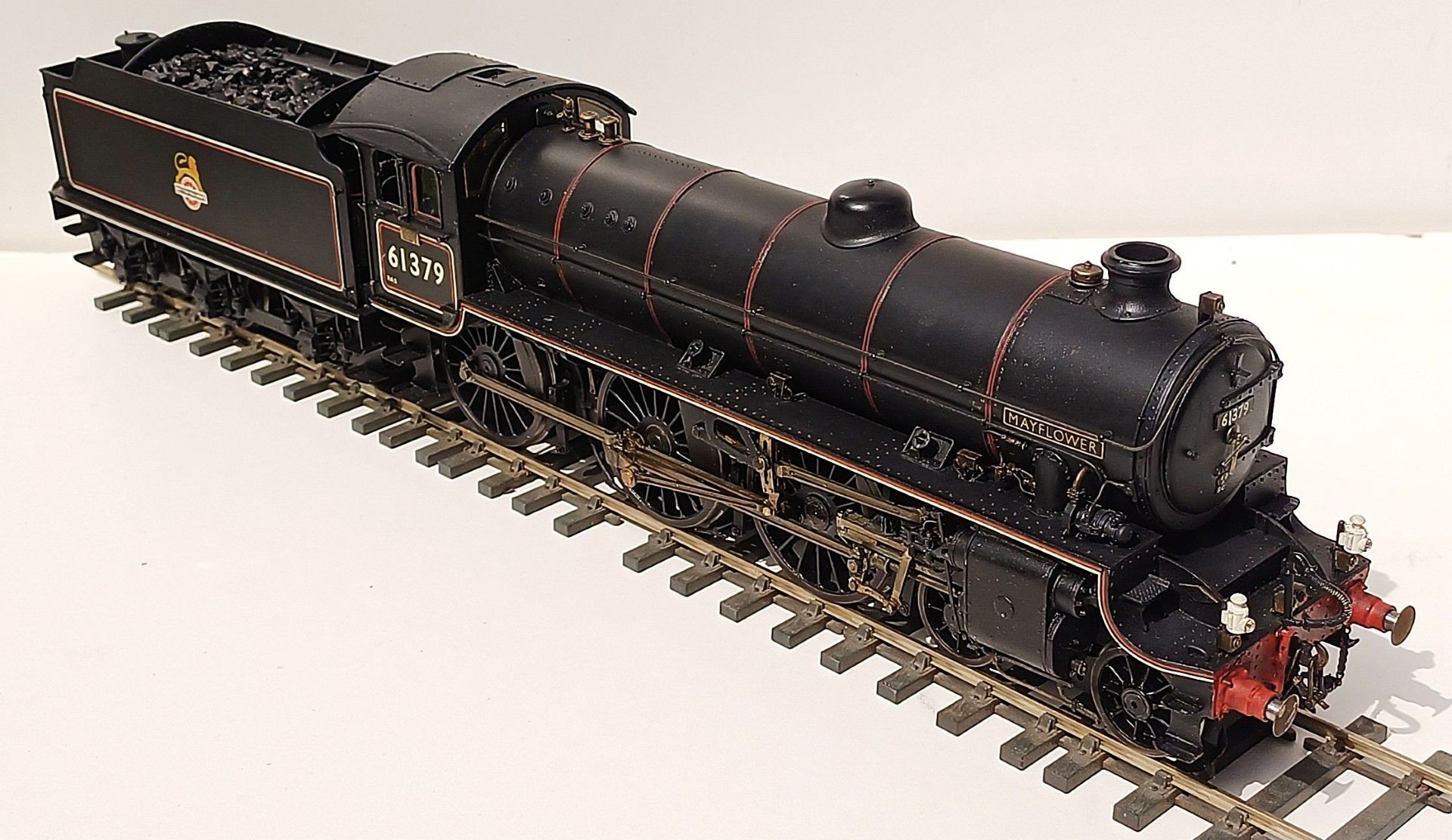
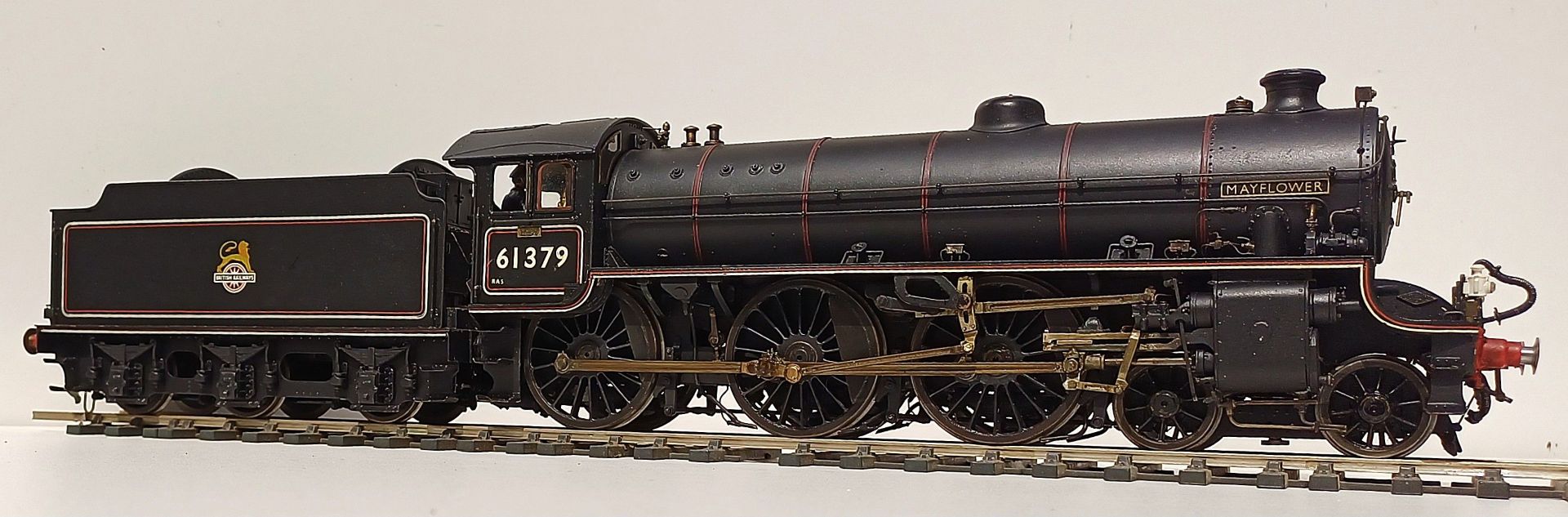
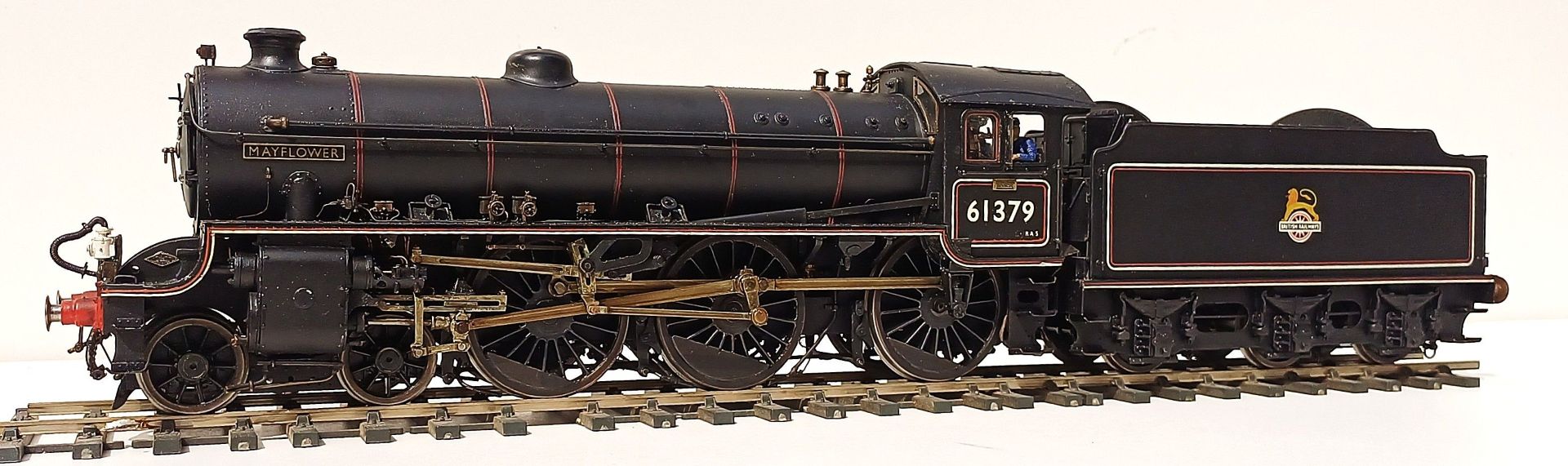
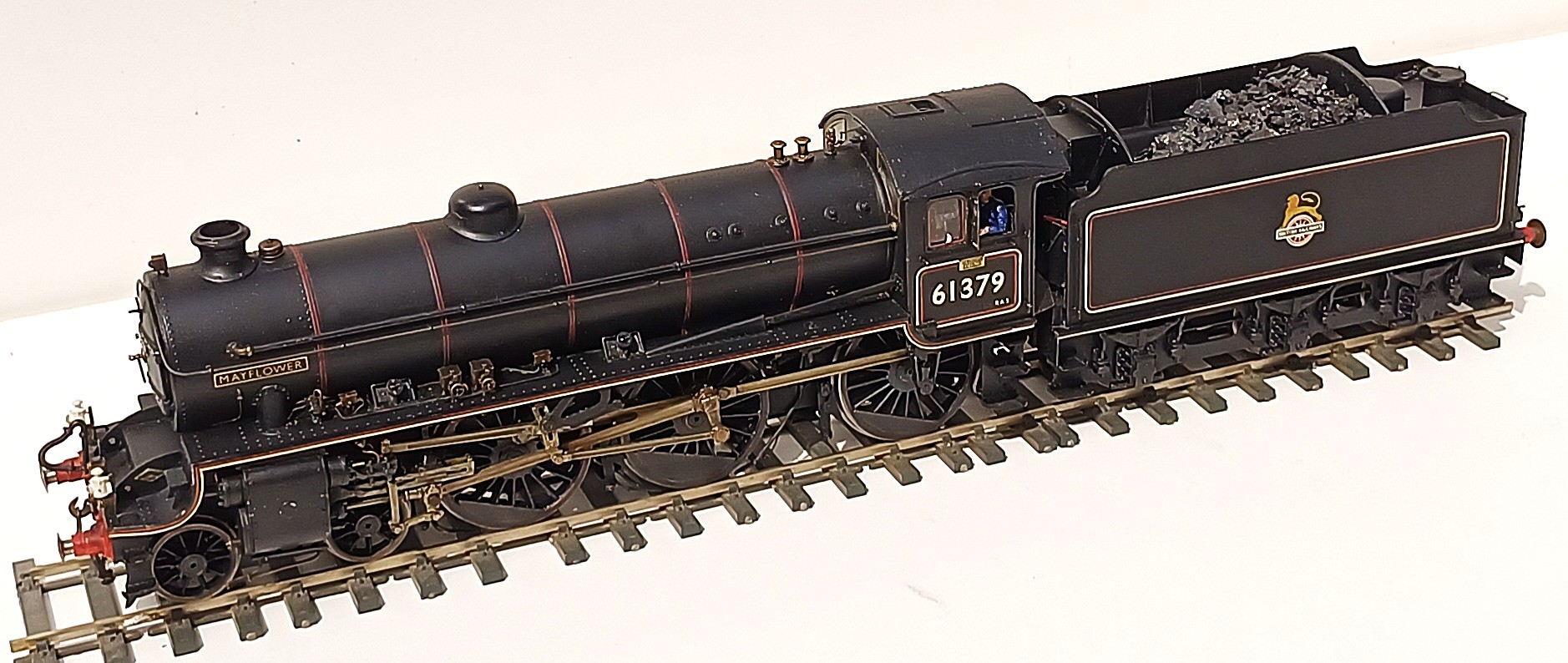

Superbly built from one of the original Walter Hodgson designed Piercy Model Products kits by my good friend the late Graham Jaques and very well painted by him also. Portescap RG7 motor and gear unit, Slaters wheels, plunger pick-ups, opening smokebox door, working lubricator linkage, working reversing gear, nothing was too much trouble for Graham. The model runs like a dream.
A rare model of the only B1 named by British Railways, No. 61379 Mayflower was named in 1951. Mayflower also carried on the cab-sides, a plaque stating “This locomotive was named Mayflower 13th July 1951 as a symbol of the ties between the two towns of Boston and of the lasting friendship between the USA and the British Commonwealth”. It’s well worth stating that I remember Graham, with his eye for detail, commissioning the late Chris Gordon Watford of Severnmill Nameplates to create the cab-side plaques for this model.
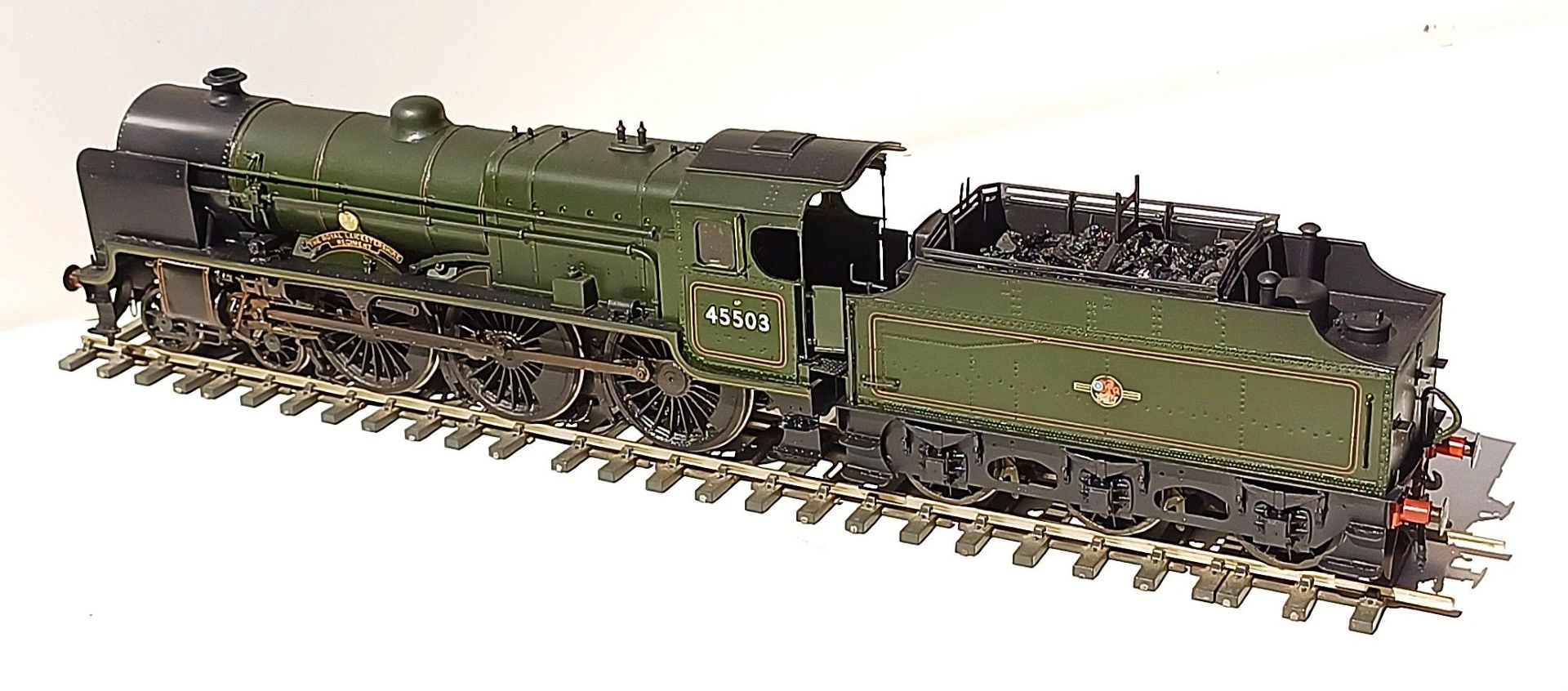
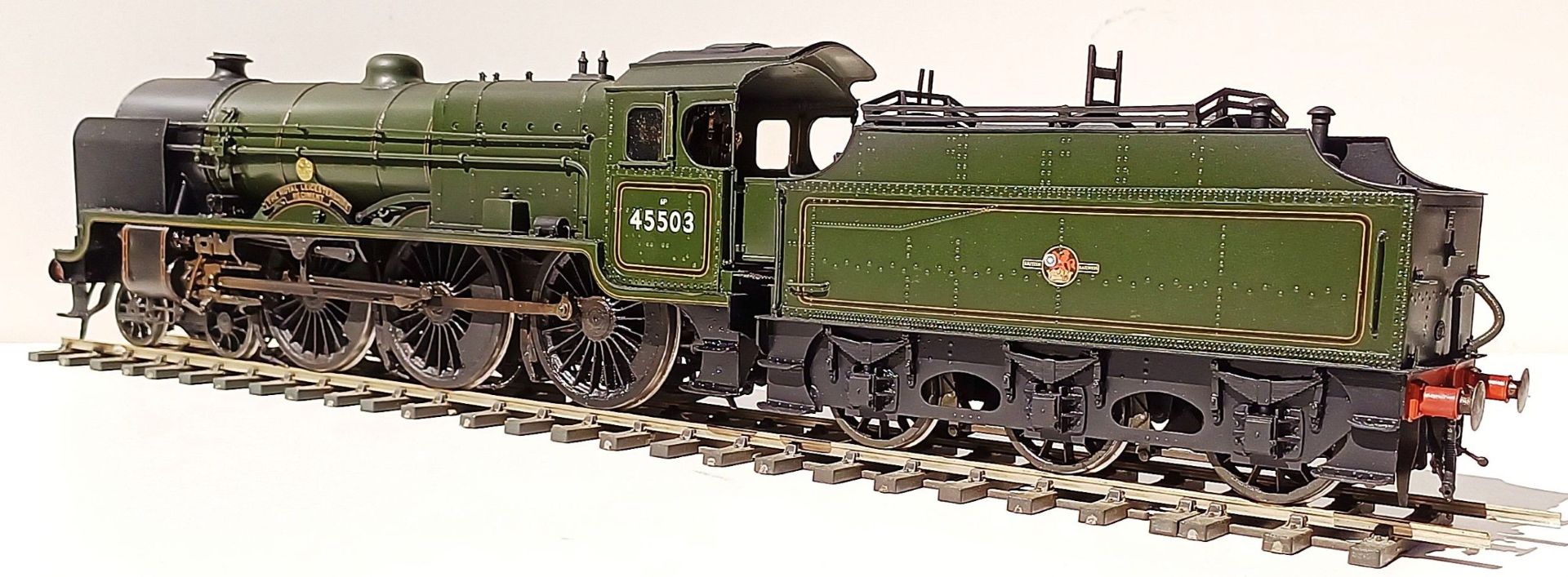
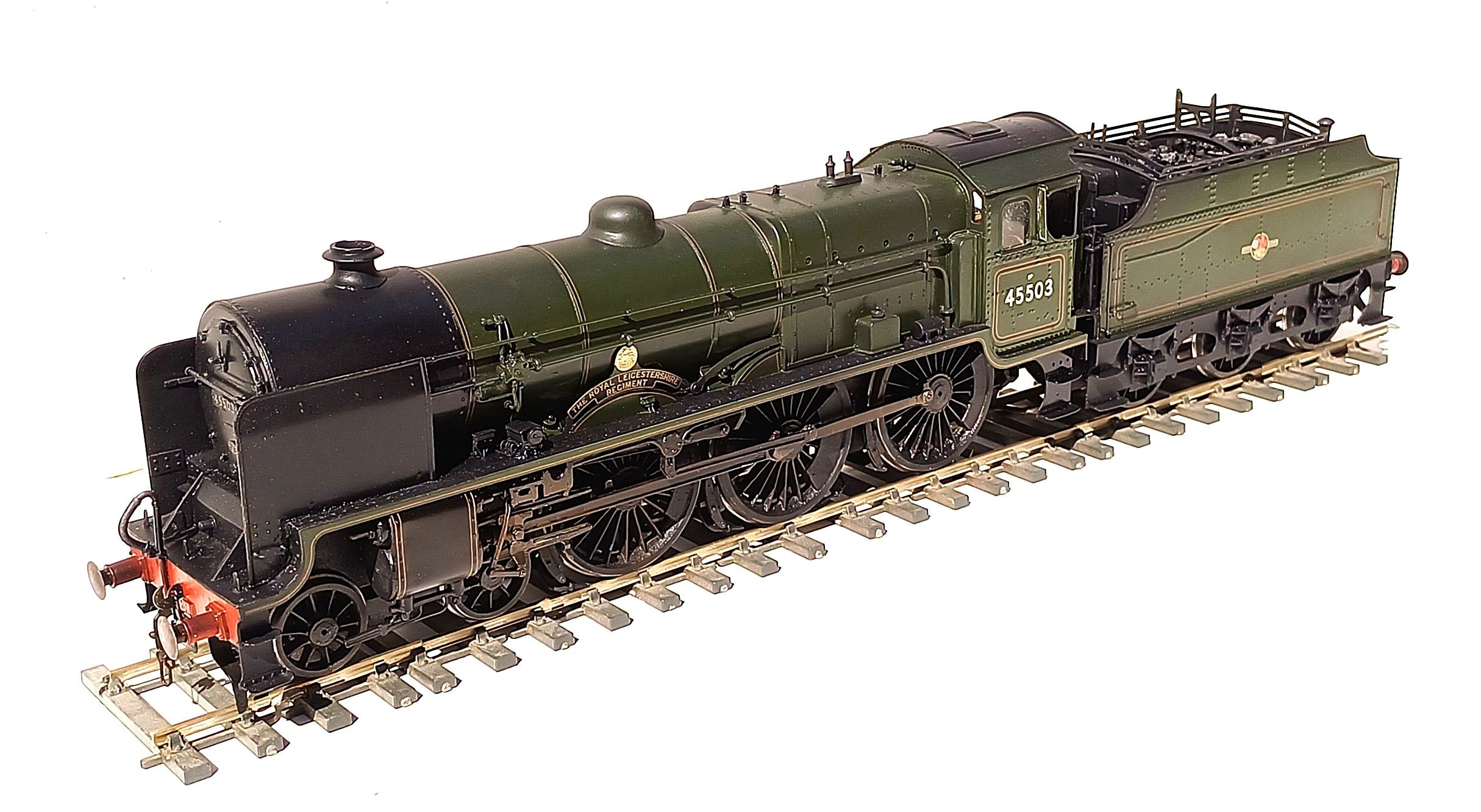

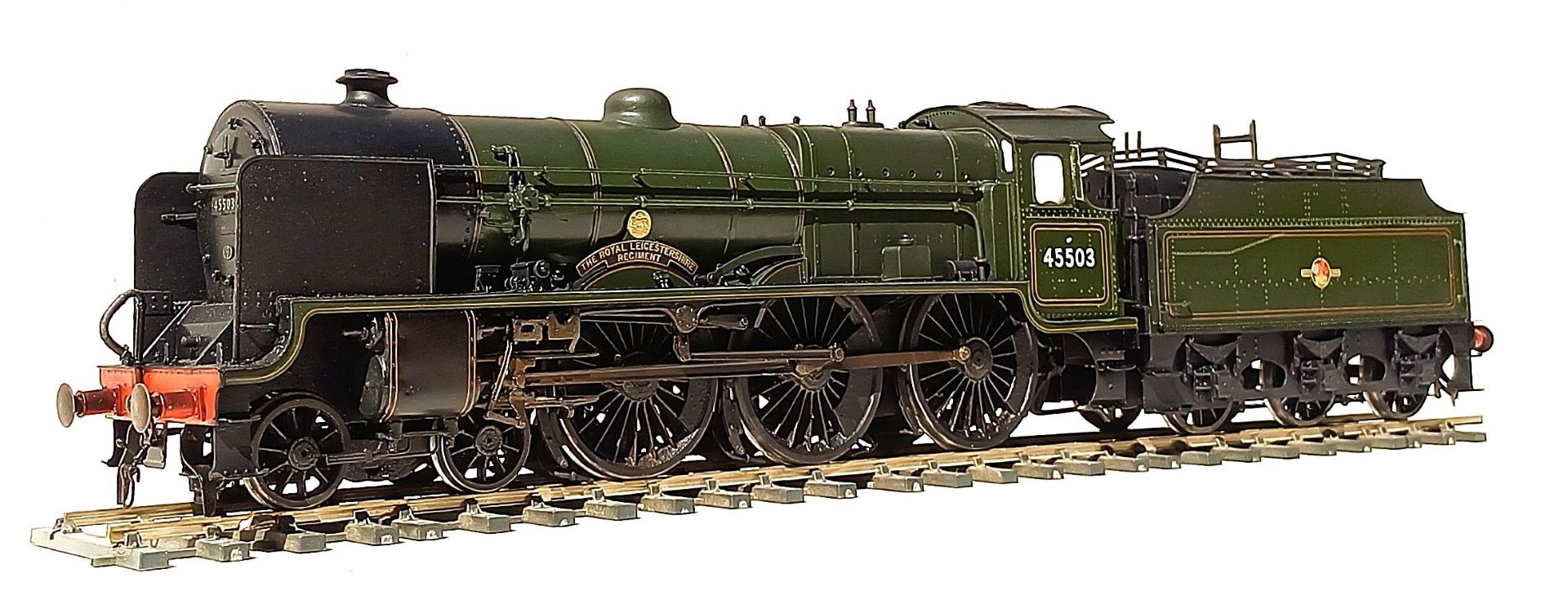
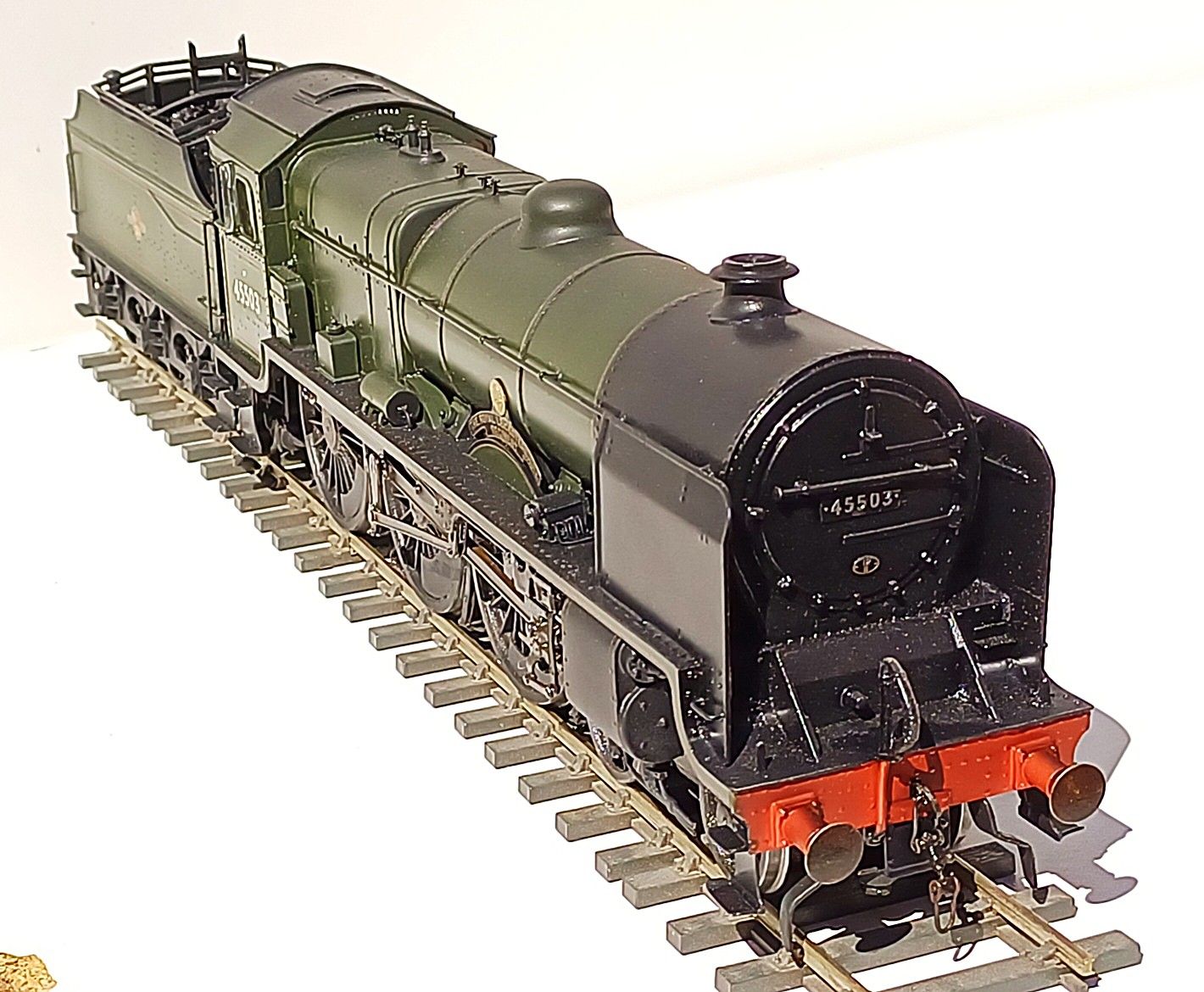
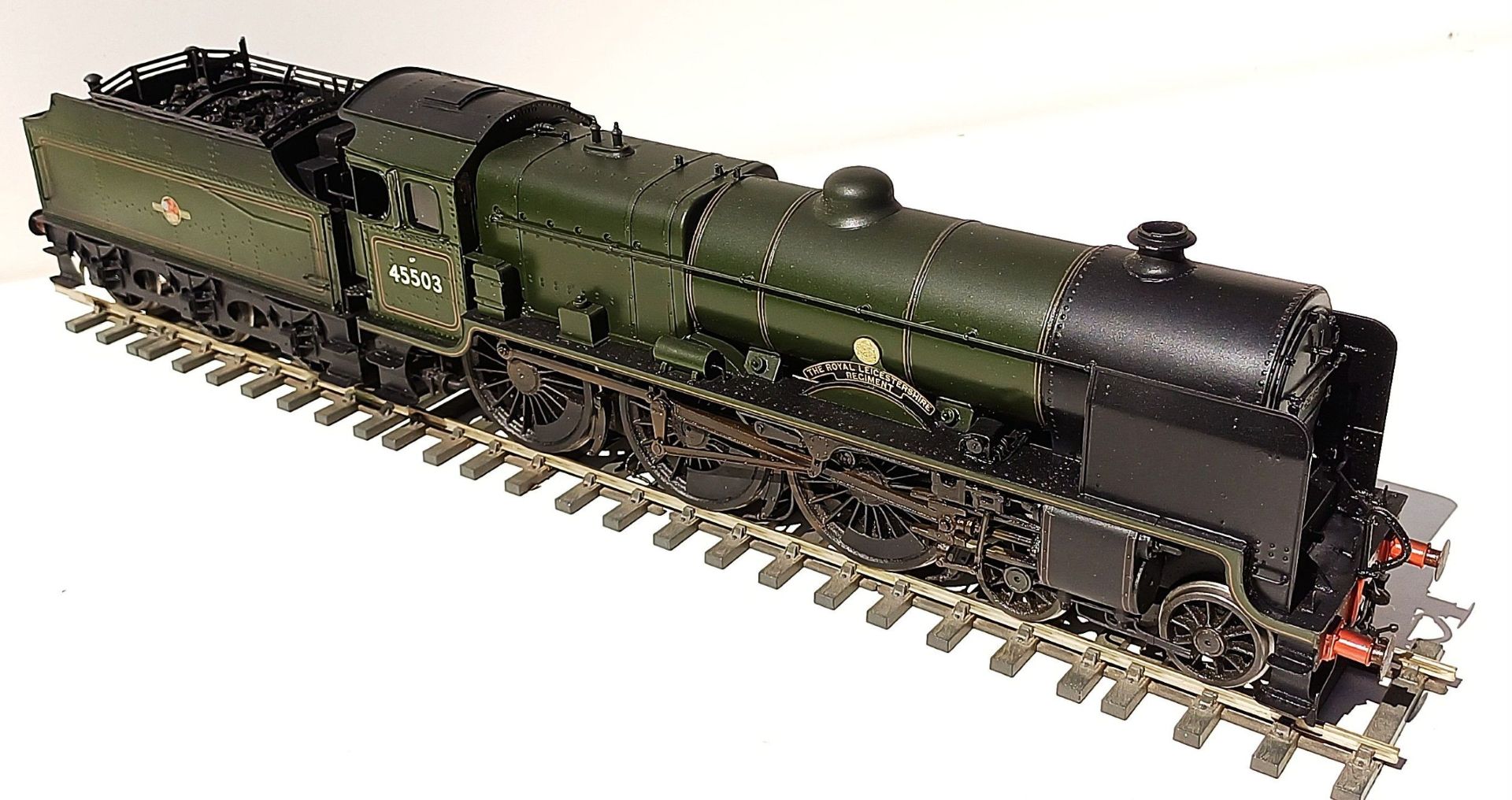
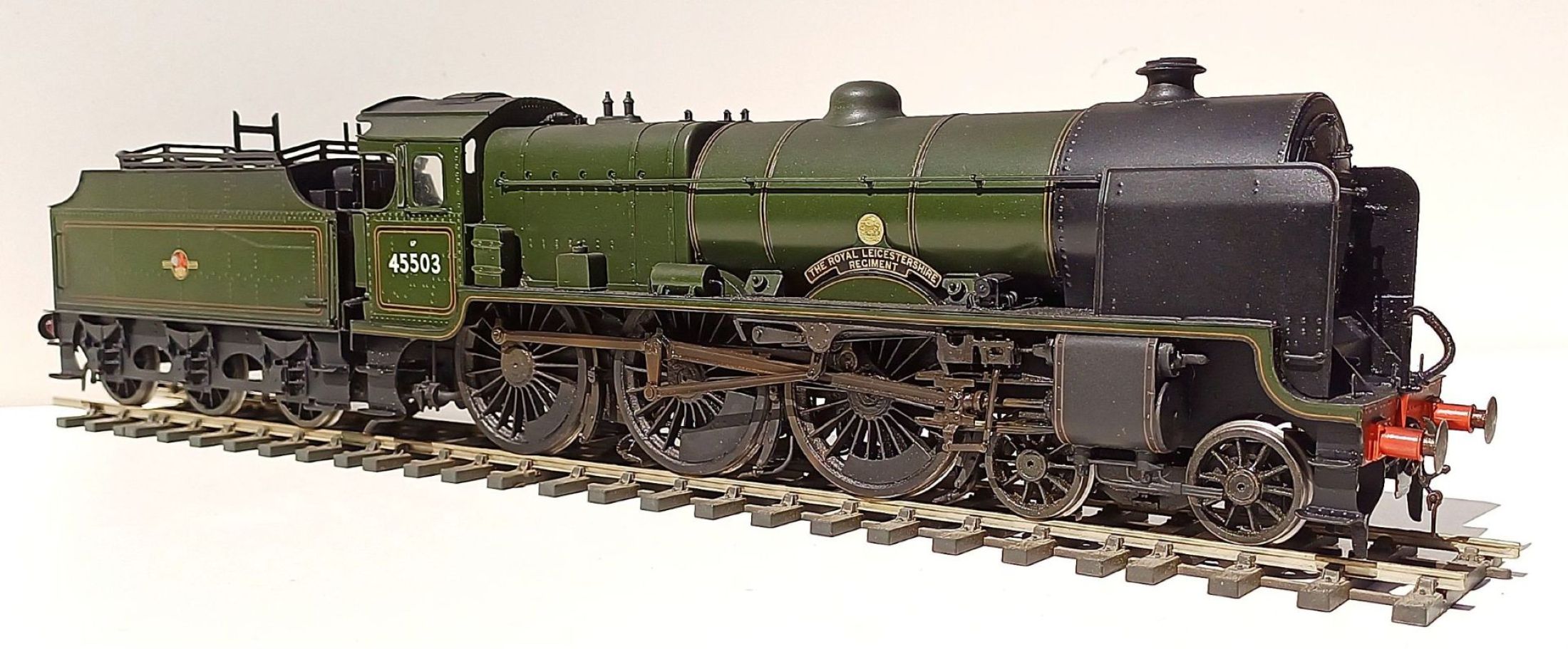
BR (ex LMS) Fowler 6P Patriot class 4-6-0 no. 45503 The Royal Leicestershire Regiment. Another recent auction purchase. This model from the David Andrews kit is powered by the MSC Crailcrest multi-stage gear and motor unit, collecting power from the Slaters wheels and plunger pick-ups. Only minimal repairs and adjustments have been needed, other than a paint strip and repaint by Warren Haywood, to restore an already very well built Patriot to the top level of quality. No provenance as to the very capable builder, unfortunately.