BR (ex LMS) Fowler Patriot 6P class 4-6-0 no. 45504 Royal Signals

BR (ex LMS) Fowler Patriot 6P class 4-6-0 no. 45504 Royal Signals
BR (exLMS) Fowler Patriot 6P class 4-6-0 no. 45504 Royal Signals. The third Patriot that has been added to these pages recently and another recent auction purchase. This model like the other two has been very well built from the superb David Andrews kit. It is powered by the Portescap RG7 multi-stage gear and motor unit, collecting power from the Slaters wheels and plunger pick-ups. Bought unpainted. Very little work, in the way of repairs or restoration has been needed, other than a visit to Warren Haywood’s for one of his magnificent paint and light weathering jobs. Jon Boot takes the credit for the build quality.

Great Western Railway 517 class 0-4-2T no. 572

Scratch built by Brian Broumpton, Alan Harris wheels, painted by Alan Brackenborough, from the Michael Price collection. This site shows that I have had, and sold, four others of these lovely 517 class tanks. All of them well built from the superb Malcolm Mitchell kit that has been on the market for probably the last 30 years. All now restored into working and superb looking model locomotives. But this no. 572, being a Broompton/Brackenborouh masterpiece, will hopefully not be following the others for some years yet.

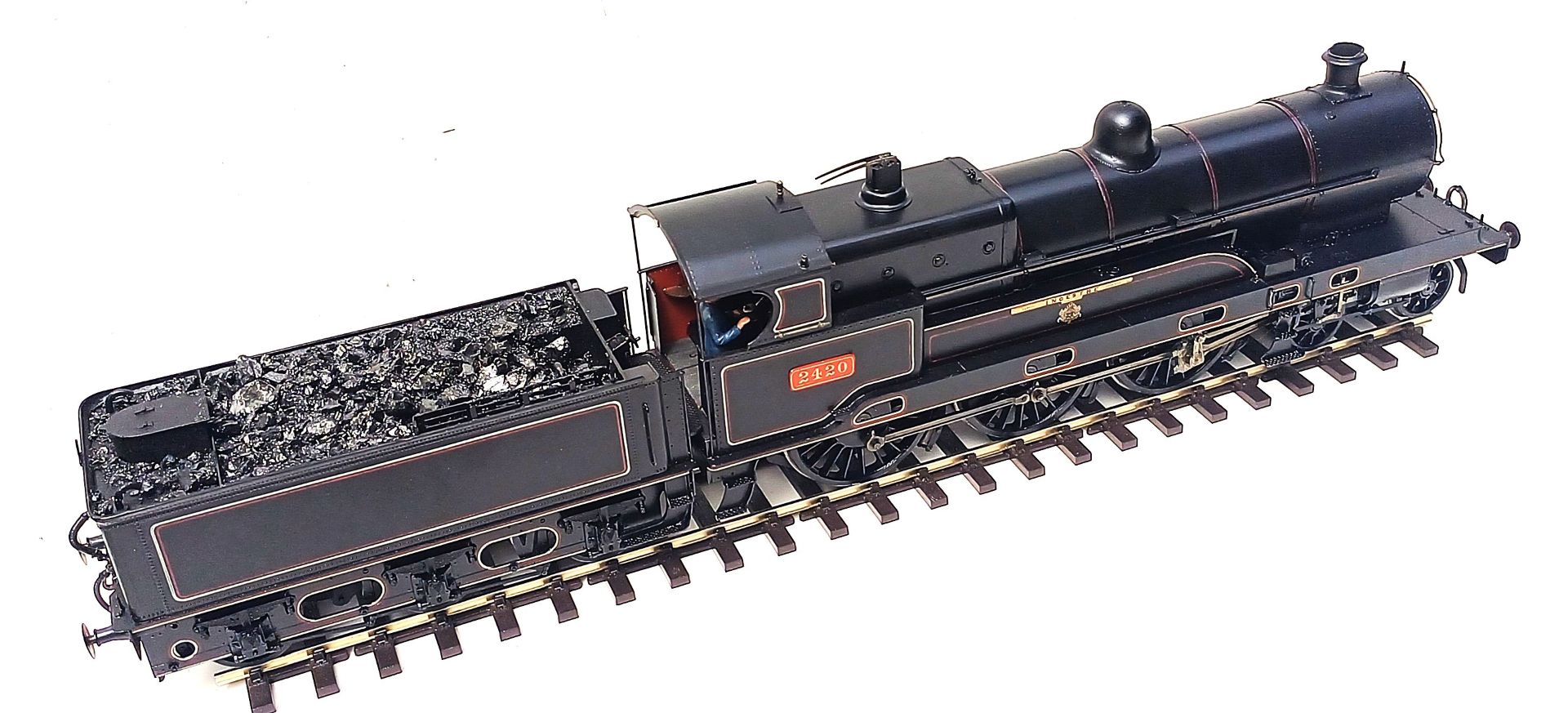
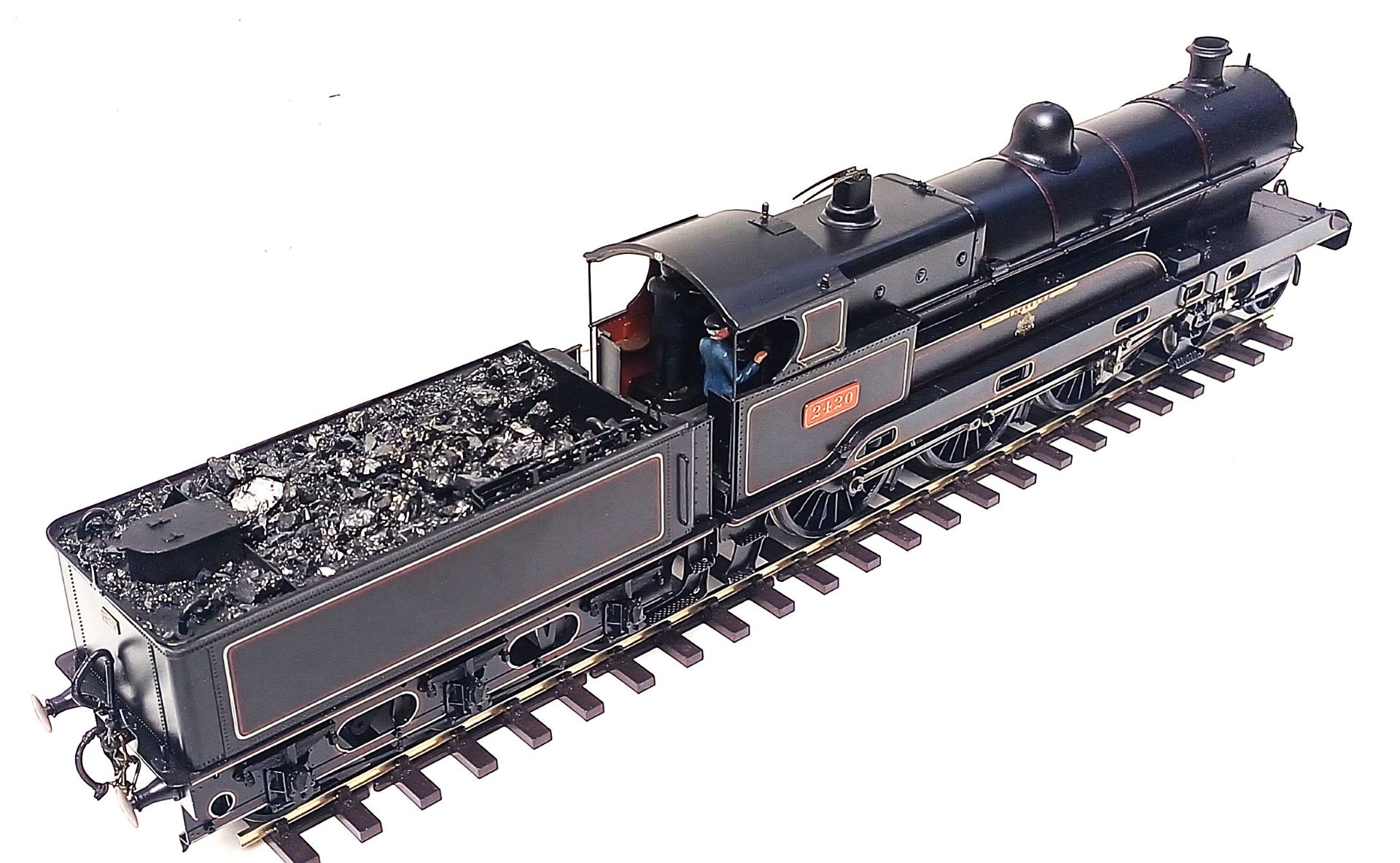
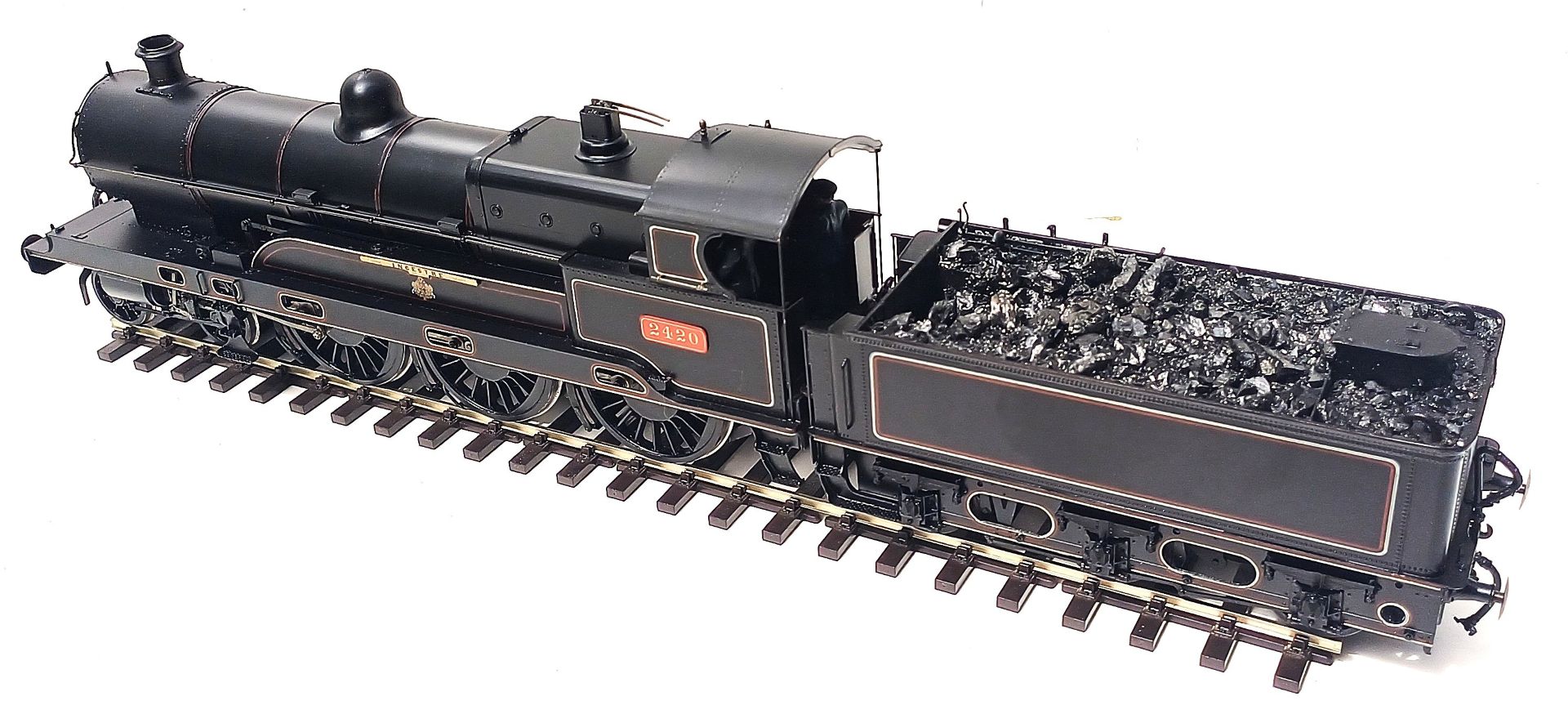
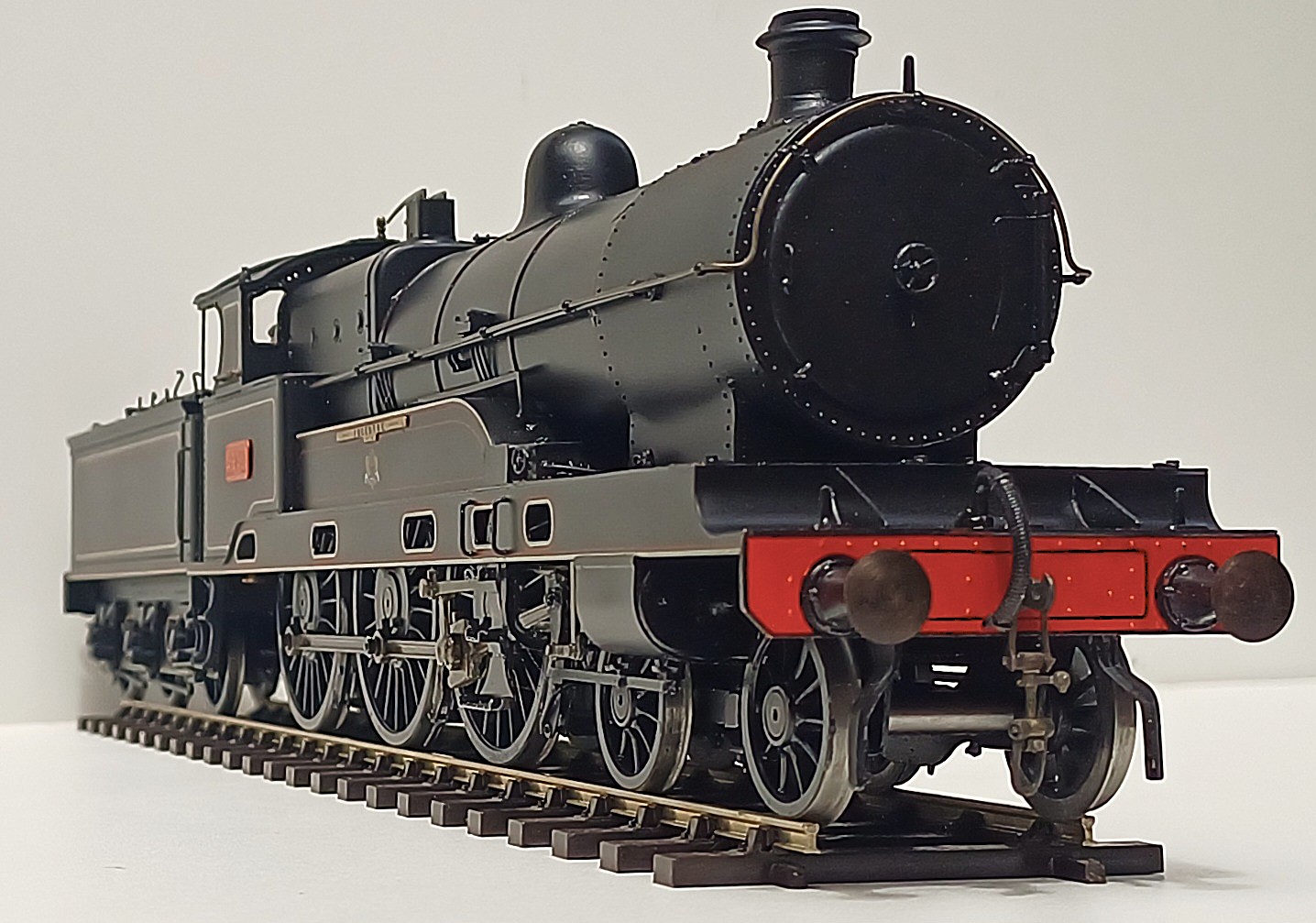
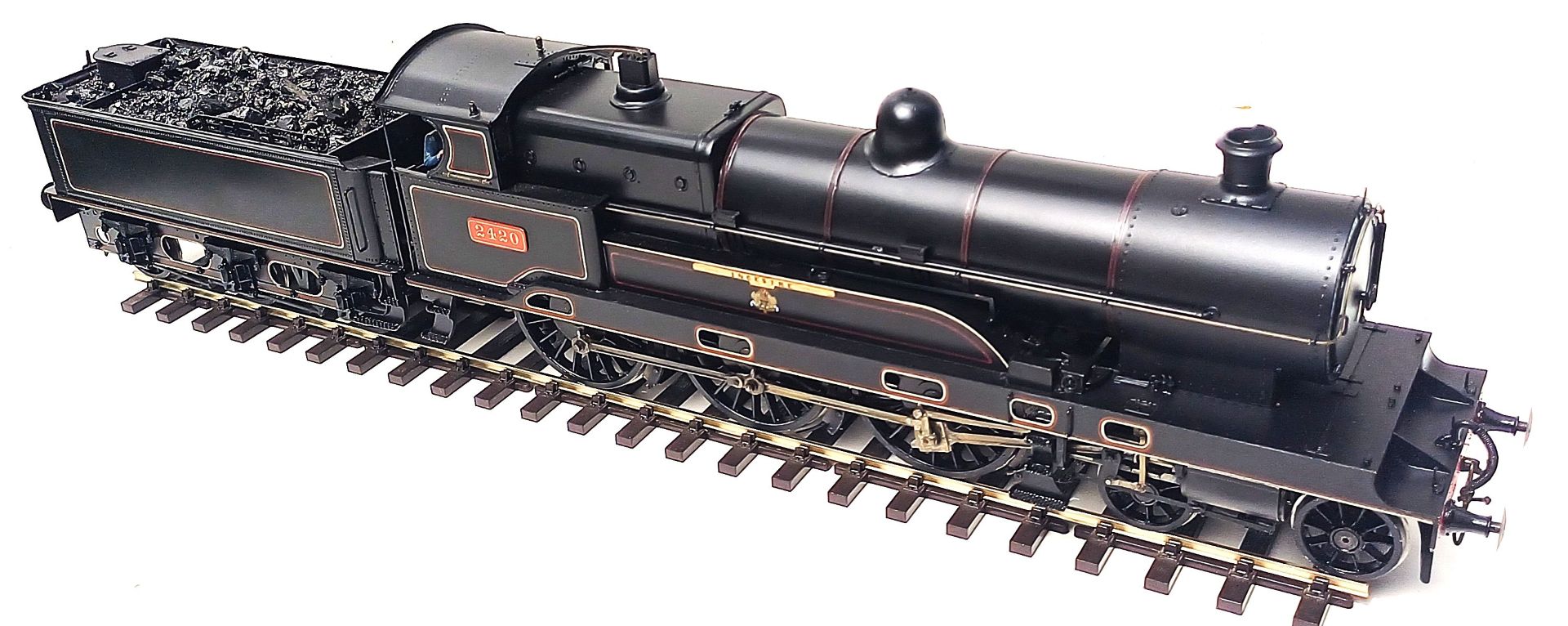
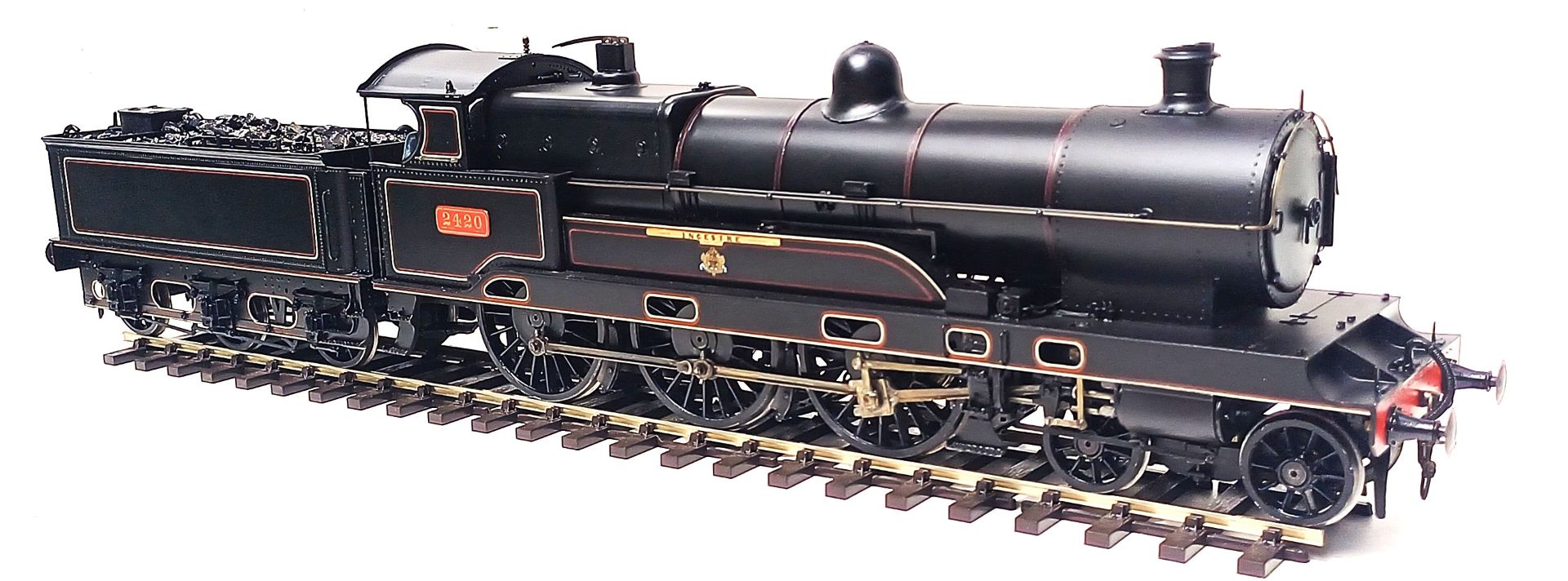
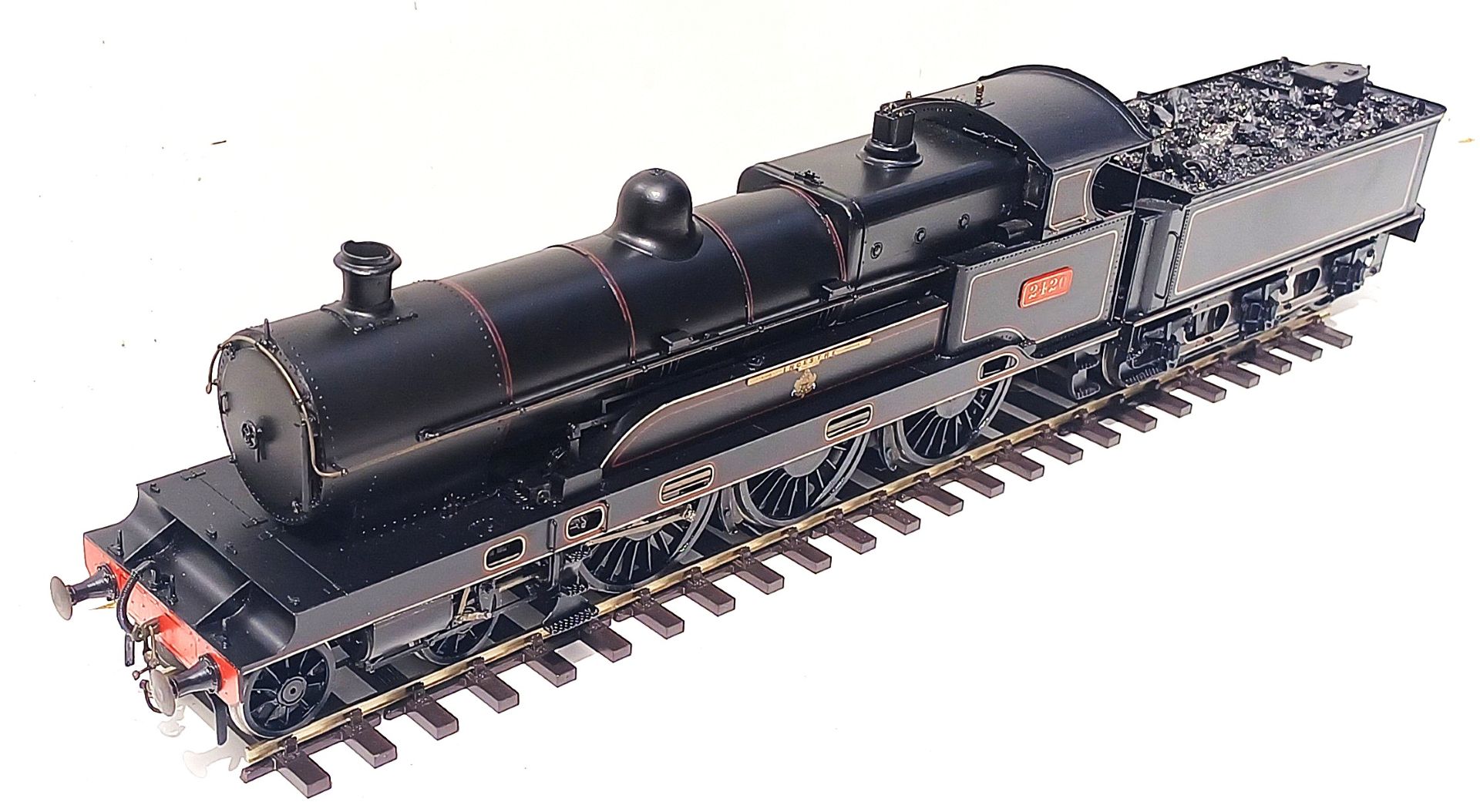
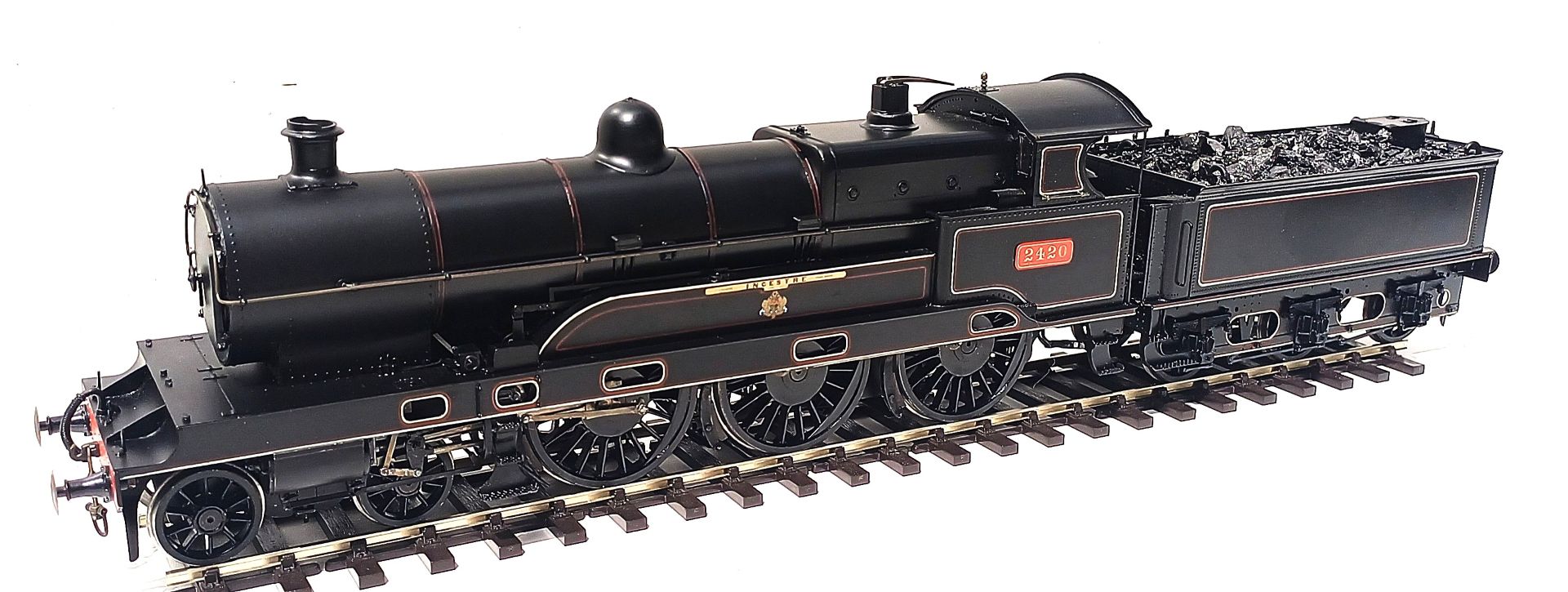
LNWR Bowen Cooke Claughton class 4-6-0 no. 2420 Ingesture

LNWR Bowen Cooke Claughton class 4-6-0 no. 2420 Ingesture. Superbly built with inside cylinder motion and a fully cranked leading driving axle, by Martin Wyatt, otherwise from the superb David Andrews kit. The smooth, quiet and robust Crailcrest motor and gear unit, Slaters wheels, power collection is via plunger pickups on the loco and wipers on the tender. Painted by Ian Rathbone to a very high standard, this model has been produced to a superb standard in every respect. The model is featured on Ian’s website as provenance. https://www.ianrathbonemodelpainting.co.uk/

The RCTS book “L&NWR Locomotive Names” states:
Ingestre Hall was the seat of the Chetwynd family, Earls Talbot, near Stafford.
In 1846 when the LNWR was formed, the first use of the name was on a small firebox 2-2-2.
In 1872 the name was used on a Southern Division 2-2-2 Large Bloomer.
In 1923 Claughton no. 2420 was named. “Ingestre”.

GWR Dean Bulldog class 4-4-0 no. 3453 Skylark

GWR Dean Bulldog class 4-4-0 no. 3453 Skylark. Built to a professional standard from the Martin Finney kit with much extra detailing including fully working inside motion. Plated on the underside “Built by R.J.Merry (Birmingham)” and “Painted by Alan Brackenborough”, giving cast iron provenance. Bob Merry I have known for almost as long as I have been modelling. He and Morgan Lewis took me under their wing, taught me about quality and we became friends. I have had one of Morgan’s models https://www.7mmloco.co.uk/?s=sherwood+forester&submit=Search for many years. Now I have one of Bob’s as well. Top quality paintwork. Top quality Alan Harris wheels, top quality ABC gear and motor unit, top quality plates by Severn Mill, and my preferred American method of current collection. Another stunning GWR model, one of many that are being sold by Footplate, from the collection of John Glaze.

GWR Collett King class 4-6-0 no. 6026 King John

GWR Collett King class 4-6-0 no. 6026 King John. I visited Richard at Footplate in Nantwich yesterday to collect a model of a Hall class, but came away with a King. I’m hoping that Rich doesn’t mind me using a couple of his images to create this posting. It will only be on a temporary basis until the weather improves and I can get some decent images myself to do justice to this stunning model. Undoubtedly built from scratch by Peter Roles in January 2007. The model collects current on the American principle. This is achieved by using insulated driving wheels on one side of the loco and insulated wheels on the opposite side of the tender. The locomotive and tender are coupled together by an insulated draw-bar. A fly-lead connected to the motor, plugs into a socket in the tender chassis. Plated on the underside “Built by R.J.Merry (Birmingham)” and also “Built by Peter Roles”. Cast iron provenance and two magical names of superb quality model makers. I am not sure why this model had to be finished by Peter Roles, but, far from it, the quality has not diminished. As always superbly painted by Alan Brackenborough in the unpopular, (why? It is part of the history of the GWR) shirtbutton livery. Top quality Alan Harris wheels, top quality ABC gear and motor unit, top quality plates by Severn Mill. One of many models of this quality that are being sold by Footplate, from the collection of John Glaze.

GWR Churchward Saint class 4-6-0 no. 2908 Lady of Quality

GWR Churchward Saint class 4-6-0 no. 2908 Lady of Quality. Built from the DJH Piercy kit, with a chain drive gear unit, Slaters wheels and plunger pickups to the driving wheels and (belt and braces) wiper pickups to the tender wheels. Since the kit was released some years ago I had admired the good looks of the loco and quality of the kit, so when a part built kit appeared on Ebay at a reasonable price I bought it, tender ready built, Severnmill “Lady of Quality” nameplates included. I have now recently had Bob Walker, of the Poachers group, to complete the build for me, and what a good job he has made of it. Superb painting by Warren Haywood adds the finishing touch. The full size Lady of Quality circa 1935, was one of the early Saints with lever reverse and stepped frames at the cab end. Bob has modified the standard kit to incorporate these unusual features superbly.

LNER (ex GNR) Ivatt class D2 4-4-0 no. 4390

LNER (ex Great Northern Railway) Ivatt class D2 4-4-0 no. 4390. Going back around 30 years to my early days of 7mm modelling, I joined the East Midlands O gauge group. In those days and with thanks to Nelson Keen and Les Hargreaves, we had test track running sessions at Silverdale in Nottingham (we still do), Nuthall and Willington Power Station. One member that I remember well, because he always ran lovely models, was a chap by the name of Tony Evans (now sadly deceased, I’m sure) and one of those models was an LNER D2. I am now lucky enough to own that model. Built from scratch with superb inside motion by Peter Everton, (his builders plate “Peter Everton Wickersley Made in England” is on the underside as provenance) and undoubtedly painted by Alan Brackenborough. “J.A.Evans” is also painted on the underside of the loco and tender. A top quality model with cast iron provenance and personal history to boot. It has been around the houses quite a bit, two other owners at least as I know of, but she is still in superb condition with no build defects and just a small paint defect, virtually unnoticeable on top of the running plate left side.

BR Peppercorn A1 class Pacific no. 60114 W.P.Allen

BR Peppercorn A1 class Pacific no. 60114 W.P.Allen. This lovely model is from a kit, factory built by DJH Grandspot. However, in my opinion it was a case of the tail wagging the dog, (or in this case the client telling the builder) as it was built as 60116 Hal O’ the Wynd, and I bought it as that. However, on research, Mr. Peppercorns 60116 was not named when originally built and wasn’t named until the loco had been repainted in BR blue livery. I like my models to be as proto-typically correct as possible. The only A1 class loco to carry a name whilst it was in apple green livery was 60114, hence why this model found its way into the works to be renumbered and renamed as you see it here. Talking of livery, 60114 carried apple green between when built in August 1948 and November 1949, when he was repainted in BR passenger blue. The warm and sunny weather when the model was photographed has made the livery look more like Muscat green, see the loco “Northern Rock” on the R&ER, a livery that I think looks fabulous on that loco, but not quite right for 60114, so perhaps re-photography on a not so sunny day, or a light weathering may be required? Mr W.P. Allen was a high ranking trades union official of the time. Apologies to the man, but I prefer the name Hal O’ the Wynd, just as the original client did, obviously. Also noteworthy are the curly topped sixes to the number. DJH, I’m sorry to say used straight topped sixes, so they had to be corrected also.