LMS Stanier Jubilee class 4-6-0 no. 5703 Thunderer

Model engines and locos



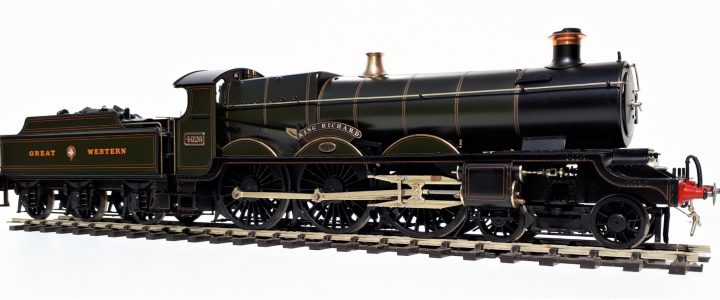
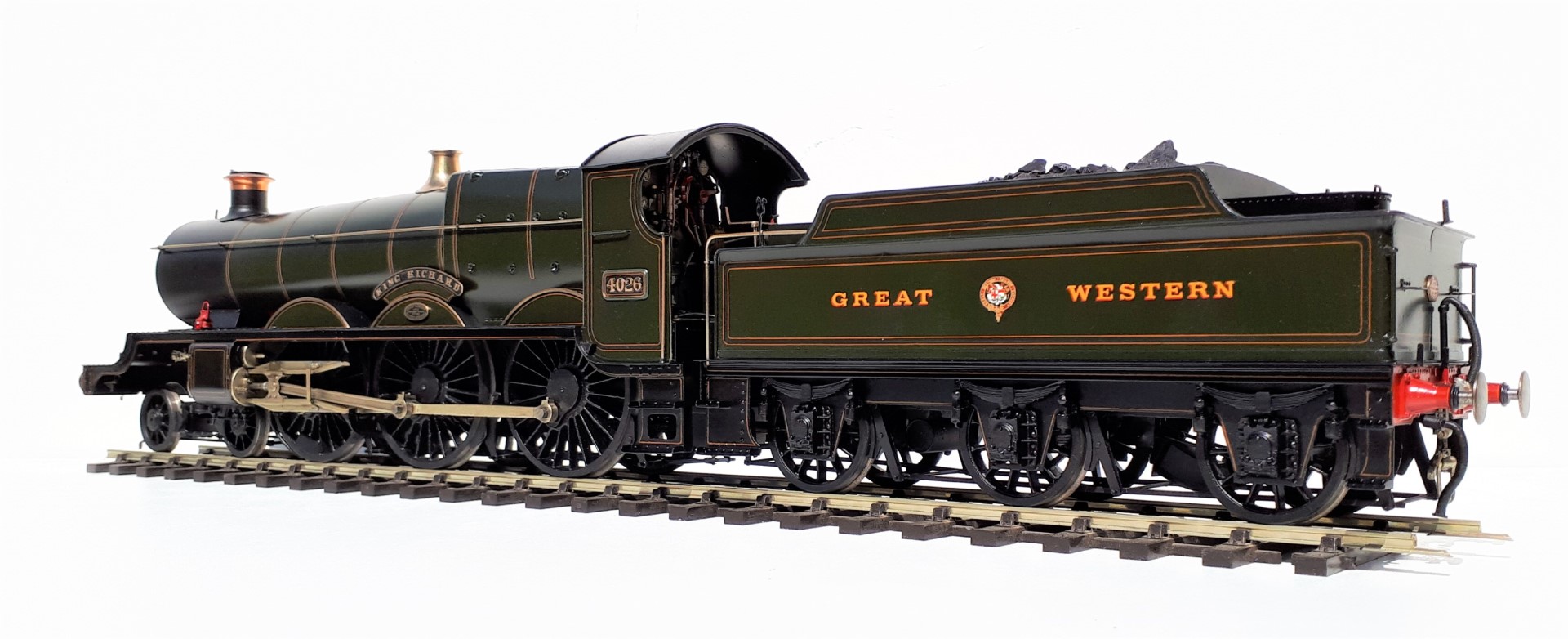
I was lucky enough, to firstly find and again to be able to buy, this very fine model at a Special Auction Services auction in Newbury. It’s condition was not great, with minor rusting to all of the wheels and other bright-work a little tarnished. Additionally two small repairs have needed to be made to the working of the inside motion. All’s well now though. Of more importance to me was that there was no damage to the paintwork.
These are typical of the risks needed to be taken when buying in auction. It goes without saying that you do not get a chance to test the working of models before bidding. You are lucky if you get a box to carry it home in. Therefore confidence in your own ability to be able to repair any faults is obviously a necessity.
In the same auction there were many more fine models, including my Experiment and Precursor class models. There were also two other Stars which I didn’t buy – Dog Star and Princess Helena. Both of the same original build and paint quality as King Richard, although Dog Star looked to have had a slightly tougher working life. I wonder if the buyer of those models is as pleased as I am with this? I wonder if he had any surprises when he got them home and placed them on the track? Has he had to make any repairs? More interestingly for me, does he know who the builder is? The previous owner, now deceased, was a man by the name of Peter Tray, who apparently lived in Ireland. If anyone reading this has any further knowledge of this model, eg. who the builder is, please let me know.
Princess Helena was missing a nameplate. That doesn’t sound a great issue as a replacement can easily be acquired and stuck on with superglue. But the nameplates on these models were cleverly designed and mounted to the splasher with a slot and tab fixing of great craftsmanship. A real shame to have lost one and that was the only reason that I chose to go for King Richard instead.
These models, clearly came from a true connoisseur of model trains and an avid enthusiast of the GWR and L&NWR.
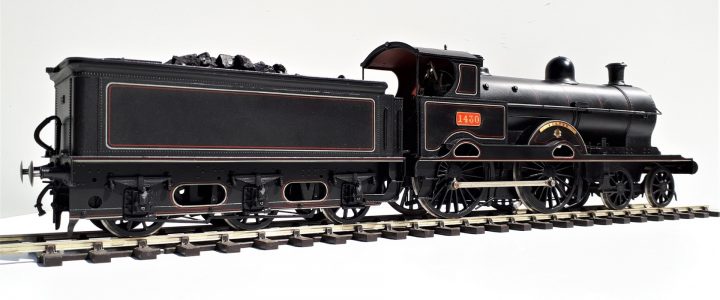
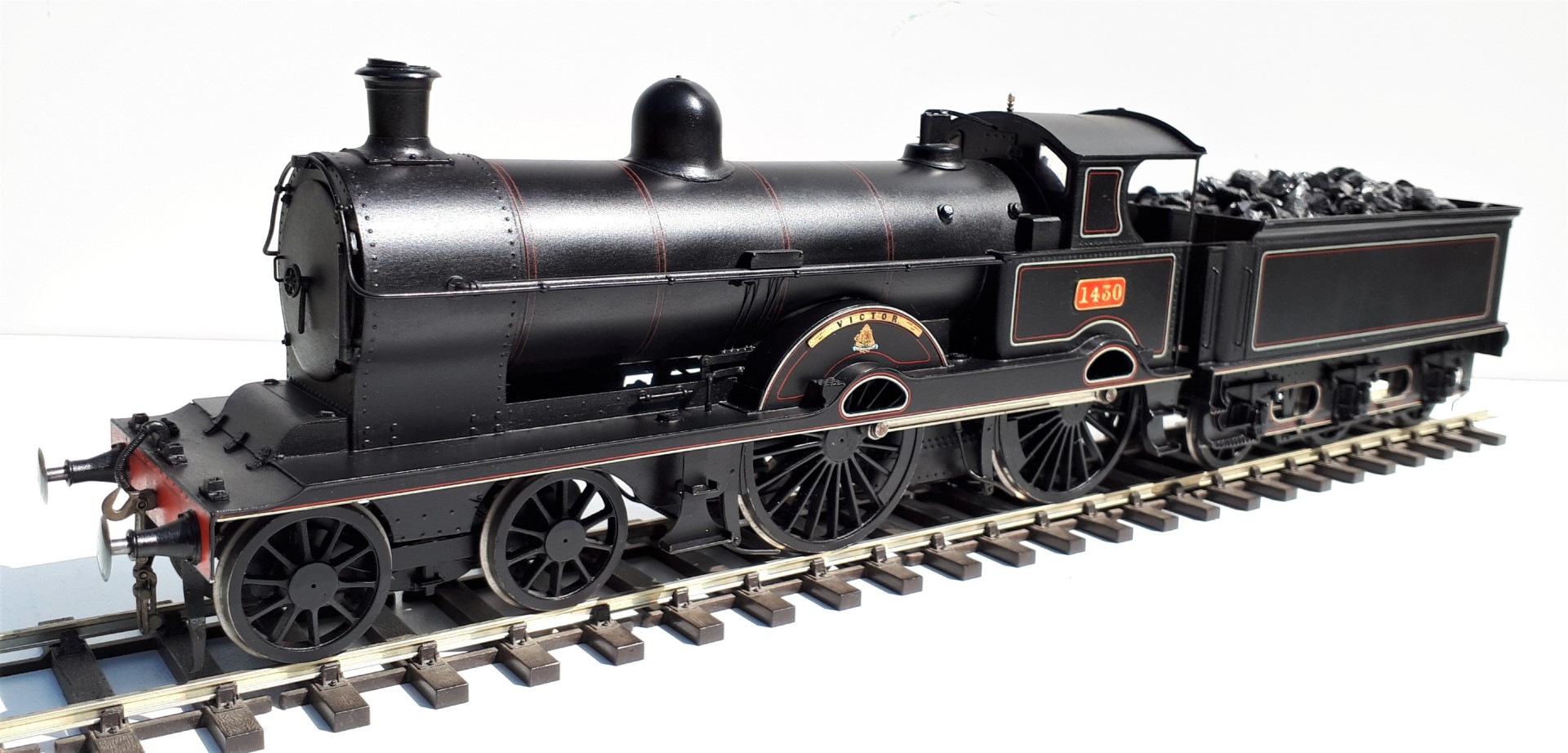
For a further image of this loco follow this link


Built and painted, using PC lining transfers, by myself. When I started O gauge modelling I soon set myself a target to build a Crab, one of my favourite locos. As soon as I heard of the Chowbent kit I had to have one. Over 20 years later and I have not been disappointed. Lots of people complain about the narrow tender, but I think it adds to the character. As does the high running plate over the inclined cylinders. The paint is starting to look a bit worn, but it is still a great livery and she looks a treat hauling my train of of six Peter Cowling LMS series one coaches. Portescap motor and gears, with fused protection. Current collection is by the American method, where the loco collects from one rail and the tender from the other. The insulated Slaters wheels have been shorted by thin wire behind a spoke on one or other side of the loco and tender. An insulated drawbar and fallplate is needed with this system and in my experience, with care, it works very well.
These very useful locos were designed by George Hughes, Chief Mechanical Engineer of the London Midland & Scottish Railway. His background was with the Lancashire and Yorkshire Railway and they were developed using L&YR practice. In 1925 Henry Fowler, previously of the Midland Railway at Derby, succeeded Hughes as CME and he tried to have the design changed to use Derby standard parts, but because the build process was so advanced, only the tender and some boiler fittings became the only obvious changes. Production commenced at the L&YR Horwich works and L&NWR Crewe works in 1926. A total of 245 engines were built, five of which were experimentally fitted with Lentz valve gear in 1931. In 1953 that was replaced with Reidinger valve gear. Otherwise the class remained virtually as designed throughout their thirty plus year life. No. 2876 was built at Crewe in 1930 and withdrawn from service in 1962.
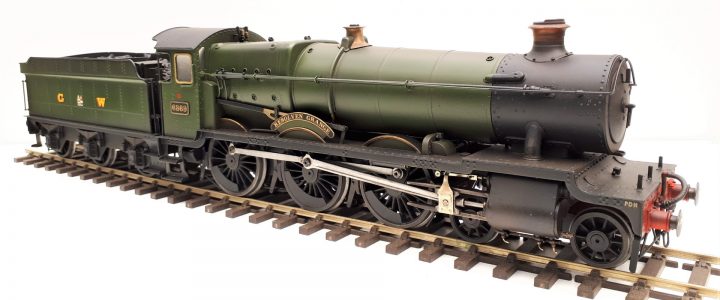

The Grange class locomotives were designed by Charles Collett and built at Swindon between 1936 and 1939 as replacements for 43xx class Moguls. For comparison with one of these locos, no. 4302, follow this link.. In fact many Granges were built using a pool of reconditioned parts from withdrawn 43xx locomotives. They are effectively a smaller wheeled version of the Collett Hall class. For a description and images of one of these locos, Aldenham Hall, follow this link.