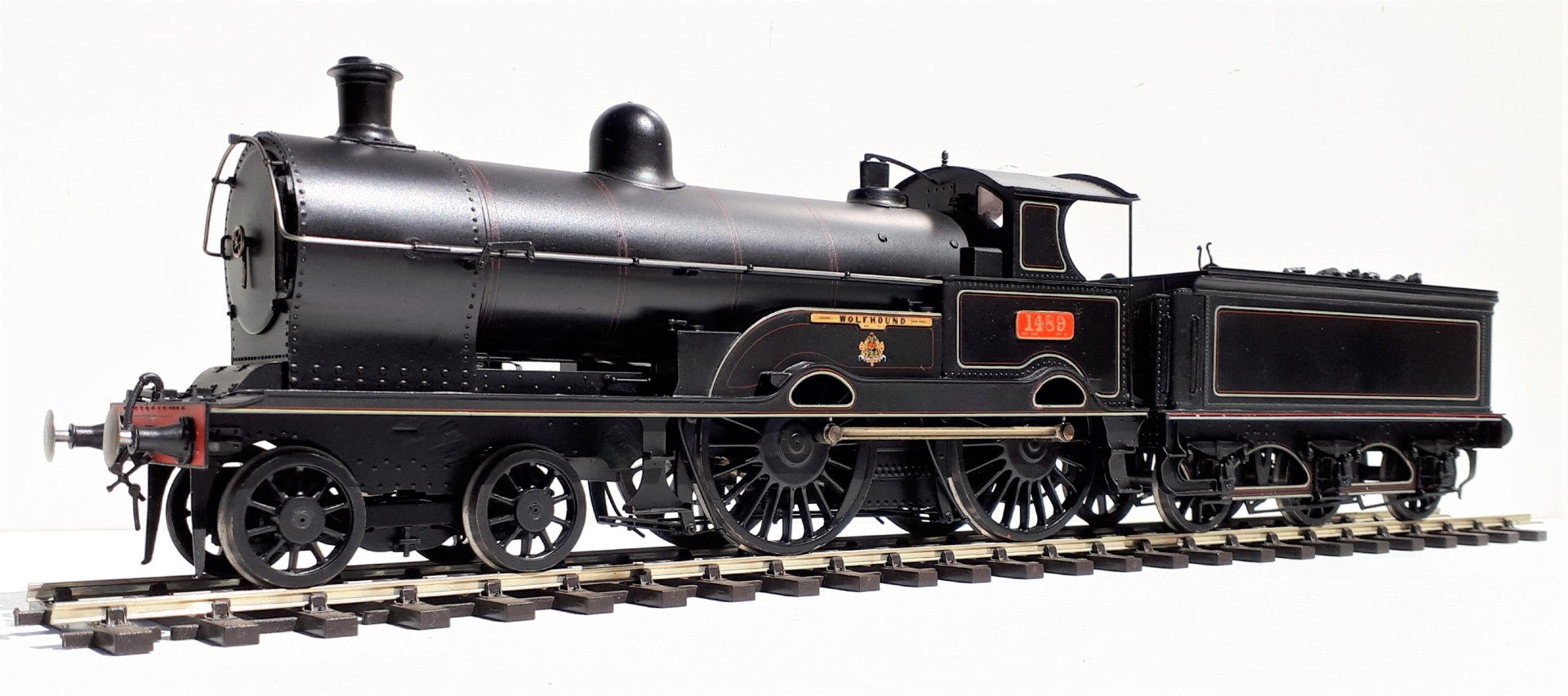
LNWR George the Fifth class no. 1489 Wolfhound

Wolfhound
Wolfhound
LNWR George the Fifth class No. 1489 Wolfhound: Built and expertly painted by Ian Rathbone from a Javelin Models kit. Additionally, the model carries a small nameplate of the builder on the underside of the running plate to give that provenance. Used in the build are wheels that have been finely cast, possibly by Alan Harris. The drivers having telescopic axles with a tapered pin to fix the quartering.

I was lucky enough, to firstly find and again to be able to buy Wolfhound at auction. But it was in less than good condition as it had rusting to all of the wheels. On the positive side however and very importantly, the paintwork was still in very good condition. After cleaning and lubrication, placing the model on the track and she was away. Non the worse for her spell in a location of damp atmosphere and change of ownership.

It goes without saying what a risky business it is when buying models in auction. You do not get a chance to test the working of models before bidding. You are lucky if you get a box to carry it home in. Therefore confidence in your own ability to be able to repair any faults is obviously a necessity.

In the same auction there were many more fine models, including my Experiment, Precursor and Star King Richard. These models, came from the collection of Peter Tray, in Ireland. Obviously a true connoisseur of model trains and an avid enthusiast of the GWR and L&NWR.

A full size George the Fifth steam loco, Prince George, is presently being built. Follow this link for the website.

Charles Bowen Cooke became Locomotive Superintendent of the London and North Western Railway in 1909. He introduced this class by taking the design of Whale’s Precursor class and incorporating a superheated boiler and piston valves. Straight nameplates, continuous splasher, a longer smokebox and smaller bogie wheels identify these locos from the Precursor class. Follow this link for a comparison with one of these locos, Victor.
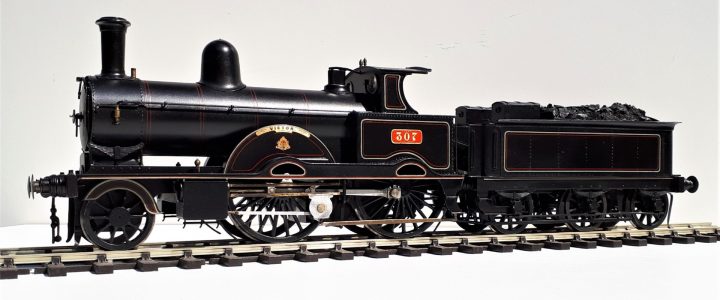
LNWR divided drive compound Experiment class no. 307 Victor

Experiment Victor
Experiment no. 307 Victor
LNWR Experiment class no. 307 Victor. Built from scratch by Michael Edge of Carlton in 2004 and painted by Ian Rathbone. Metal wheels, which have been finely cast, possibly by Alan Harris, were used in the build. The drivers having telescopic axles with a tapered pin to fix the quartering. Additionally, the model carries small nameplates of both the builder and the painter on the underside to give that provenance. F.W.Webb designed the full size loco using his patent divided drive compound system. Built at Crewe in 1883 as a 2-(2-2)-0. Two outside high pressure cylinders driving the rear wheels and one  low pressure cylinder between the frames driving the forward wheels. To replicate that working on the model, Michael has expertly fitted two independent motor and gearbox units into the model loco. One driving the forward wheels, in addition to the other driving the rear wheels. It works perfectly, just like the real thing. A credit to the builder. I was lucky enough, to firstly find and again to be able to buy, this very fine model at auction. But it was in a poor state. It had considerable rusting to all of the wheels and other brightwork. The chimney, smokebox door and a tender toolbox had become detached. On the positive side however and very importantly, the paintwork was still in very good condition and the loose parts have been easily refitted with no detriment. After repair, cleaning and lubrication, placing the model on the track and he was away, non the worse for his spell in a location of damp atmosphere and change of ownership. It is now perfect motive power to my rake of Peter Cowling built London & North Western Railway and West Coast Joint Stock coaches. In conclusion, working models of divided drive Webb Compounds are very rare. Pete Waterman has a superb model of Apollo, built from scratch by James Harwood in scale 7. Warren Haywood has painted a model of Jeannie Deans, featured in his website gallery. I wonder if these models have independently powered divided drive like Victor?


For a further image of this model follow this link

LNWR Whale Precursor class 4-4-0 no. 1430 Victor

Precursor Victor


Precursor no.1430 Victor
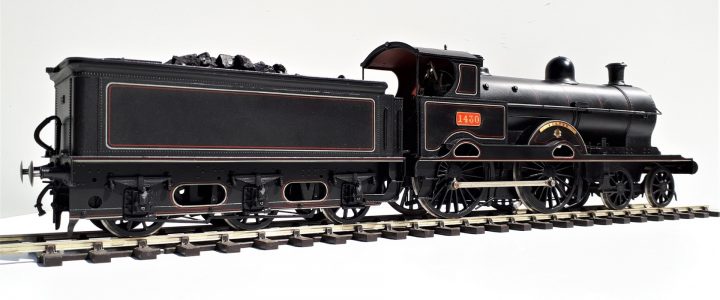
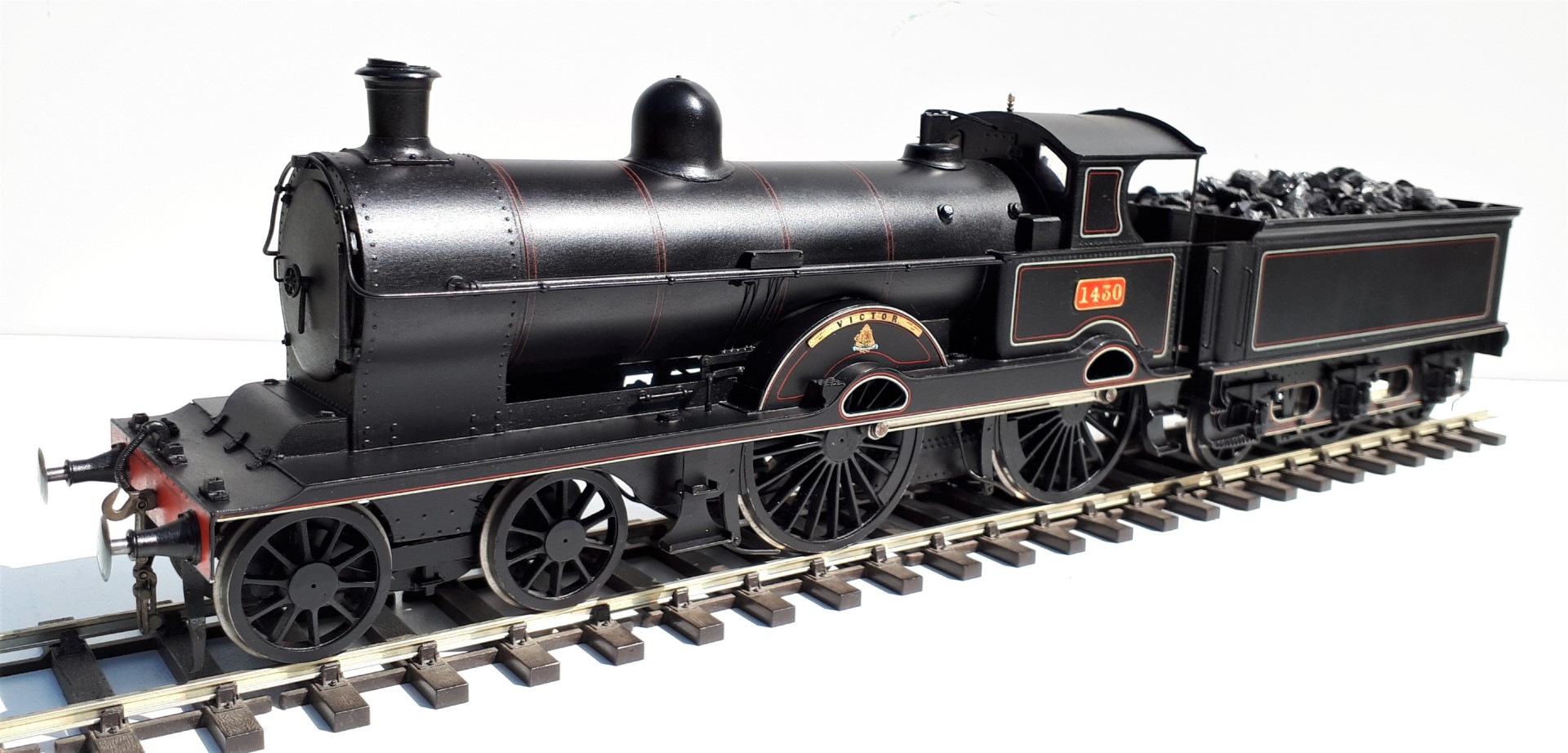
LNWR Precursor class no. 1430 Victor. Built from the Javelin Models kit by Michael Edge of Carlton in 2003 and painted by Ian Rathbone. The wheels used in the build are finely cast, possibly by Alan Harris. The drivers having telescopic axles with a tapered pin to fix the quartering. Additionally, the model carries small nameplates of both the builder and the painter on the underside to give that provenance. George Whale followed F.W.Webb as Locomotive Superintendent of the London and North Western Railway in 1903. His first loco design was the Precursor class, basically an enlarged version of Webb’s Precedent class. Built at Crewe in 1905 as a two cylinder saturated steam 4-4-0 with slide valves, Victor has here been modelled in that condition. Many of the class were later rebuilt by Charles Bowen Cooke who replaced Whale in 1909. He incorporated superheated boilers and piston valves to bring them into line with his more powerful George the Fifth class. A longer smokebox and smaller bogie wheels identify these locos from the unrebuilt members of the class. I have built a model of one of the rebuilds, Velocipede. For a description and images of this loco follow this link. I was lucky enough, to firstly find and again to be able to buy, this very fine model at auction. But it was in less than good condition as it had rusting to all of the wheels. On the positive side however and very importantly, the paintwork was still in very good condition. After cleaning and lubrication, placing the model on the track and he was away. Non the worse for his spell in a location of damp atmosphere and change of ownership. It is now perfect motive power to my rake of Peter Cowling built London & North Western Railway and West Coast Joint Stock coaches.

For a further image of this loco follow this link


Caledonian Railway 812 class 0-6-0 no. 824

Caley 824
Caley no. 824
Caledonian Railway 812 class 0-6-0 tender loco no. 824. The original model was bought from a Lacy, Scott & Knight auction at Bury St. Edmonds in May 2017 as no. 57566 in black, with 3 rail and skate current collection. The paint had been applied by brush and although it looked reasonable from a distance, it didn’t stand close scrutiny. Looking through the paint however, it was clear and especially relevant that this coarse scale model had been very well scratch built. The stripping of the original paintwork preceded the models complete refurbishment and conversion to a 2 rail finescale model by myself. Now expertly re-painted to Caledonian dark blue fully lined livery by John Cockcroft. Current collection is by the American method. This is where the loco collects from one rail and the tender from the other. New insulated Slaters wheels have been carefully shorted by soldering thin wire behind a spoke on one or other side of the loco and tender. This system works very well, however an insulated drawbar and fallplate are required and have been fitted to the model. Numberplates were purchased from Guilplates to complete the rebuild. In the same auction and clearly from the same collection, were 37 other model locos. All unusual north of the country prototypes and all scratch built 3-rail. It seems that the previous owner (now deceased) lived in Carlisle, which explains his preference of Northern England or Scottish locos. An LNER D49 Hunt class model was bought at the same time and for a description and images of this loco follow this link. Both examples of risky purchases that in my opinion have paid off. If only at the time I had the confidence (and the funds) to have bought more?

Prince of Wales, Director class

GCR Prince of Wales.
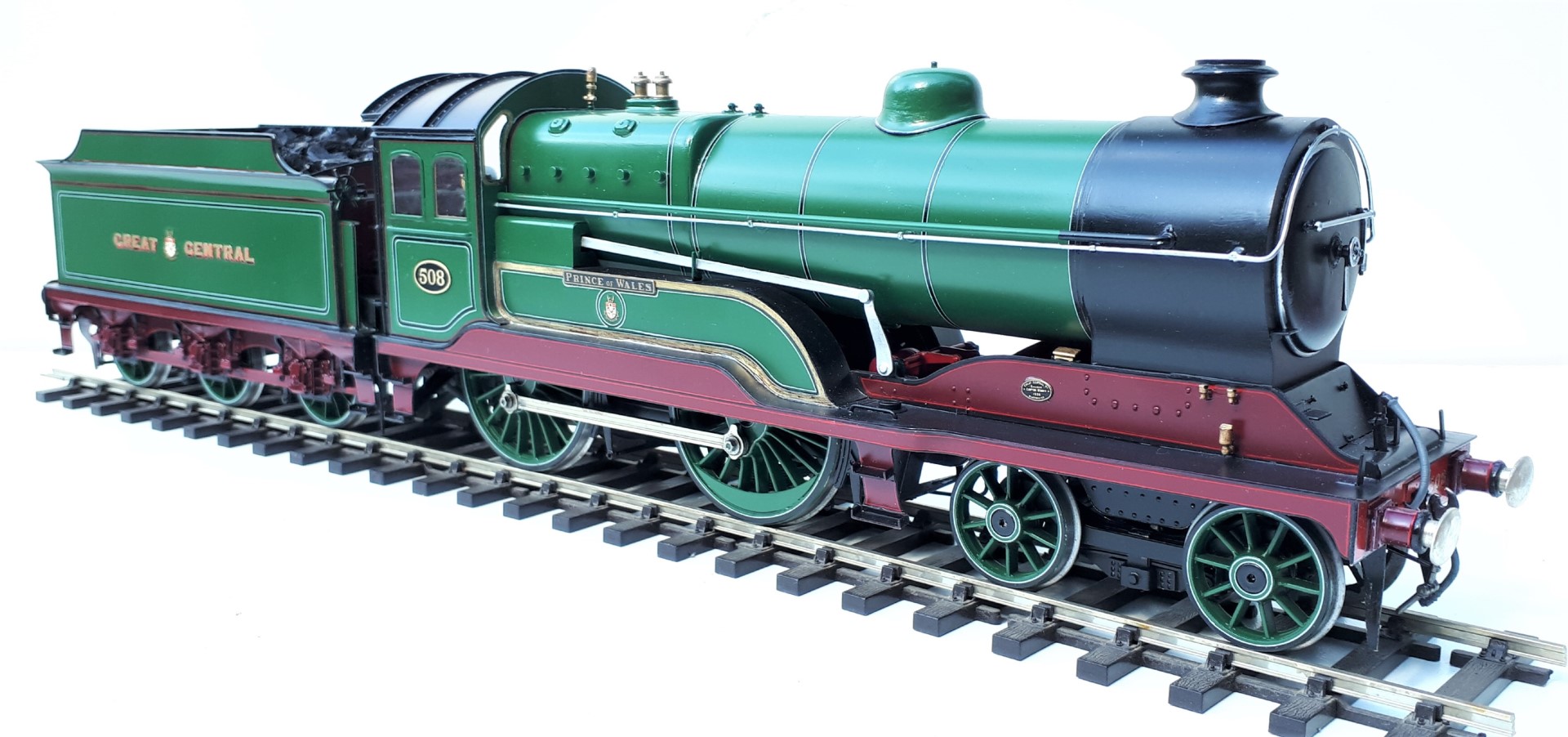
GCR 11F Improved Director class no. 508 Prince of Wales. This model was built on commission by myself from the very good David Andrews kit, which includes parts to build a non-working representation of the inside motion. A motor and gearbox unit and wheels by Slaters Plasticard have been used in the build. The loco has been superbly painted and lined out in Great Central Railway passenger livery by Warren Haywood of Ossett. Number and nameplates supplied by Severnmill. Work started on the build on 30th September 2017 and finished on 8th March 2018. Build time 90 hours. Current collection is by the American method, where the loco collects from one rail and the tender from the other. The insulated wheels have been shorted by thin wire carefully soldered behind a spoke on one or other side of the loco and tender. An insulated drawbar and fallplate are needed with this system and in my experience, with care, it works very well. Handed over to a delighted client on the 24th March 2018.

The Improved Director class (LNER class D11) was designed by John G. Robinson for express passenger work on the Great Central main line between London Marylebone and Sheffield and Manchester. An improved version of the 11E Director class (LNER class D10). No. 508 was built in March 1920 as the third member of the class. It had an operational life of over 40 years, being withdrawn in 1960. One member of the class, no. 506 Butler Henderson, is fortunately preserved, but unfortunately in static condition, at Barrow Hill.


BR (ex LMS) 4P compound no. 41186

BR( ex LMS) 4P class no. 41186. One of the famous Midland Compounds. Built from scratch in nickel silver by Laurie Pickard of Bristol. An elderly model that has for all of it’s life before I bought it, been displayed unpainted in a cabinet. I found this in a Dreweatts auction in Bristol. Now painted by myself and superbly lined out by bow-pen for me by John Cockcroft.

This loco has been superbly built in what I would call a robust style, around a very powerful Bonds type motor/gearbox unit. The pickups are wiper blades to the backs of the wheels. The wheels are of cast iron construction with fine spokes and are slightly thicker than fine scale. They negotiate Peco fine scale track and points well. The Poachers test track at Lincoln https://www.7mmloco.co.uk/poachers/ was built using Peco track and this loco can fly around there with six blood and custards in tow, no problem.

One hundred and ninety five engines of these Henry Fowler developed locos were built by the LMS. Adding to the 45 similar locos that had been designed by Richard Deeley and built by the Midland Railway, to which they were almost identical. The most obvious difference is that the driving wheel diameter was reduced from 7 ft 0 in on the Midland locomotive to 6 ft 9 in on the LMS version. The Deeley locos had been developed from a 1902 design of Samuel Johnson which had a three cylinder compound arrangement. This had a layout of one high-pressure cylinder inside the frames, and two low-pressure outside frame cylinders. The modelled loco, number 41186 being one of the Vulcan Foundry built engines built in 1927 and the class were still being built at Derby works in 1932. A long and complicated building history, but they got there in the end. The class were withdrawn between 1952 and 1961.

LMS 5P/4F class no. 2876

LMS Crab 2876
LMS 2876
LMS 5P/4F class (Crab) no. 2876.


Built and painted, using PC lining transfers, by myself. When I started O gauge modelling I soon set myself a target to build a Crab, one of my favourite locos. As soon as I heard of the Chowbent kit I had to have one. Over 20 years later and I have not been disappointed. Lots of people complain about the narrow tender, but I think it adds to the character. As does the high running plate over the inclined cylinders. The paint is starting to look a bit worn, but it is still a great livery and she looks a treat hauling my train of of six Peter Cowling LMS series one coaches. Portescap motor and gears, with fused protection. Current collection is by the American method, where the loco collects from one rail and the tender from the other. The insulated Slaters wheels have been shorted by thin wire behind a spoke on one or other side of the loco and tender. An insulated drawbar and fallplate is needed with this system and in my experience, with care, it works very well.

These very useful locos were designed by George Hughes, Chief Mechanical Engineer of the London Midland & Scottish Railway. His background was with the Lancashire and Yorkshire Railway and they were developed using L&YR practice. In 1925 Henry Fowler, previously of the Midland Railway at Derby, succeeded Hughes as CME and he tried to have the design changed to use Derby standard parts, but because the build process was so advanced, only the tender and some boiler fittings became the only obvious changes. Production commenced at the L&YR Horwich works and L&NWR Crewe works in 1926. A total of 245 engines were built, five of which were experimentally fitted with Lentz valve gear in 1931. In 1953 that was replaced with Reidinger valve gear. Otherwise the class remained virtually as designed throughout their thirty plus year life. No. 2876 was built at Crewe in 1930 and withdrawn from service in 1962.

GWR Grange class no. 6869 Resolven Grange

Resolven Grange
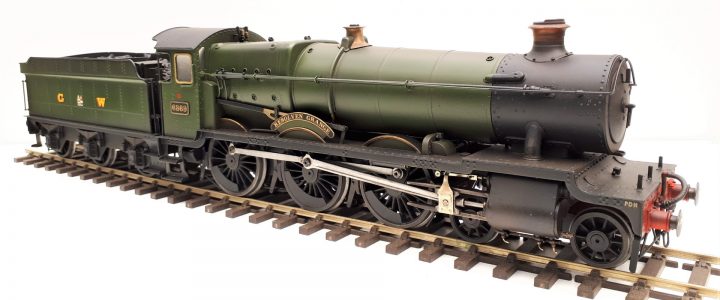
This unusual model has been built from scratch by Peter Everton, as a convertible 2 or 3 rail pickup, with third rail skate. By removing the skate and moving a small plug from one socket to another we have a two rail loco. Reverse that procedure and it’s back to three rail. Very clever and I have never seen this feature before. The loco is fitted with a set of chunky gears and a large motor. Driving wheels are of cast iron construction, with fine spokes and very slightly thicker than Slaters. They give a back to back of 28.25mm and negotiate Peco fine scale track and points with no problems. Slaters wheels (with 29.25mm back to back) are fitted to the bogie and tender. The Poachers test track at Lincoln,  https://www.7mmloco.co.uk/poachers/  was built using Peco track and this loco can fly around there with my eight chocolate and creams in tow, no problem. In fact I’m sure it would pull double that length of train. This well detailed and very heavy model, with a working representation of the valve gear, is of extremely robust construction and would be well suited to either an indoor layout or an outdoor track. It was bought privately in an unpainted and unused condition. It has now been painted by myself in unlined GWR green and lightly weathered by Warren Hayward. In addition, the model carries the small nameplate of the builder on the underside of the running plate to give that provenance.

The Grange class locomotives were designed by Charles Collett and built at Swindon between 1936 and 1939 as replacements for 43xx class Moguls. For comparison with one of these locos, no. 4302, follow this link.. In fact many Granges were built using a pool of reconditioned parts from withdrawn 43xx locomotives. They are effectively a smaller wheeled version of the Collett Hall class. For a description and images of one of these locos, Aldenham Hall, follow this link.