BR (ex GNR) Gresley A3 class 4-6-2 no. 60102 Sir Frederick Banbury. The loco chassis of this model was built by the late Wally West, using top quality cast metal wheels by Allan Harris (AGH). Wally part-built three Gresley Pacifics at the same time. Great Northern and Robert the Devil have been completed for some time and appear elsewhere on the pages of this website. The loco body that this chassis was intended for (we believe it was to be an A4) was never completed. The skeleton of an A4 streamlined casing was found after Wally’s passing and putting two and two together that skeleton and this chassis was as far as Wally got with his A4. I was asked by the West family to sell any unfinished models, but the quality of workmanship is so good on this chassis, I couldn’t resist buying it for myself. By coincidence, I already had a Martin Finney part built A3 kit, which was in a right old mess, especially the chassis. The body and tender were recoverable however and I have married the three units together and this is the result. Fabulous paintwork by Warren Haywood. Gear and motor unit by ABC.
The full size loco was built by the Great Northern Railway in 1922 as their second Pacific and soon after it was named after the Chairman of the company. Modelled in BR days, it was a long time GC line loco, being allocated to Leicester GC, Neasden, after modification to right hand drive, Leicester GC again, then in 1957 it went to Kings Cross, Doncaster, Grantham, then KX again before withdrawal in 1961. A famous loco, it should have been preserved, as the only original GNR Pacific.
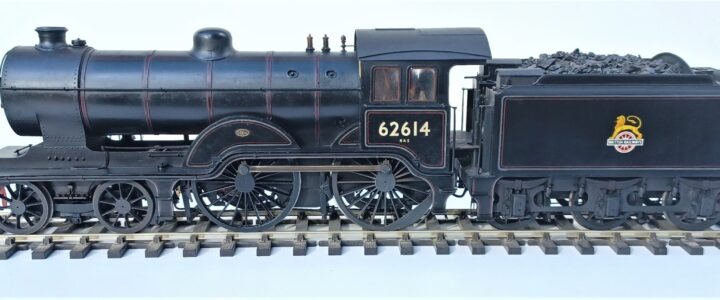
BR(E) (ex LNER) D16/3 class 4-4-0 no. 62614. This model was built from scratch by Laurie Griffin, with many of the parts being cut out on a pantograph mill. Fully working inside motion, Alan Harris wheels and powered by an ABC motor and gears unit, picking up current via the American method. Martin Welch takes the credit for the painting, lining and weathering. It was built on commission for Michael Brooks (the originator of Masterpiece Models) for use on his famous Monks Eleigh scale 7 layout. The model has now been converted to finescale wheel standards.
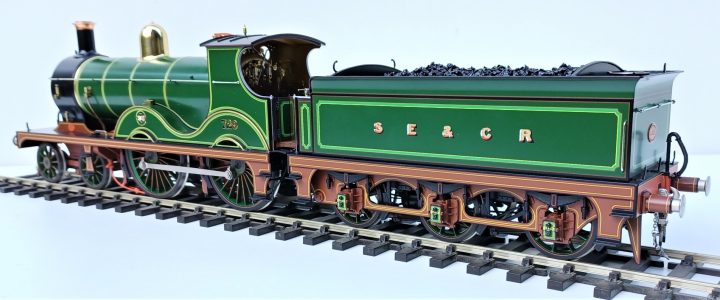
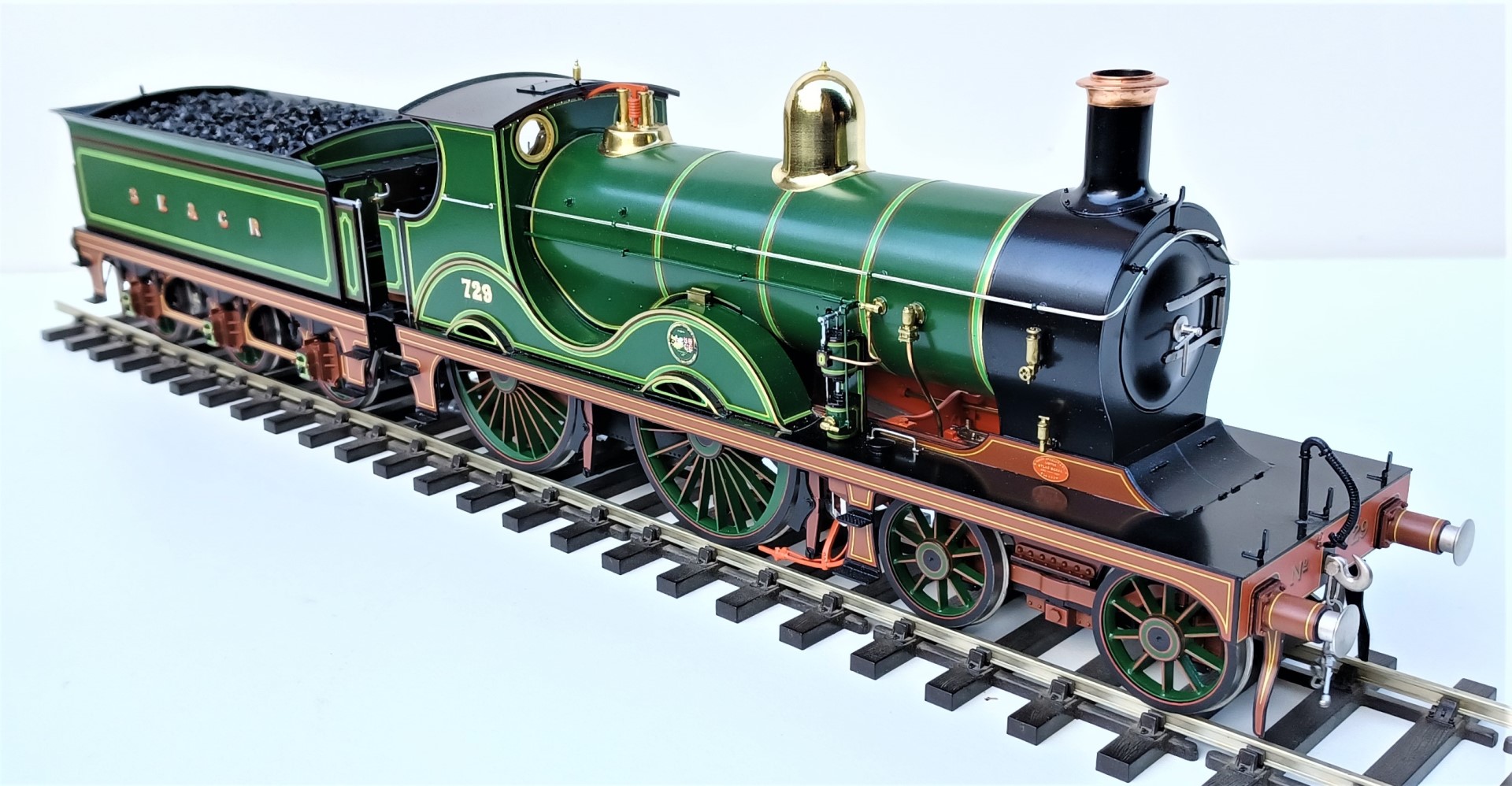
South Eastern & Chatham Railway Wainwright D class 4-4-0 no.729. This fabulous model of a fabulous prototype is by the Lee Marsh Model Co. and was constructed with fully working inside motion in South Korea, with DC/DCC control and sound. The build quality and paint finish (cellulose) is second to none and the model, although second hand, is still in mint condition. Thank you ebay.
L&YR Aspinal 7′-3″ 4-4-0 no. 1224 (nicknamed a “Flyer”). Expertly built from scratch by Peter Priestley, with fully working inside motion and Joy valve gear. Beautifully painted some years ago in the L&Y fully lined black livery, which is still in remarkably good condition, proving that this model has been well looked after throughout it’s life. Fitted with a powerful motor and gears, this 4-4-0 is a good performing example of a wheel arrangement that is notoriously difficult to get good adhesion to the track.
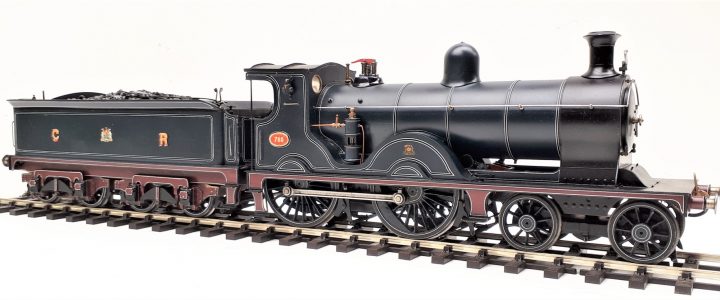
Caledonain Railway 766 class (Dunalastair II) 4-4-0 no. 780. Built from scratch by Wally West circa 1978 using a John Hart RM (short) type motor and wheels turned from extremely good castings, probably by Miller, Swan & Co. This model is unusual for Wally as it does not rely on the tender to collect it’s power, perhaps because it is a bogie tender? Well painted by Bernard Miller in the Caledonian Railway fully lined passenger blue livery. The “CR” initials on the tender have been expertly painted by hand.
BR Britannia class 4-6-2 no. 70006 Robert Burns. A Masterpiece model loco, obtained in a swap deal, second hand and with only very minor repairs needed, otherwise mint condition. Switchable DC/DCC and sound. Truly amazing detail and surprisingly robust. I have photographic evidence that I spotted the original loco heading south on a goods train, at the signals at Syston North Junction, waiting to go round the sharp curve towards Melton Mowbray in 1966. Admittedly she was without nameplates and didn’t look as clean as depicted in the model, but still great memories.
LMS Stanier Jubilee class 4-6-0 no. 5703 Thunderer. Built from scratch by Michael Edge and carries his builders plates on the underside as provenance. The crimson lake paintwork, applied by a person unknown is superb and has no chips or damage. Portescap RG7 motor and gear unit. Bought from the O gauge Guild executors service as 5579 Punjab, but Punjab was never a long firebox Jubilee in LMS days, so we had it changed and thanks to John Cockcroft for making such a good job of it. This fabulous loco is for sale. See the models for sale section of this website.
LSWR 380 class 4-4-0 no. 381. This class of 12 locomotives were the first tender locos designed by William Adams. They were built by Beyer Peacock & Co. at the Gorton Foundry, Manchester in 1879. Dubbed “Steamrollers” by reason of their disc bogie wheels and stovepipe chimneys. When built, Beatties’ umber passenger livery was used, with green and orange lining and with the London and South Western Railway Co. crest above the brass numbers on the cab side. From about 1885 they were repainted into the Adams mixed traffic loco livery of Holly green with black borders, edged by a fine bright green line. This old but accurate model was built in 1955 to a high standard, from scratch by the Rob Dettmar/John Hart (who also produced the RM and early JH motor/gears) partnership. She is still mechanically very good. The original RM 3 pole motor, no. 577, gears and flywheel are smooth and quiet and move the model swiftly and elegantly. The wheels are good quality cast iron, verging on the coarse side of finescale. Since originally listed, she has been stripped of her original paint, which had turned very dark and the finish had deteriorated with age. Now expertly re-painted in the mixed traffic livery described above by Warren Haywood. She was also renumbered from her original 382 at the same time. For a press cutting which shows a photo of this model look for R.G.Dettmar & Co. in the following link https://www.milbromodelrailways.co.uk/vintagelocos.html
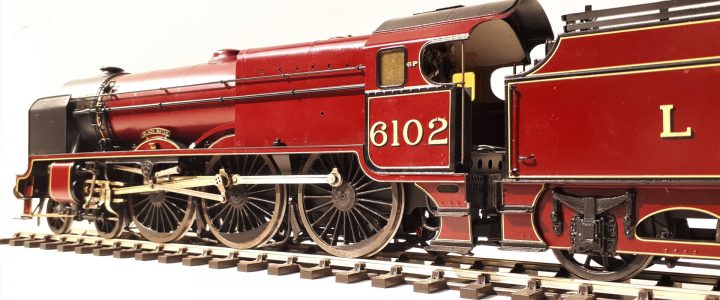
A very famous model with cast iron provenance, the LMS Royal Scot class no. 6102 Black Watch. This very fine model was built by the late Geoff Holt in 1993. Featured in the late lamented Modellers Back Track magazines of April-May and June-July 1993, edited by David Jenkinson. (Volume 3 numbers 1 & 2). In the article, called “The Red Scots”, Geoff builds three at the same time, 6148 The Manchester Regiment, for himself, 6170 British Legion, for David Jenkinson and my loco, 6102 Black Watch. Quality large images in colour by Tony Wright, of all three models, both in their nickel silver unpainted and painted states are featured. The beautiful LMS Crimson Lake and straw lining was expertly applied by Larry Goddard and the model has been signed “G.Holt L.Goddard ’93 6102” under the cab. Both the loco and tender carry nameplates on the underside “Built by Geoff Holt”. The wheels are of Alan Harris manufacture and have been expertly machined by Steve Ross with solid stepped axles to give a back to back of 29mm, with a tight fit to the wheels on the insulated side and a push fit on the non-insulated side. This information, obtained from the magazine article which was written by Geoff himself, became very useful to me only the day after taking delivery of the model. The motor and gears that the model was using, which I have no reason to doubt were the original fitment, were not to my standard. As I had a spare ABC gear unit with a Maxon motor, it was not a difficult decision to make the replacement. The new unit fitted like a glove and as the axles are not of the telescopic type, the fitting of the new unit was not difficult either. Black Watch now runs as good as it looks.
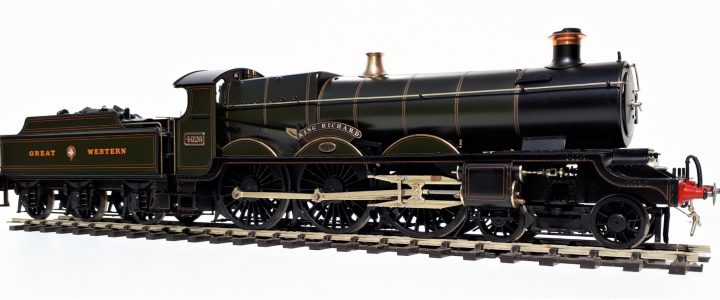
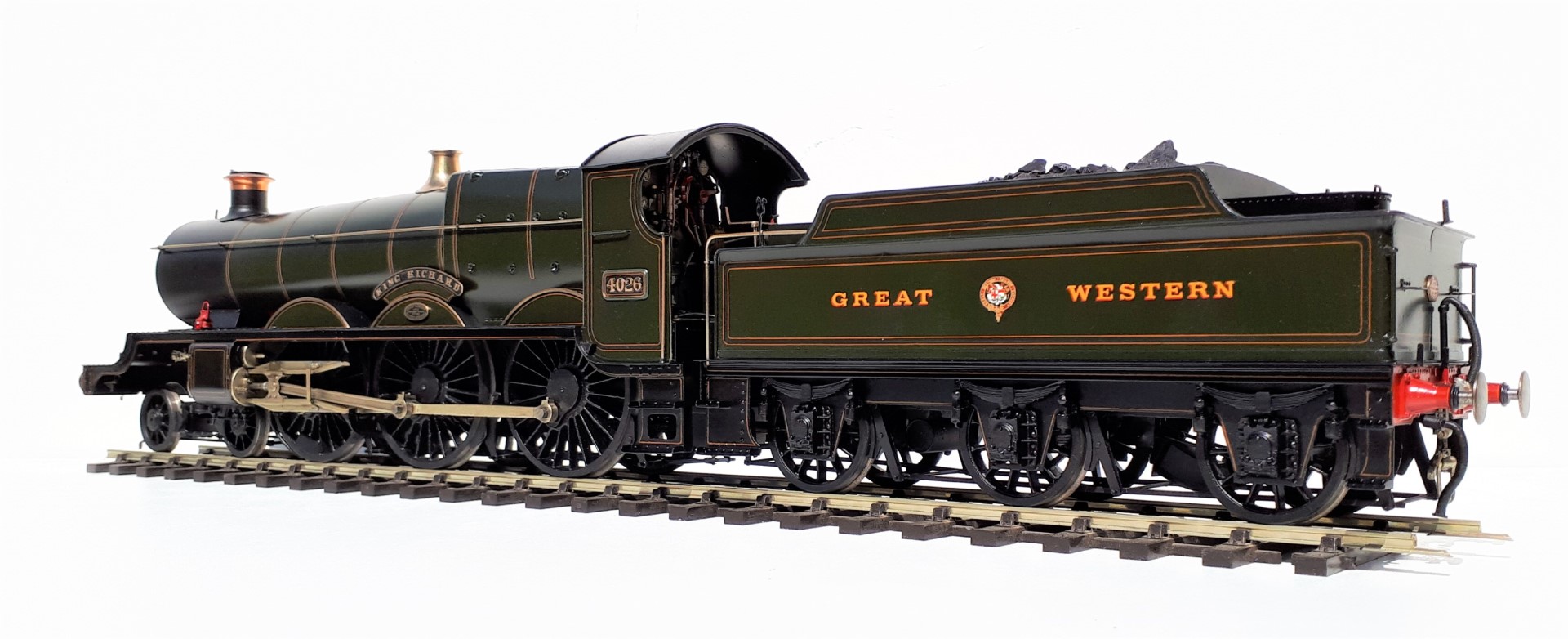
GWR Star class no. 4026 King Richard. Built from scratch to an exceptional standard with fully working inside motion by a person unknown. Painted, (also exceptionally, as always?) by Alan Brackenborough.
I was lucky enough, to firstly find and again to be able to buy, this very fine model at a Special Auction Services auction in Newbury. It’s condition was not great, with minor rusting to all of the wheels and other bright-work a little tarnished. Additionally two small repairs have needed to be made to the working of the inside motion. All’s well now though. Of more importance to me was that there was no damage to the paintwork.
These are typical of the risks needed to be taken when buying in auction. It goes without saying that you do not get a chance to test the working of models before bidding. You are lucky if you get a box to carry it home in. Therefore confidence in your own ability to be able to repair any faults is obviously a necessity.
In the same auction there were many more fine models, including my Experiment and Precursor class models. There were also two other Stars which I didn’t buy – Dog Star and Princess Helena. Both of the same original build and paint quality as King Richard, although Dog Star looked to have had a slightly tougher working life. I wonder if the buyer of those models is as pleased as I am with this? I wonder if he had any surprises when he got them home and placed them on the track? Has he had to make any repairs? More interestingly for me, does he know who the builder is? The previous owner, now deceased, was a man by the name of Peter Tray, who apparently lived in Ireland. If anyone reading this has any further knowledge of this model, eg. who the builder is, please let me know.
Princess Helena was missing a nameplate. That doesn’t sound a great issue as a replacement can easily be acquired and stuck on with superglue. But the nameplates on these models were cleverly designed and mounted to the splasher with a slot and tab fixing of great craftsmanship. A real shame to have lost one and that was the only reason that I chose to go for King Richard instead.
These models, clearly came from a true connoisseur of model trains and an avid enthusiast of the GWR and L&NWR.