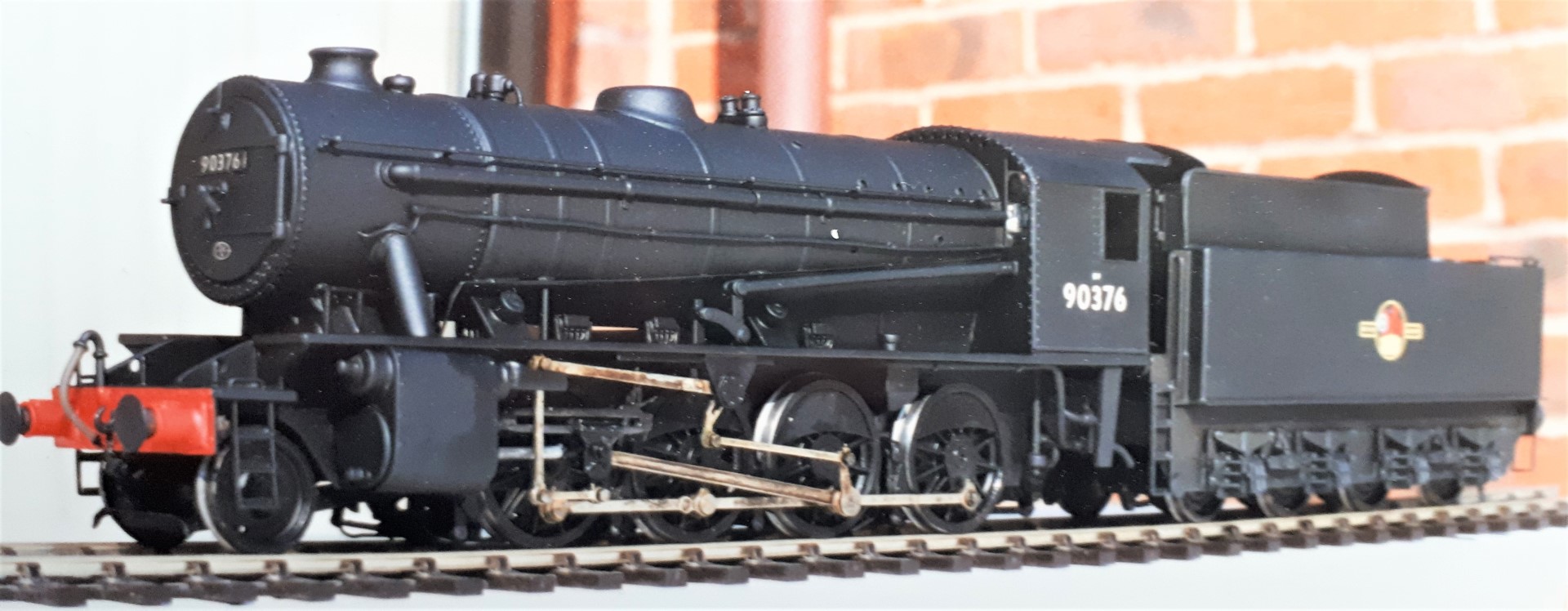
BR(ex WD) Riddles Austerity No. 90376

Model engines and locos
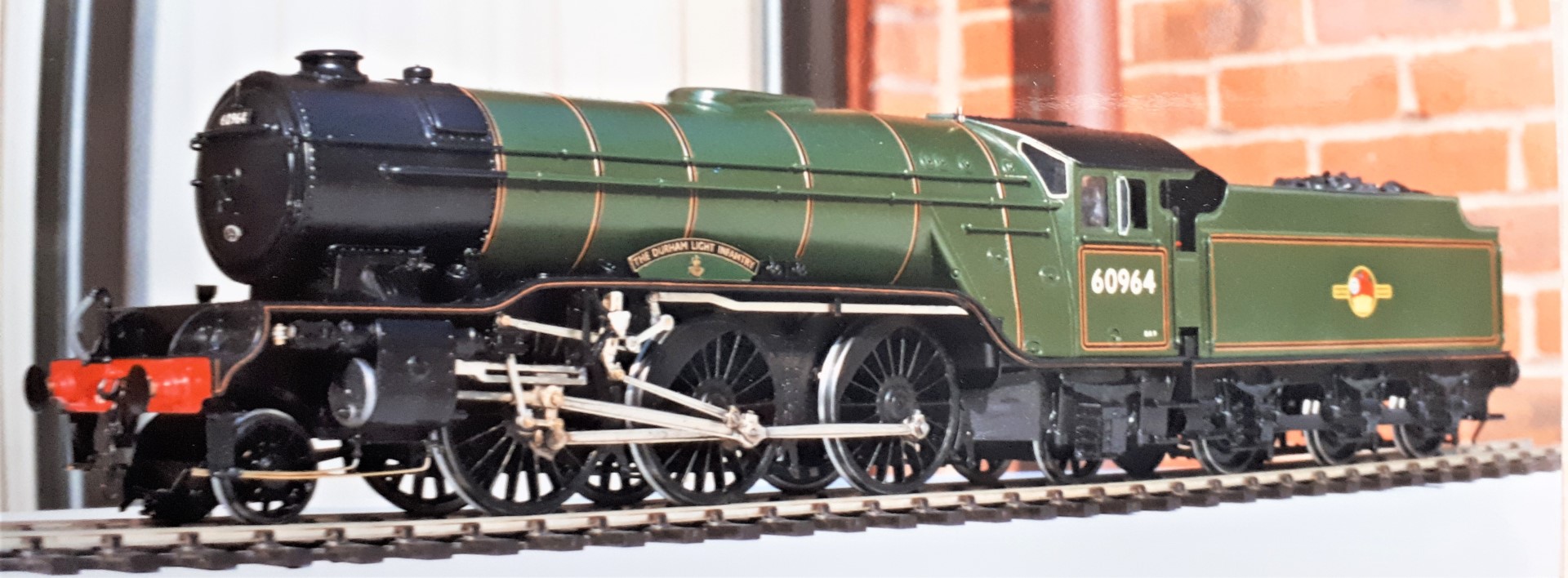


I was lucky enough, to firstly find and again to be able to buy this model at auction. But it was in less than good condition as it had rusting to all of the wheels. On the positive side however and very importantly, the paintwork was still in very good condition. After cleaning and lubrication, placing the model on the track and she was away. Non the worse for her spell in a location of damp atmosphere and change of ownership.
It goes without saying what a risky business it is when buying models in auction. You do not get a chance to test the working of models before bidding. You are lucky if you get a box to carry it home in. Therefore confidence in your own ability to be able to repair any faults is obviously a necessity.
In the same auction there were many more fine models, including my Experiment, Precursor and Star King Richard. These models, came from the collection of Peter Tray, in Ireland. Obviously a true connoisseur of model trains and an avid enthusiast of the GWR and L&NWR.

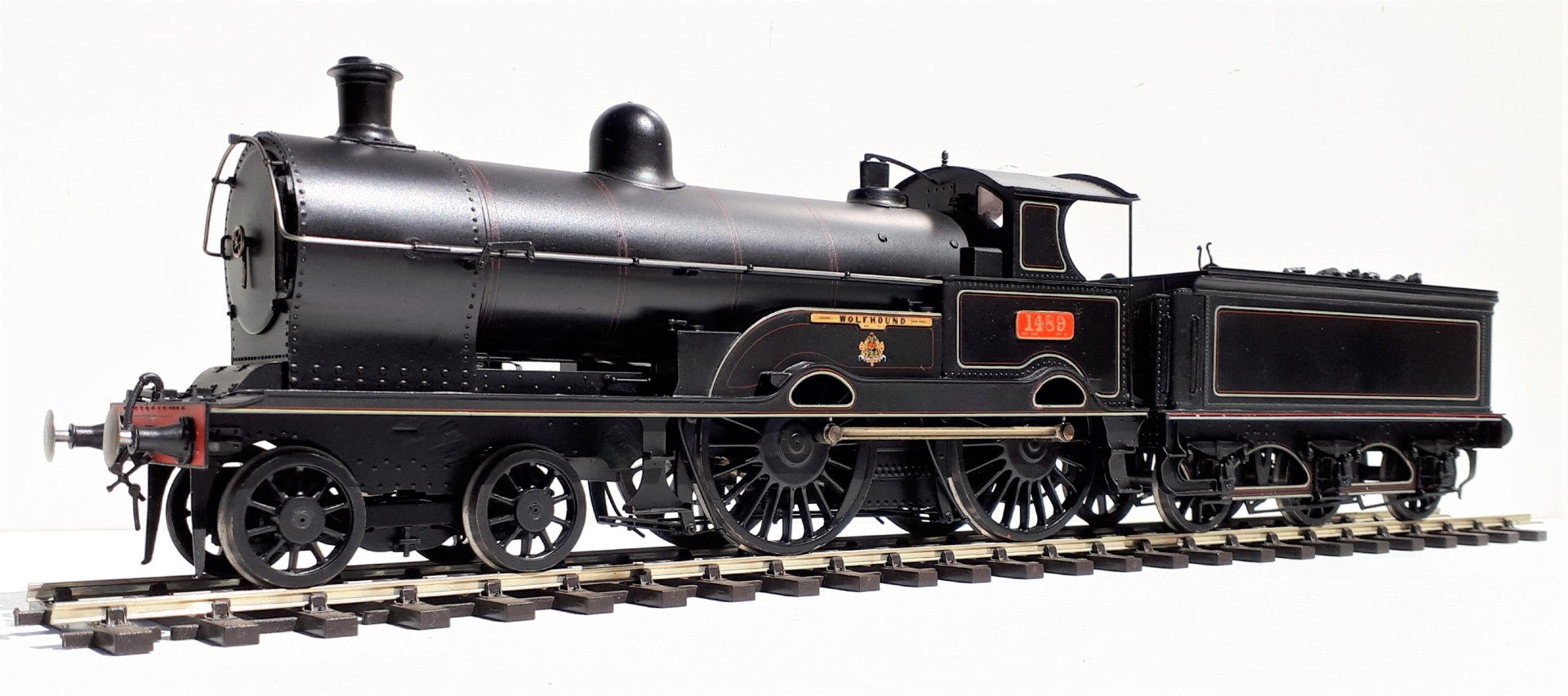
I was lucky enough, to firstly find and again to be able to buy Wolfhound at auction. But it was in less than good condition as it had rusting to all of the wheels. On the positive side however and very importantly, the paintwork was still in very good condition. After cleaning and lubrication, placing the model on the track and she was away. Non the worse for her spell in a location of damp atmosphere and change of ownership.
It goes without saying what a risky business it is when buying models in auction. You do not get a chance to test the working of models before bidding. You are lucky if you get a box to carry it home in. Therefore confidence in your own ability to be able to repair any faults is obviously a necessity.
In the same auction there were many more fine models, including my Experiment, Precursor and Star King Richard. These models, came from the collection of Peter Tray, in Ireland. Obviously a true connoisseur of model trains and an avid enthusiast of the GWR and L&NWR.
A full size George the Fifth steam loco, Prince George, is presently being built. Follow this link for the website.
Charles Bowen Cooke became Locomotive Superintendent of the London and North Western Railway in 1909. He introduced this class by taking the design of Whale’s Precursor class and incorporating a superheated boiler and piston valves. Straight nameplates, continuous splasher, a longer smokebox and smaller bogie wheels identify these locos from the Precursor class. Follow this link for a comparison with one of these locos, Victor.


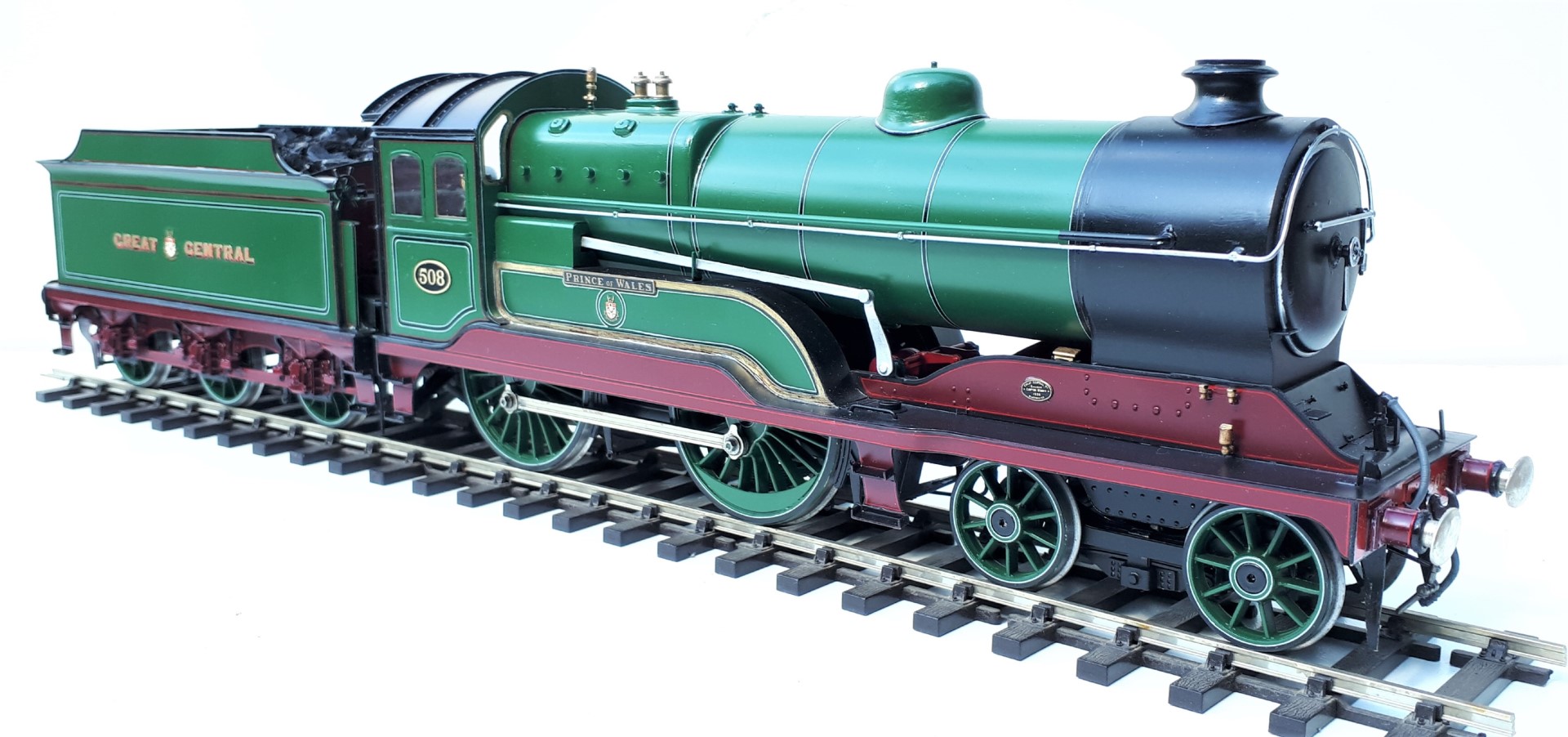
The Improved Director class (LNER class D11) was designed by John G. Robinson for express passenger work on the Great Central main line between London Marylebone and Sheffield and Manchester. An improved version of the 11E Director class (LNER class D10). No. 508 was built in March 1920 as the third member of the class. It had an operational life of over 40 years, being withdrawn in 1960. One member of the class, no. 506 Butler Henderson, is fortunately preserved, but unfortunately in static condition, at Barrow Hill.

This loco has been superbly built in what I would call a robust style, around a very powerful Bonds type motor/gearbox unit. The pickups are wiper blades to the backs of the wheels. The wheels are of cast iron construction with fine spokes and are slightly thicker than fine scale. They negotiate Peco fine scale track and points well. The Poachers test track at Lincoln https://www.7mmloco.co.uk/poachers/ was built using Peco track and this loco can fly around there with six blood and custards in tow, no problem.
One hundred and ninety five engines of these Henry Fowler developed locos were built by the LMS. Adding to the 45 similar locos that had been designed by Richard Deeley and built by the Midland Railway, to which they were almost identical. The most obvious difference is that the driving wheel diameter was reduced from 7 ft 0 in on the Midland locomotive to 6 ft 9 in on the LMS version. The Deeley locos had been developed from a 1902 design of Samuel Johnson which had a three cylinder compound arrangement. This had a layout of one high-pressure cylinder inside the frames, and two low-pressure outside frame cylinders. The modelled loco, number 41186 being one of the Vulcan Foundry built engines built in 1927 and the class were still being built at Derby works in 1932. A long and complicated building history, but they got there in the end. The class were withdrawn between 1952 and 1961.

