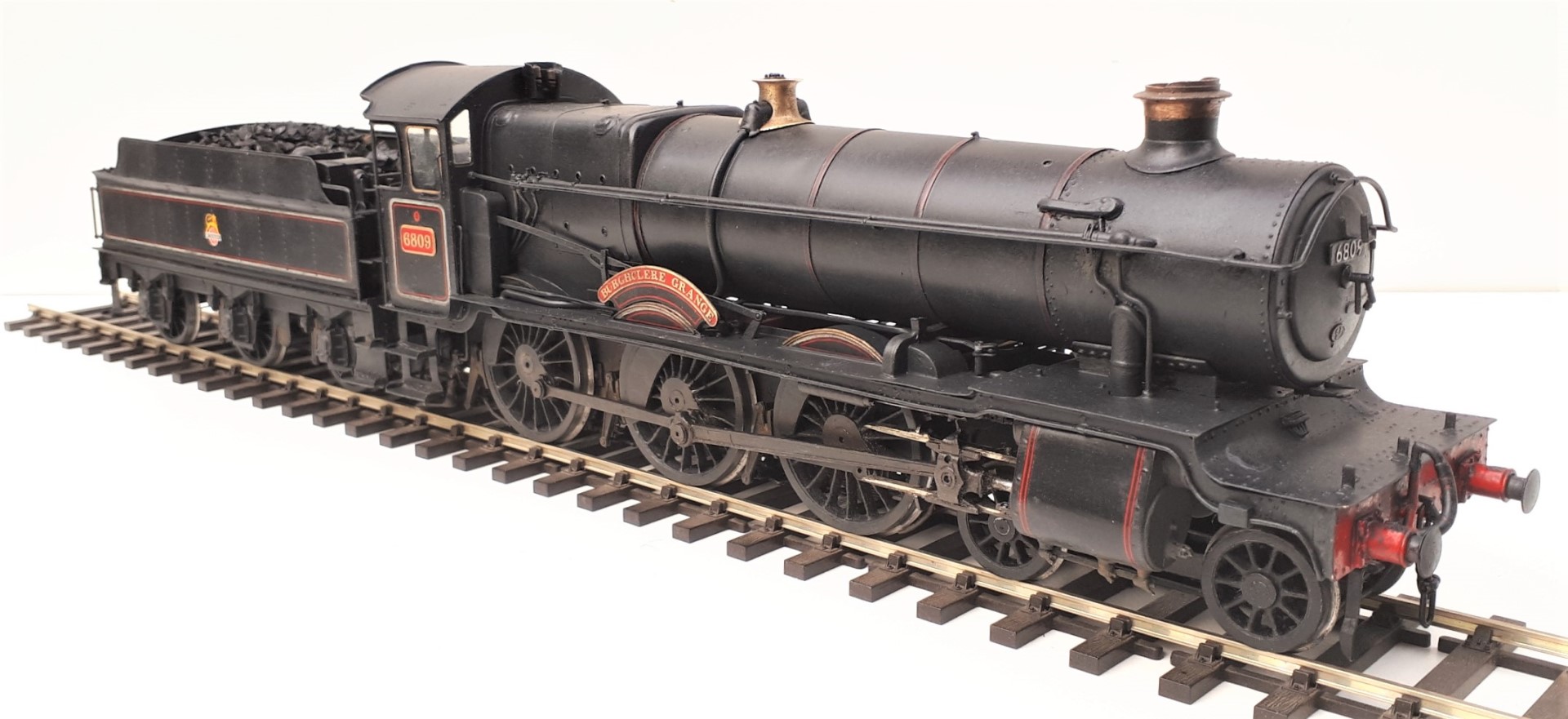
LSWR Drummond K10 class 4-4-0 no. 149

LSWR Drummond K10 class 4-4-0 no. 149
LSWR Drummond K10 class 4-4-0 no. 149. Built by Mick Bayliss from the Shedmaster kit, which is a set of fairly basic brass etchings (ex Jidenco, I believe), together with some very good quality brass and whitemetal castings. Additional details have been added including a representation of the inside motion. The wheels are Slaters and the power is provided by a fuse protected Portescap RG7, via the American method of power collection. Superbly painted in the Robert Urie post World War 1 olive green livery, by John Cockcroft.  

Caley 4-4-0 passenger tank no.2

Caley 4-4-0 passenger tank no.2
Caledonian Railway 4-4-0 passenger tank no.2. Built from scratch by person unknown many years ago. Since buying this model in auction I have completely stripped the original paint, added details for example new safety valve, lamp irons, condensing pipes, smokebox lubricators, door opening wheel and lever, couplings etc. Hopefully adding more character to an already characterful model. Now expertly repainted for me by John Cockcroft.

This is the second model of one of these locos that I have had, refer to this link for the other  https://www.7mmloco.co.uk/2018/11/05/caledonian-railway-4-4-0-passenger-tank-no-2/
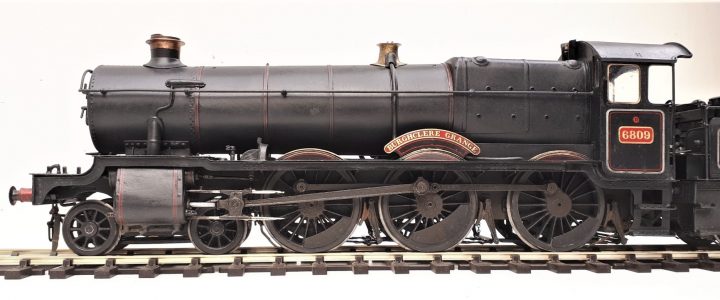
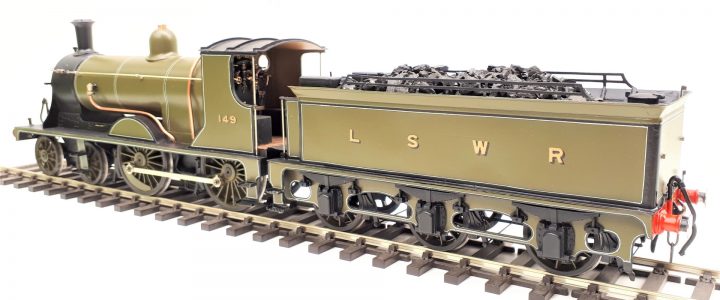
BR(WR) Grange class 4-6-0 no. 6809 Burghclere Grange

6809 Burghclere Grange
BR(WR) Grange class 4-6-0 no. 6809 Burghclere Grange. 

This model was built by J.K.Stansfield of Colne in 1993, from the Malcolm Mitchell kit. The motor/gear unit is by ABC and the wheels are good quality cast iron. The pick-ups are of the plunger type and it all has been built to a very professional and well detailed standard. Since then it has been displayed unpainted in a glass case. After purchase, it has been thoroughly cleaned and serviced to excellent running condition by myself and expertly painted and weathered by John Cockcroft. The model even has a tender makers plate with the correct number, 1898, all part of the excellent service from Severn Mill nameplates. For more photos of this model, see the Locos for sale page of this website. 

Only two of the Granges were given the British Railways mixed traffic lined black livery. 6809 in December 1949 when the loco was allocated at Penzance, having a 3500 gallon Churchward pattern tender at the time. The other, number 6819 having the Collett intermediate pattern tender when it was painted in lined black at Caerphilly in 1955. All other Granges were painted plain black, until green became the standard livery for the class in the late 1950’s.

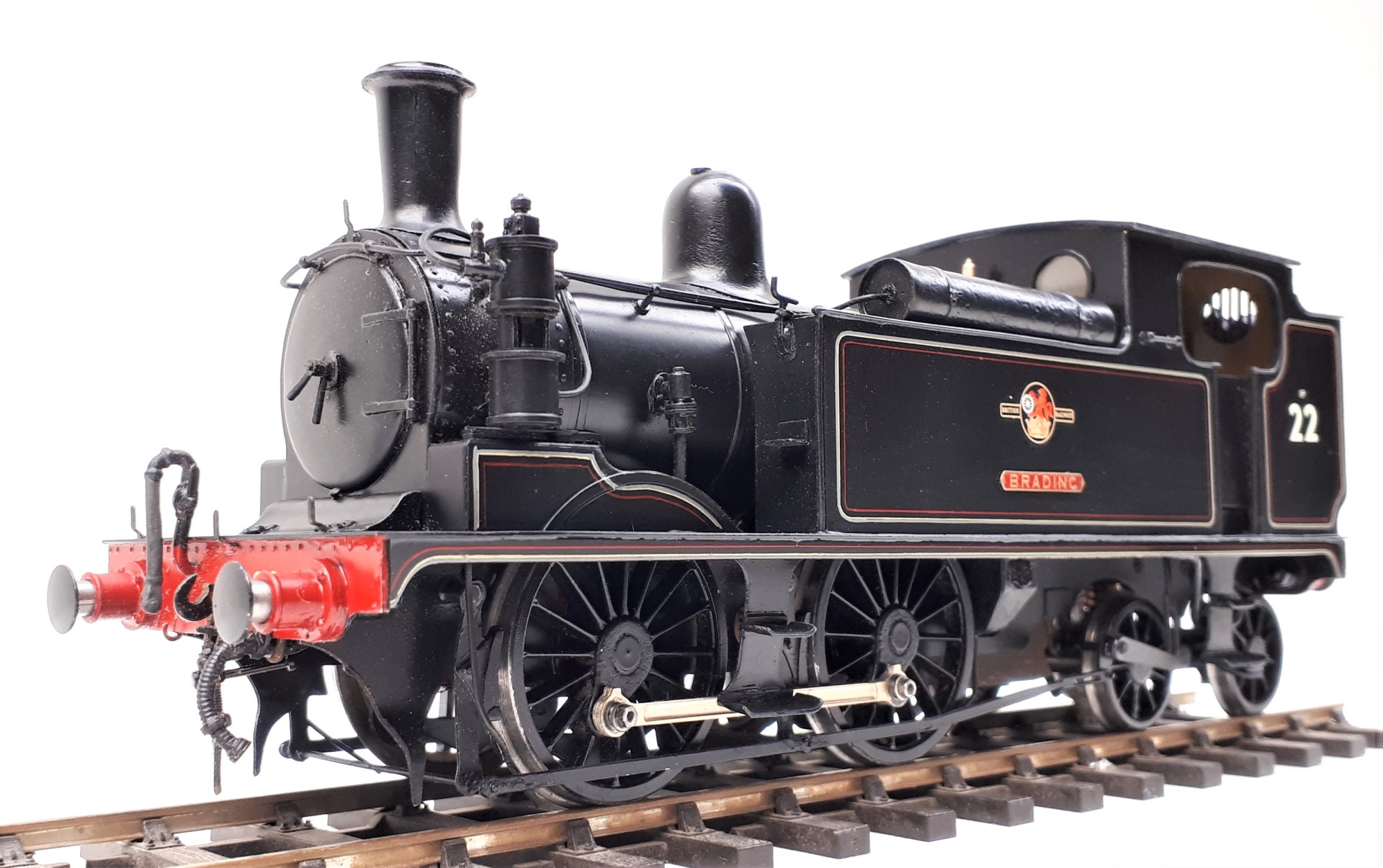
BR (ex LSWR) IOW O2 class no. W22 Brading

W22 Brading

W22 Brading
BR (ex LSWR) IOW O2 class no. W22 Brading. Built by myself from the Alan Gibson kit with Gibson wheels and an ABC motor/gear unit. Warren Haywood takes the credit for the superb painting. For more photos of this model, see the Locos for sale page of this website. 

Models of these delightful little Isle of Wight locos rarely appear and even more rarely come up for sale. I was fortunate to be taken to the Isle of Wight on holiday when in my early teens and I still have a photo of Brading, taken on the small turntable at the end of the line at Ventnor. Thus the motivation for me to buy and build this kit. Check out Jim McGowan’s Connoiseur website http://www.jimmcgeown.com/Photo%20Gallery%20Customers%20Models/Southern%20Class%2002%20Photo%20Gallery.html for more photos of models of these locos. (All in green livery? None in black, I wonder why??)

I bought this kit in completely untouched condition from a good friend, now deceased, who had decided to sell his collection because of health problems. He had bought it probably 30 years previously and it had lain in the bottom of his wardrobe ever since. Now here it is built, painted and running like a dream and none the worse for spending all of those years in the dark.
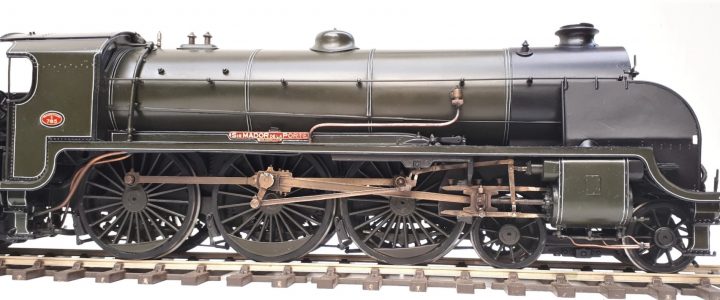
Southern Railway King Arthur class 4-6-0 no. E785 Sir Mador de la Porte

E785 Sir Mador de la Porte

E785 Sir Mador de la Porte
Southern Railway King Arthur Class no. E785 Sir Mador de la Porte. This model was built by myself many years ago from the Modern Outline kit, with Slaters wheels and an ABC motor/gear unit. I originally painted it in an identical livery to this as no. E792 Sir Hervis de Revel and with that identity he gave me many years excellent service, but unfortunately the paint deteriorated, resulting in me stripping it for a repaint. New paint, new identity. Now expertly re-painted by Warren Haywood. The model as Sir Mador is now all ready to give many more years service.

Great Northern Railway Stirling single wheeler no. 1

Stirling single
GNR Stirling single wheeler no. 1. From the Swanage Models kit with Slaters wheels and a Portescap motor and gearbox. This model was originally built by a person unknown and I won it in a GNRA railwayana auction. It was bought because I have confidence in buying second hand models that have been built from quality kits, and as I had already built one of these before, my confidence remained that I could strip and rebuild it into a superb model. Well I have done that, but at a cost in time that convinces me that never again will I tackle one of these in that way. The model now has a pair of plunger pickups on the driving wheels and wiper pickups on the tender. Although axle side to side clearances are very tight on the bogie and trailing wheels, it runs well with 6 foot radius curves being achievable. Thanks to Warren Haywood for a stunning paint job. This model is for sale. See the models for sale page of this website.

LNER Gresley A1 class Pacific no. 1470N Great Northern

Great Northern

Great Northern
LNER Gresley A1 class Pacific no. 1470N Great Northern. Built (to 95% completion) from scratch by Wally West circa 1980’s using driving wheel castings by Alan Harris and a massive Pittman gear and motor unit. For a reason unknown Great Northern (and his twin brother Robert the Devil, who appears on a separate posting on this site) were left unfinished until in early 2020, when I was commissioned by Wally’s family to complete the models. This entailed, in the main, the soldered assembly of cab parts and the fitting of all handrails on the boiler, cab and tender. It also entailed the preparation of the model for final painting by Warren Haywood. I am very proud to have completed the model to a standard worthy of the builder and honoured to have this fabulous model as part of my collection.

SL&NCR Beyer Peacock 0-6-4T “Lissadell”

Lissadell
“Lissadell” of the Sligo, Leitrim & Northern Counties Railway, ‘Leitrim’ Class 0-6-4T, built in 1899 by Beyer Peacock & Co., works No.4073. Very well built indeed by a person unknown, from the North Star kit designed by Adrian Rowland, with an ABC motor/gears unit, wiper pick-ups, sprung hornblocks and Slaters wheels. As can be seen, it is presently in unpainted condition and has never been finished. It was bought with the intention to get my good friend John Cockcroft to paint it for me in it’s original SL&NCR livery, but the only photos that I can find of it are relatively recent ones in what looks like unlined black. I do have a builders photo of the class leader “Leitrim” in lined out works grey, but other than that I have no idea of what livery these locos carried in their early years. If anyone can help me get this lovely little tank loco completed in an early livery, I would be very much appreciative.

Thanks to the Railway Modellers Ireland Facebook group and Jonathan Beaumont in particular I have received the following information:

JB – Originally olive green – quite dark, and with lining. No actual details of the lining survive but perusal of early photos suggest black and white. The letters “S L N C R” were in shaded gold or yellow on the tank sides. It is not known what colour the nameplates were, though during the “black” era (probably about 1910/15 onwards) these were variously black with red writing, or red with polished writing.
MB – There is a photo of classmate “Lurganboy” on the smugmug website, with “SL&NCR” lettering on the tank sides, but the rest of the loco looks to be unlined. Would this lettering have been carried in the olive green days with the lining?
JB – Yes.
JB – After they started painting them unlined black I believe, but cannot be certain, that the lettering continued for a while (on the unlined black background). Connecting rods are often seen (copied) on models as red. Evidently they were not – they were black or more likely, unpainted.

LNER D49 (Hunt) class no. 366 The Oakley

LNER 366 The Oakley
 LNER D49 (Hunt) Class 4-4-0 no. 366 The Oakley. Built circa early-sixties from scratch by Wally West using non-insulated wheels turned from good quality castings, probably by Miller, Swan & Co. The split axles and insulated spacers between the frames allow power to be collected from the tender wheels and transferred to the loco via strong springs, which also represent water hoses under the fallplate. The motor and 12:1 gears are of the short Bonds type. Power is also collected by plunger pick-ups on the driving wheels. All brake blocks are made from non conductive material to eliminate shorting across the brake rigging. All loco driving and tender axles have sprung hornblocks. Originally painted by Wally Mayhew in fully lined LNER passenger green livery the model had a hard life, but still works well and is shown in use on Arthur Dewar’s layout in Jack Ray’s book ‘Model Railways and their builders’ published by Atlantic Press.The model has recently been stripped of it’s tired and chipped paintwork and has now been repainted by John Cockcroft into fully lined LNER Darlington green livery. It retains the same name, but now proudly carries new nameplates from Diane Carney.

North Eastern Railway Tennant 2-4-0 no. 1463

North Eastern Railway Tennant 2-4-0 no. 1463

North Eastern Railway Tennant 2-4-0 no. 1463. Built circa 2005, from scratch with fully working inside motion, by Wally West using wheels turned from castings by Alan Harris (AGH). The split axles and insulated spacers between the frames allow power to be collected from the tender wheels, via sprung plungers mounted on the front face of the tender, connecting with contact faces on the back of the loco. The plungers also double up as tender buffers. All brake blocks are made from non conductive material to eliminate shorting across the brake rigging. All loco driving and tender axles have sprung hornblocks. Painted in fully lined North Eastern Railway passenger livery by Alan Brackenborough. This model also features very fine cab interior detail, is powered by a Portescap motor/gear unit and is in superb (virtually unused) working condition. A superbly built and painted model in every respect.

It has recently transpired that Wally did actually build three finescale Tennants like this, as well as the scaleseven version shown elsewhere, so four it total. The recently discovered model was in fact sold by Wally himself in an unpainted condition and has since been painted in the livery shown above by Alan Brackenborough.